


Prevalence of temporomandibular joint disorders among students of the university of jordan
- PMID: 22493650
- PMCID: PMC3318879
- DOI: 10.4021/jocmr2009.06.1245
Prevalence of temporomandibular joint disorders among students of the university of jordan
Abstract
Background: This study aimed to investigate the prevalence of temporomandibular disorder (TMD) among students of the University of Jordan.
Methods: Information about the symptoms of TMD and the possible risk factors were collected using specifically designed questionnaires. The collected data sets were treated statistically using the SPSS release 14 package.
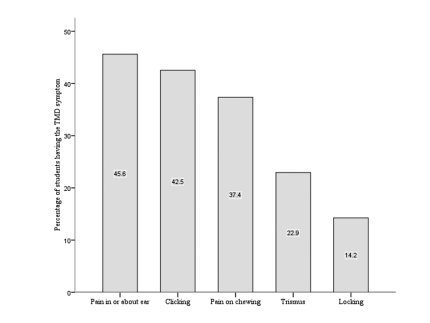
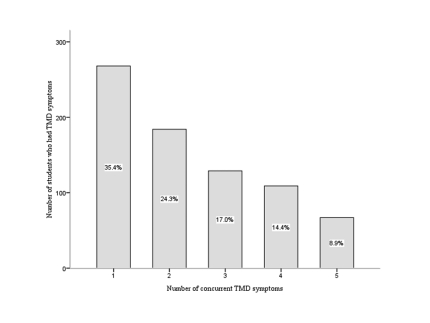
Results: The results of the present investigation showed that pain in or about the ears or cheeks was the most prevalent symptom whereas locking of the temporomandibular joint (TMJ) was the least prevalent. Nearly one-third of the investigated sample (31.4%, 346/1103) had no symptoms of TMD whereas 68.6% (757/1103) had at least one symptom. Students of health science studies had significantly the highest risk in developing TMJ clicking compared to students studying pure science or humanitarian studies.
Conclusions: TMD is of a high prevalence among students of the University of Jordan, particularly among students of health and science studies, which signify the role of stress in the development and/or progression of TMD. The findings of this study are alarming and entailing further investigations to identify risk factors associated with TMD in order to establish measures for prevention and treatment.
Keywords: TMD; Clicking; Health sciences; Humanitarian studies.
Figures
References
-
- Sari S, Sonmez H. Investigation of the relationship between oral parafunctions and temporomandibular joint dysfunction in Turkish children with mixed and permanent dentition. J Oral Rehabil. 2002;29(1):108–112. - PubMed
-
- Schmitter M, Rammelsberg P, Hassel A. The prevalence of signs and symptoms of temporomandibular disorders in very old subjects. J Oral Rehabil. 2005;32(7):467–473. - PubMed
-
- Nilner M, Lassing SA. Prevalence of functional disturbances and diseases of the stomatognathic system in 7-14 year olds. Swed Dent J. 1981;5(5-6):173–187. - PubMed
-
- Nassif NJ, Hilsen KL. Screening for temporomandibular disorders: history and clinical examination. American Dental Association. J Prosthodont. 1992;1(1):42–46. - PubMed
-
- Cooper BC, Kleinberg I. Examination of a large patient population for the presence of symptoms and signs of temporomandibular disorders. Cranio. 2007;25(2):114–126. - PubMed
LinkOut - more resources
Full Text Sources