


Cancer and innate immune system interactions: translational potentials for cancer immunotherapy
- PMID: 22495387
- PMCID: PMC3331796
- DOI: 10.1097/CJI.0b013e3182518e83
Cancer and innate immune system interactions: translational potentials for cancer immunotherapy
Abstract
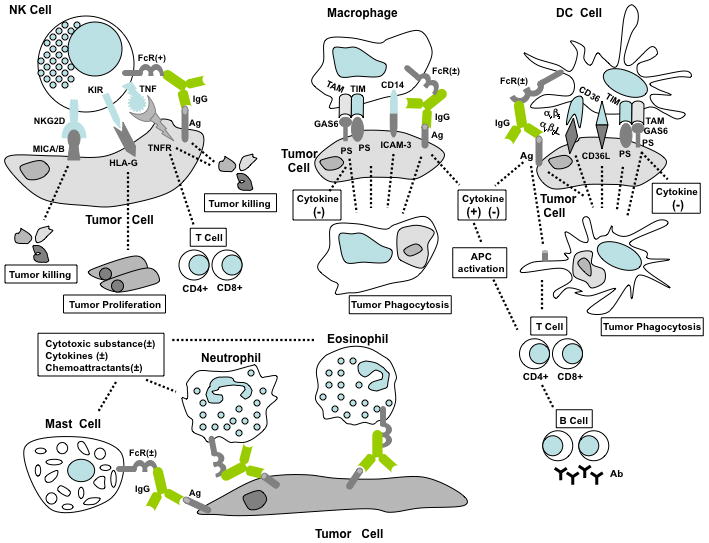
Passive immunotherapy, including adoptive T-cell therapy and antibody therapy, has shown encouraging results in cancer treatment lately. However, active immunotherapy of solid cancers remains an elusive goal. It is now known that the human innate immune system recognizes pathogen-associated molecular patterns conserved among microbes or damage-associated molecular patterns released from tissue injuries to initiate adaptive immune responses during infection and tissue inflammation, respectively. In contrast, how the innate immune system recognizes endogenously arising cancer remains poorly understood at the molecular level, which poses a significant roadblock to the development of active cancer immunotherapy. We hereby review the current knowledge of how solid cancers directly and indirectly interact with cells of the human innate immune system, with a focus on the potential effect of such interactions to the resultant adaptive immune responses against cancer. We believe that understanding cancer and innate immune system interactions may allow us to better manipulate the adaptive immune system at the molecular level to develop effective active immunotherapy against cancer. Current and future perspectives in clinical development that exploits these molecular interactions are discussed.
Conflict of interest statement
Figures
References
-
- Zou W. Immunosuppressive networks in the tumour environment and their therapeutic relevance. Nat Rev Cancer. 2005;5:263–274. - PubMed
-
- Rosenberg SA. Progress in human tumour immunology and immunotherapy. Nature. 2001;411:380–384. - PubMed
-
- Scanlan MJ, Gure AO, Jungbluth AA, et al. Cancer/testis antigens: an expanding family of targets for cancer immunotherapy. Immunol Rev. 2002;188:22–32. - PubMed
-
- Dunn GP, Old LJ, Schreiber RD. The immunobiology of cancer immunosurveillance and immunoediting. Immunity. 2004;21:137–148. - PubMed
Publication types
MeSH terms
Grants and funding
LinkOut - more resources
Full Text Sources
