


Metabolite profiling identifies pathways associated with metabolic risk in humans
- PMID: 22496159
- PMCID: PMC3376658
- DOI: 10.1161/CIRCULATIONAHA.111.067827
Metabolite profiling identifies pathways associated with metabolic risk in humans
Abstract
Background: Although metabolic risk factors are known to cluster in individuals who are prone to developing diabetes mellitus and cardiovascular disease, the underlying biological mechanisms remain poorly understood.
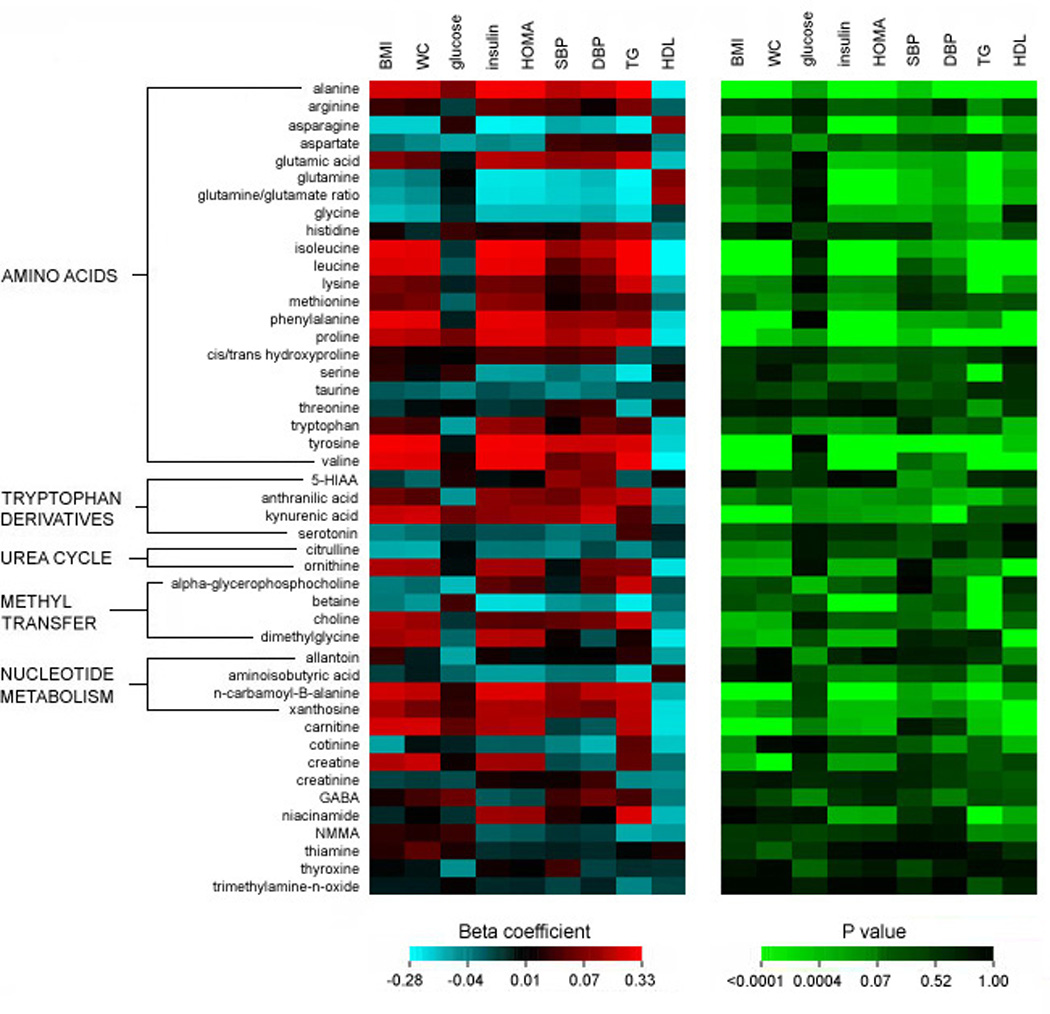
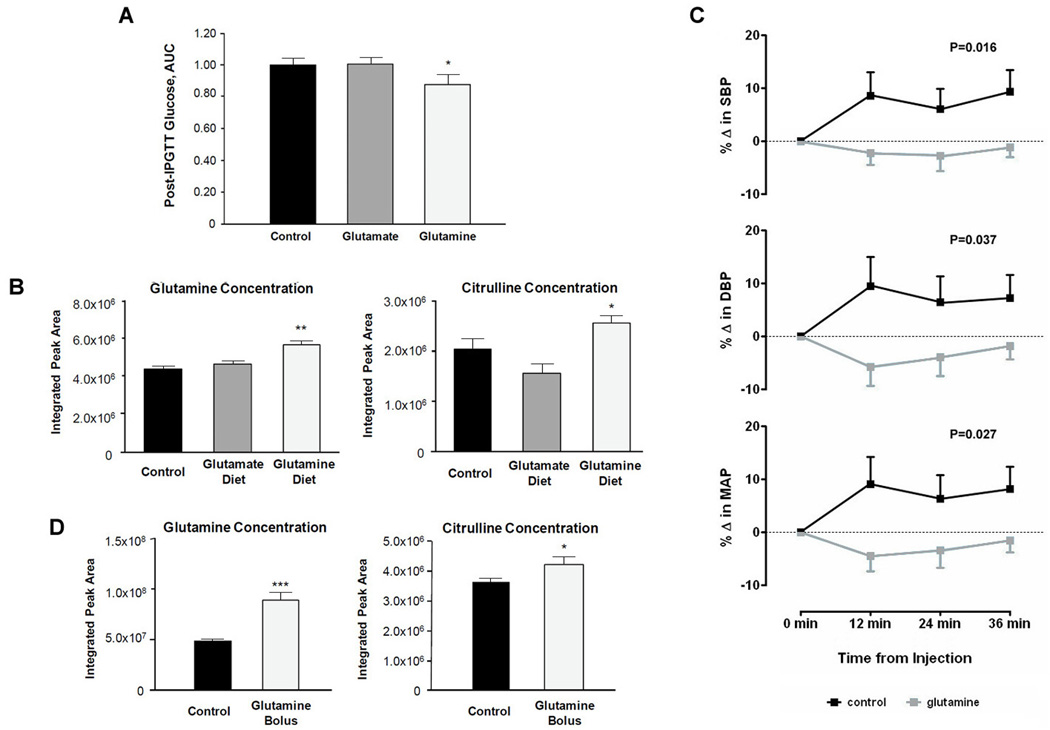
Methods and results: To identify pathways associated with cardiometabolic risk, we used liquid chromatography/mass spectrometry to determine the plasma concentrations of 45 distinct metabolites and to examine their relation to cardiometabolic risk in the Framingham Heart Study (FHS; n=1015) and the Malmö Diet and Cancer Study (MDC; n=746). We then interrogated significant findings in experimental models of cardiovascular and metabolic disease. We observed that metabolic risk factors (obesity, insulin resistance, high blood pressure, and dyslipidemia) were associated with multiple metabolites, including branched-chain amino acids, other hydrophobic amino acids, tryptophan breakdown products, and nucleotide metabolites. We observed strong associations of insulin resistance traits with glutamine (standardized regression coefficients, -0.04 to -0.22 per 1-SD change in log-glutamine; P<0.001), glutamate (0.05 to 0.14; P<0.001), and the glutamine-to-glutamate ratio (-0.05 to -0.20; P<0.001) in the discovery sample (FHS); similar associations were observed in the replication sample (MDC). High glutamine-to-glutamate ratio was associated with lower risk of incident diabetes mellitus in FHS (odds ratio, 0.79; adjusted P=0.03) but not in MDC. In experimental models, administration of glutamine in mice led to both increased glucose tolerance (P=0.01) and decreased blood pressure (P<0.05).
Conclusions: Biochemical profiling identified circulating metabolites not previously associated with metabolic traits. Experimentally interrogating one of these pathways demonstrated that excess glutamine relative to glutamate, resulting from exogenous administration, is associated with reduced metabolic risk in mice.
Conflict of interest statement
Figures
References
-
- Grundy SM, Cleeman JI, Daniels SR, Donato KA, Eckel RH, Franklin BA, Gordon DJ, Krauss RM, Savage PJ, Smith SC, Jr, Spertus JA, Costa F. Diagnosis and management of the metabolic syndrome: an American Heart Association/National Heart, Lung, and Blood Institute Scientific Statement. Circulation. 2005;112:2735–2752. - PubMed
-
- Golden SH, Folsom AR, Coresh J, Sharrett AR, Szklo M, Brancati F. Risk factor groupings related to insulin resistance and their synergistic effects on subclinical atherosclerosis: the atherosclerosis risk in communities study. Diabetes. 2002;51:3069–3076. - PubMed
-
- Sattar N, Gaw A, Scherbakova O, Ford I, O'Reilly DS, Haffner SM, Isles C, Macfarlane PW, Packard CJ, Cobbe SM, Shepherd J. Metabolic syndrome with and without C-reactive protein as a predictor of coronary heart disease and diabetes in the West of Scotland Coronary Prevention Study. Circulation. 2003;108:414–419. - PubMed
-
- Sundstrom J, Vallhagen E, Riserus U, Byberg L, Zethelius B, Berne C, Lind L, Ingelsson E. Risk associated with the metabolic syndrome versus the sum of its individual components. Diabetes Care. 2006;29:1673–1674. - PubMed
-
- Ford ES, Giles WH, Dietz WH. Prevalence of the metabolic syndrome among US adults: findings from the third National Health and Nutrition Examination Survey. JAMA. 2002;287:356–359. - PubMed
Publication types
MeSH terms
Substances
Grants and funding
LinkOut - more resources
Full Text Sources
Other Literature Sources
Medical
