


CD4+ CD25+ regulatory T cells impair HIV-1-specific CD4 T cell responses by upregulating interleukin-10 production in monocytes
- PMID: 22496237
- PMCID: PMC3393541
- DOI: 10.1128/JVI.06251-11
CD4+ CD25+ regulatory T cells impair HIV-1-specific CD4 T cell responses by upregulating interleukin-10 production in monocytes
Abstract
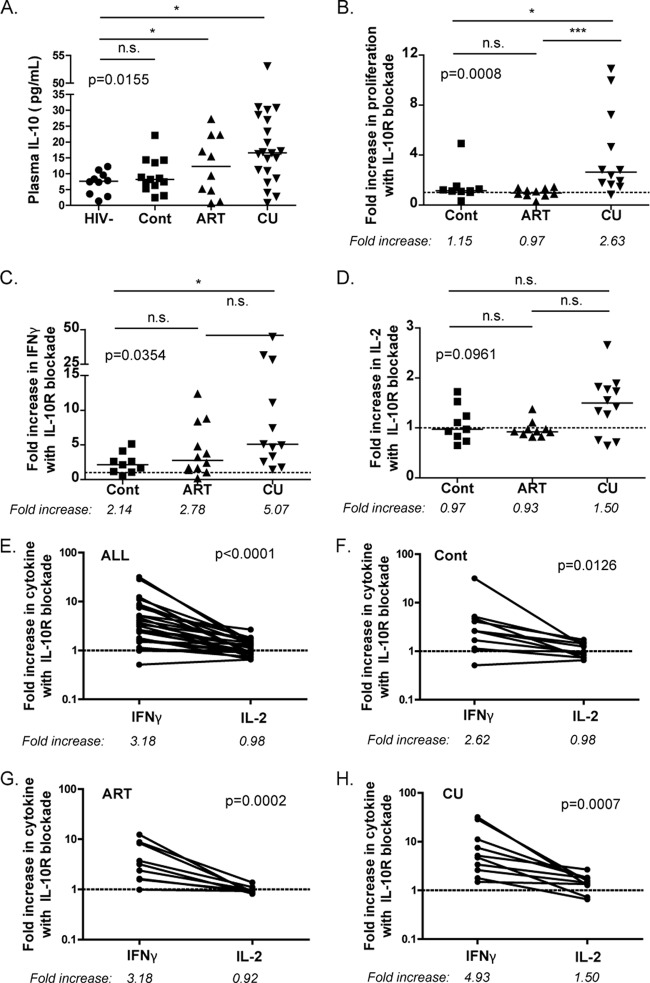
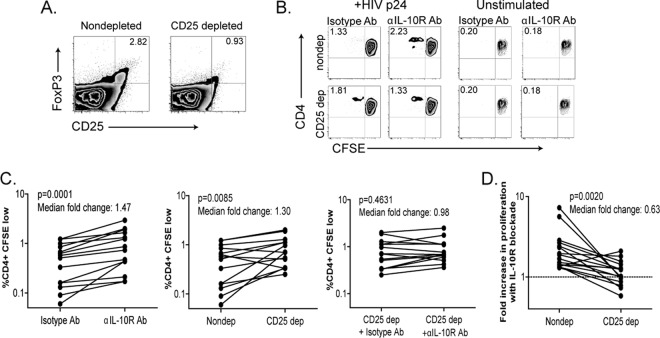
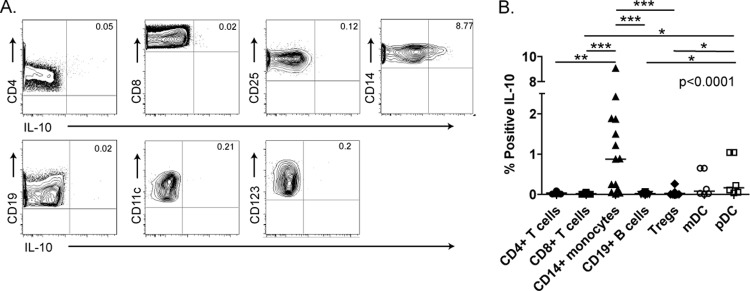
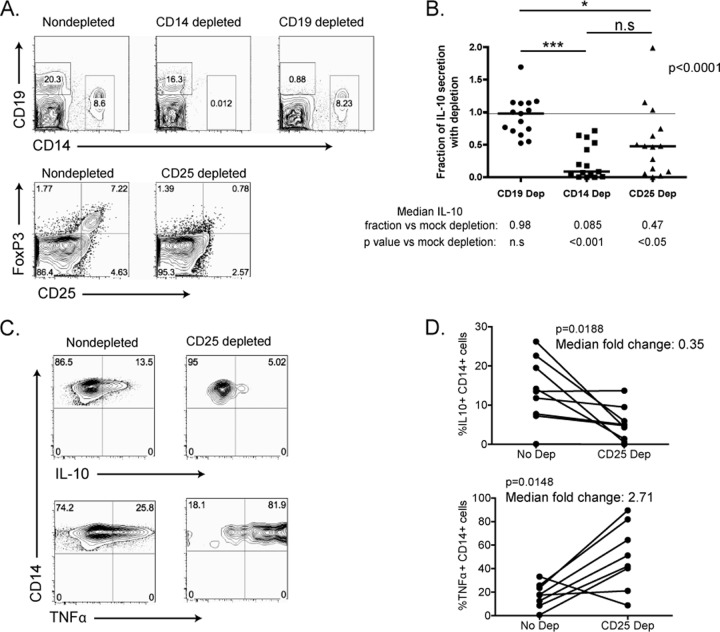
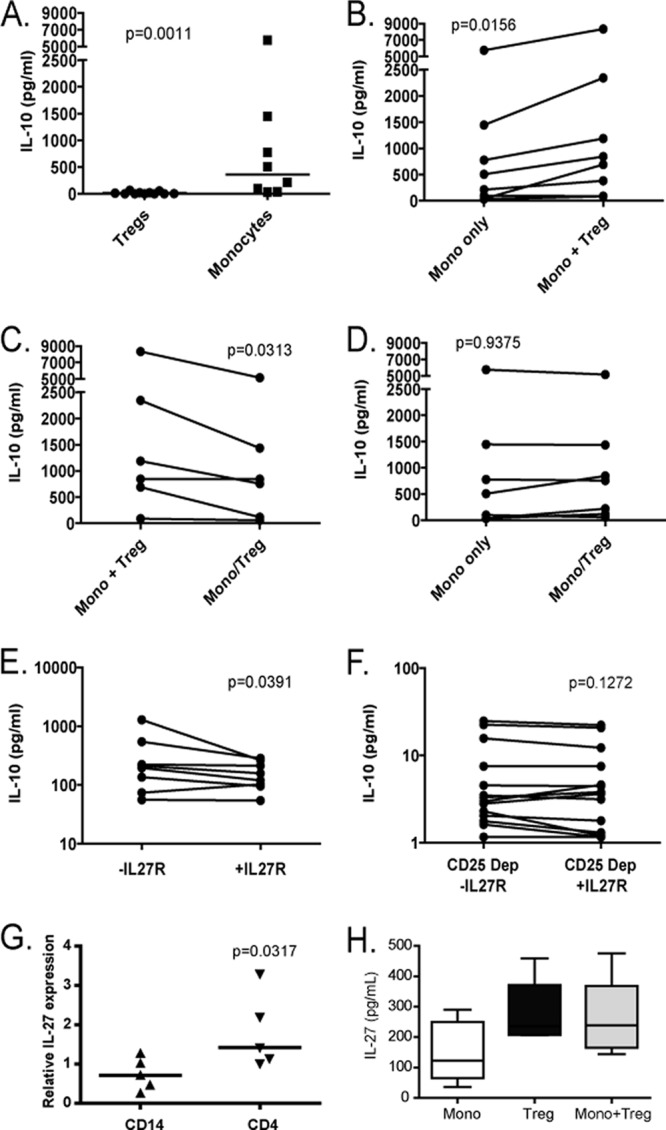
T cell dysfunction in the presence of ongoing antigen exposure is a cardinal feature of chronic viral infections with persistent high viremia, including HIV-1. Although interleukin-10 (IL-10) has been implicated as an important mediator of this T cell dysfunction, the regulation of IL-10 production in chronic HIV-1 infection remains poorly understood. We demonstrated that IL-10 is elevated in the plasma of individuals with chronic HIV-1 infection and that blockade of IL-10 signaling results in a restoration of HIV-1-specific CD4 T cell proliferation, gamma interferon (IFN-γ) secretion, and, to a lesser extent, IL-2 production. Whereas IL-10 blockade leads to restoration of IFN-γ secretion by HIV-1-specific CD4 T cells in all categories of subjects investigated, significant enhancement of IL-2 production and improved proliferation of CD4 T helper cells are restricted to viremic individuals. In peripheral blood mononuclear cells (PBMCs), this IL-10 is produced primarily by CD14(+) monocytes, but its production is tightly controlled by regulatory T cells (Tregs), which produce little IL-10 directly. When Tregs are depleted from PBMCs of viremic individuals, the effect of the IL-10 signaling blockade is abolished and IL-10 production by monocytes decreases, while the production of proinflammatory cytokines, such as tumor necrosis factor alpha (TNF-α), increases. The regulation of IL-10 by Tregs appears to be mediated primarily by contact or paracrine-dependent mechanisms which involve IL-27. This work describes a novel mechanism by which regulatory T cells control IL-10 production and contribute to dysfunctional HIV-1-specific CD4 T cell help in chronic HIV-1 infection and provides a unique mechanistic insight into the role of regulatory T cells in immune exhaustion.
Figures
References
-
- Ancuta P, et al. 2001. Opposite effects of IL-10 on the ability of dendritic cells and macrophages to replicate primary CXCR4-dependent HIV-1 strains. J. Immunol. 166:4244–4253 - PubMed
-
- Batten M, et al. 2008. Cutting edge: IL-27 is a potent inducer of IL-10 but not FoxP3 in murine T cells. J. Immunol. 180:2752–2756 - PubMed
-
- Blackburn SD, Wherry EJ. 2007. IL-10, T cell exhaustion and viral persistence. Trends Microbiol. 15:143–146 - PubMed
Publication types
MeSH terms
Substances
Grants and funding
LinkOut - more resources
Full Text Sources
Medical
Research Materials
