


Autism spectrum disorders: is mesenchymal stem cell personalized therapy the future?
- PMID: 22496609
- PMCID: PMC3303614
- DOI: 10.1155/2012/480289
Autism spectrum disorders: is mesenchymal stem cell personalized therapy the future?
Abstract
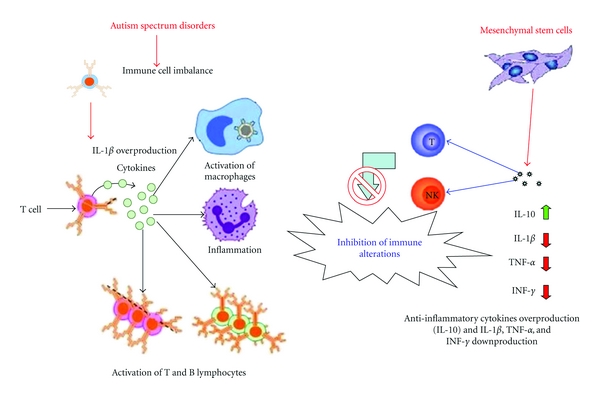
Autism and autism spectrum disorders (ASDs) are heterogeneous neurodevelopmental disorders. They are enigmatic conditions that have their origins in the interaction of genes and environmental factors. ASDs are characterized by dysfunctions in social interaction and communication skills, in addition to repetitive and stereotypic verbal and nonverbal behaviours. Immune dysfunction has been confirmed with autistic children. There are no defined mechanisms of pathogenesis or curative therapy presently available. Indeed, ASDs are still untreatable. Available treatments for autism can be divided into behavioural, nutritional, and medical approaches, although no defined standard approach exists. Nowadays, stem cell therapy represents the great promise for the future of molecular medicine. Among the stem cell population, mesenchymal stem cells (MSCs) show probably best potential good results in medical research. Due to the particular immune and neural dysregulation observed in ASDs, mesenchymal stem cell transplantation could offer a unique tool to provide better resolution for this disease.
Figures
References
-
- Fasano A. Intestine, leaky gut, autism and probiotics. In: Lyndhurst NJ, editor. Cutting Edge Therapies. Barnes & Noble; 2010. pp. 192–198.
-
- Williams K, Wheeler DM, Silove N, Hazell P. Selective serotonin reuptake inhibitors (SSRIs) for autism spectrum disorders (ASD) Cochrane Database of Systematic Reviews. 2010;8 Article ID CD004677. - PubMed
-
- Toro R, Konyukh M, Delorme R, et al. Key role for gene dosage and synaptic homeostasis in autism spectrum disorders. Trends in Genetics. 2010;26(8):363–372. - PubMed
-
- Bradstreet JJ, Smith S, Baral M, Rossignol DA. Biomarker-guided interventions of clinically relevant conditions associated with autism spectrum disorders and attention deficit hyperactivity disorder. Alternative Medicine Review. 2010;15(1):15–32. - PubMed
-
- Persico AM, Bourgeron T. Searching for ways out of the autism maze: genetic, epigenetic and environmental clues. Trends in Neurosciences. 2006;29(7):349–358. - PubMed
Publication types
MeSH terms
LinkOut - more resources
Full Text Sources
Other Literature Sources
Medical
