Cell-cell transmission enables HIV-1 to evade inhibition by potent CD4bs directed antibodies
- PMID: 22496655
- PMCID: PMC3320602
- DOI: 10.1371/journal.ppat.1002634
Cell-cell transmission enables HIV-1 to evade inhibition by potent CD4bs directed antibodies
Abstract
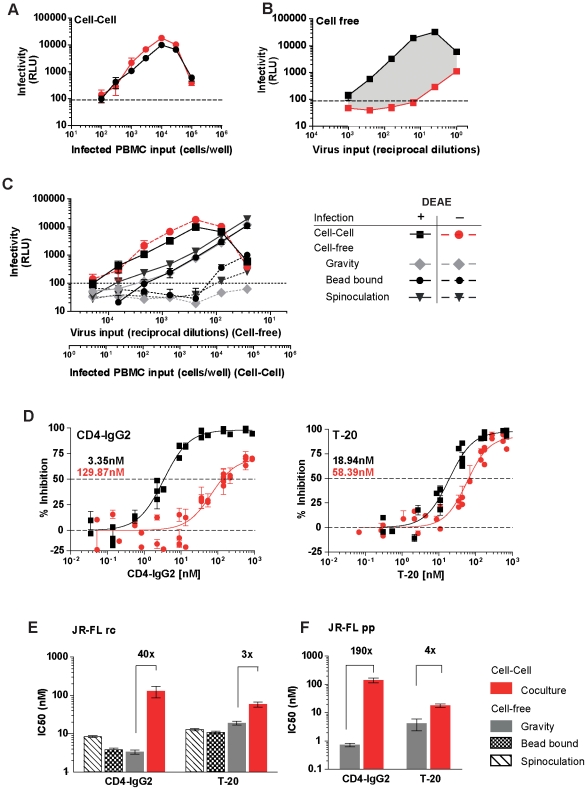
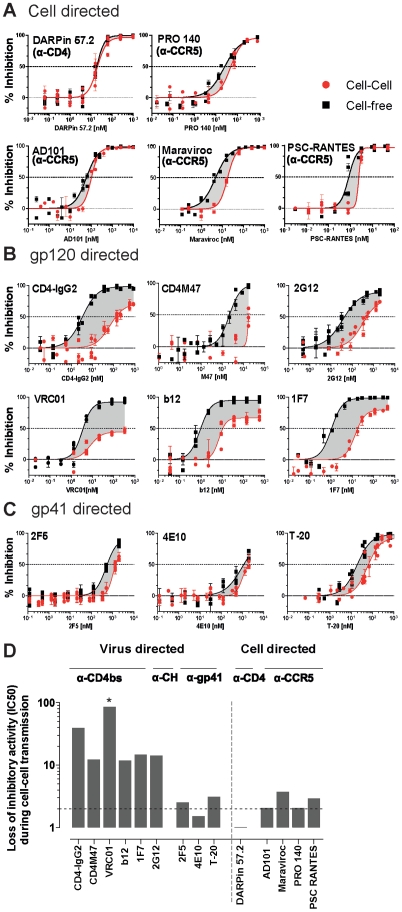
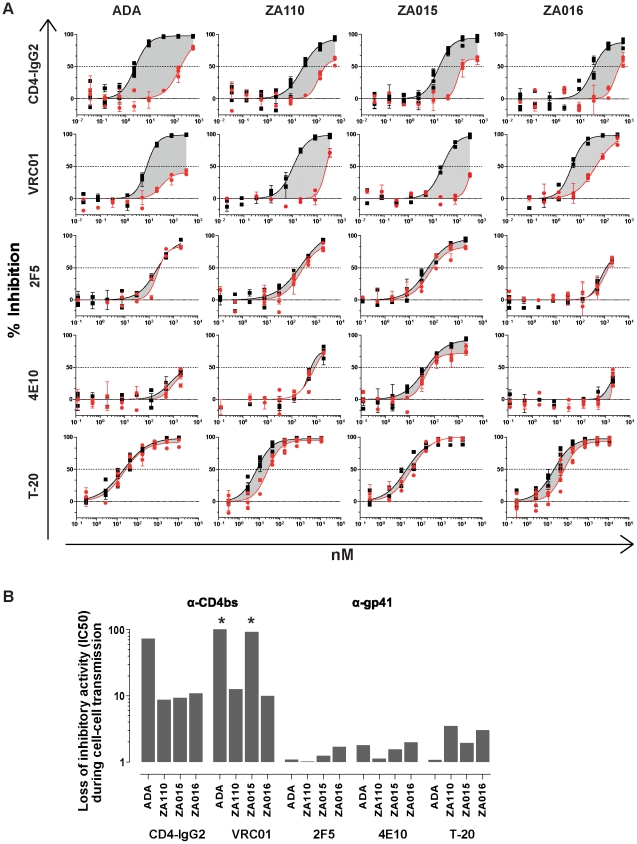
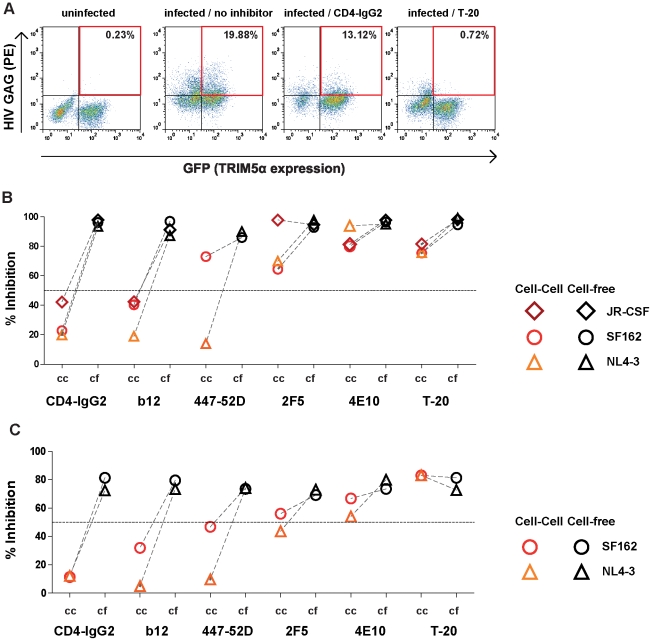
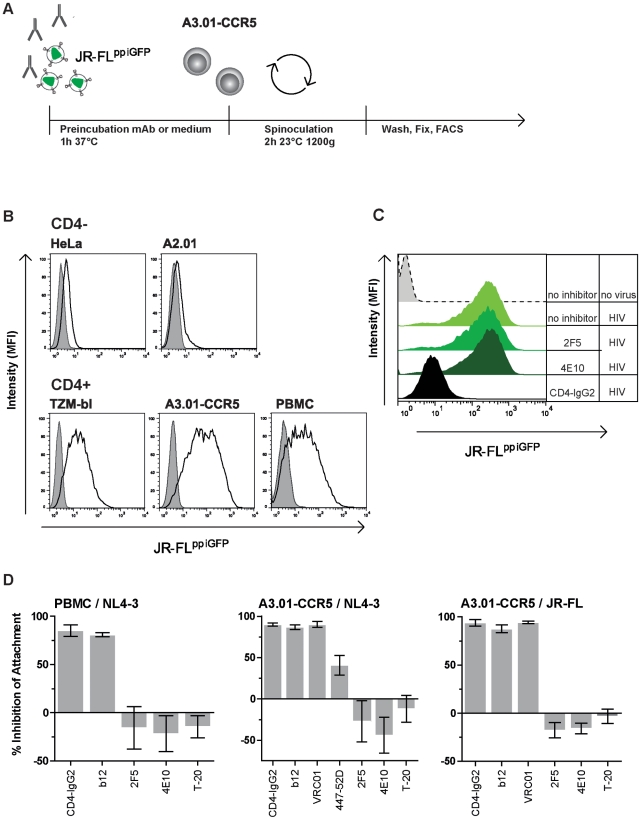
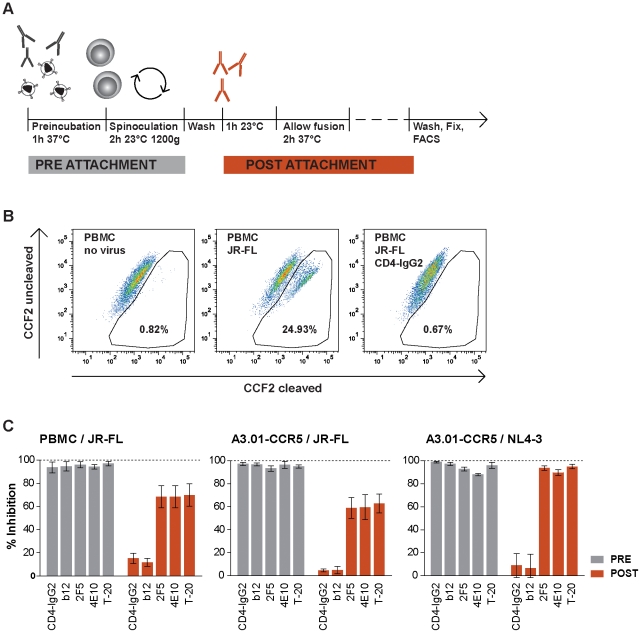
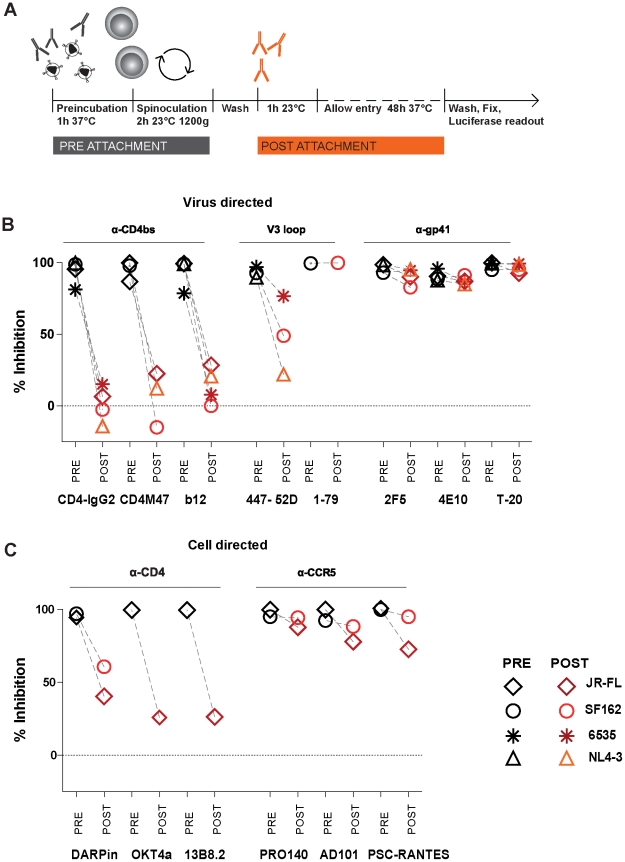
HIV is known to spread efficiently both in a cell-free state and from cell to cell, however the relative importance of the cell-cell transmission mode in natural infection has not yet been resolved. Likewise to what extent cell-cell transmission is vulnerable to inhibition by neutralizing antibodies and entry inhibitors remains to be determined. Here we report on neutralizing antibody activity during cell-cell transmission using specifically tailored experimental strategies which enable unambiguous discrimination between the two transmission routes. We demonstrate that the activity of neutralizing monoclonal antibodies (mAbs) and entry inhibitors during cell-cell transmission varies depending on their mode of action. While gp41 directed agents remain active, CD4 binding site (CD4bs) directed inhibitors, including the potent neutralizing mAb VRC01, dramatically lose potency during cell-cell transmission. This implies that CD4bs mAbs act preferentially through blocking free virus transmission, while still allowing HIV to spread through cell-cell contacts. Thus providing a plausible explanation for how HIV maintains infectivity and rapidly escapes potent and broadly active CD4bs directed antibody responses in vivo.
Conflict of interest statement
The authors have declared that no competing interests exist.
Figures
References
-
- Sattentau Q. Avoiding the void: cell-to-cell spread of human viruses. Nat Rev Microbiol. 2008;6:815–826. - PubMed
-
- Igakura T, Stinchcombe JC, Goon PK, Taylor GP, Weber JN, et al. Spread of HTLV-I between lymphocytes by virus-induced polarization of the cytoskeleton. Science. 2003;299:1713–1716. - PubMed
-
- McDonald D, Wu L, Bohks SM, KewalRamani VN, Unutmaz D, et al. Recruitment of HIV and its receptors to dendritic cell-T cell junctions. Science. 2003;300:1295–1297. - PubMed
-
- Jolly C, Sattentau QJ. Retroviral spread by induction of virological synapses. Traffic. 2004;5:643–650. - PubMed
Publication types
MeSH terms
Substances
LinkOut - more resources
Full Text Sources
Other Literature Sources
Medical
Research Materials