


Modulation of GSK-3β activity in Venezuelan equine encephalitis virus infection
- PMID: 22496857
- PMCID: PMC3319612
- DOI: 10.1371/journal.pone.0034761
Modulation of GSK-3β activity in Venezuelan equine encephalitis virus infection
Abstract
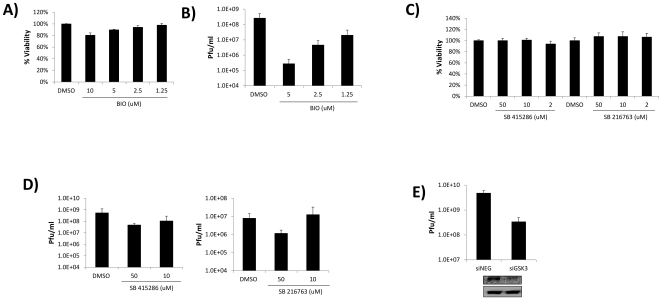
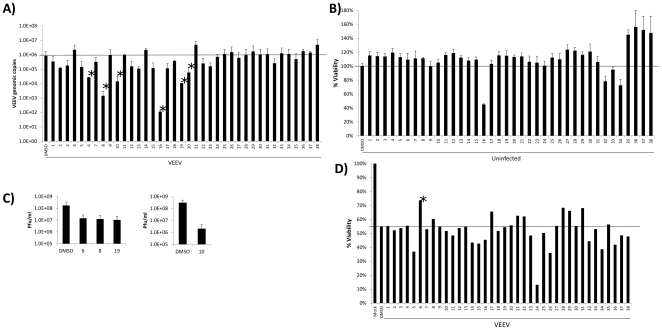
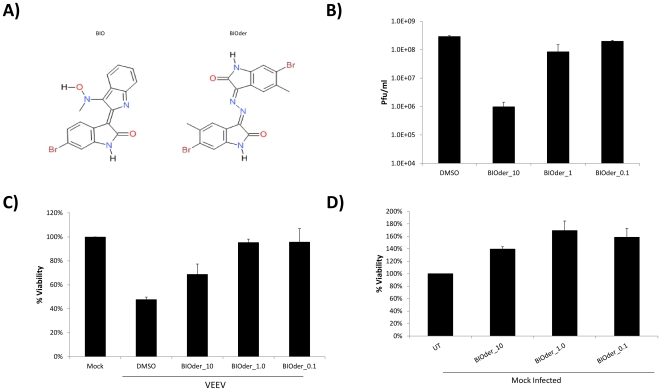
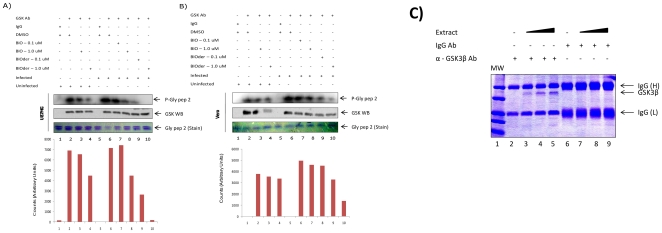
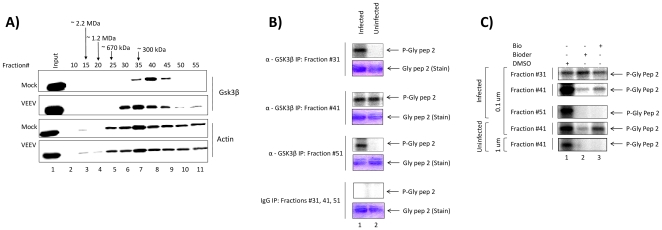
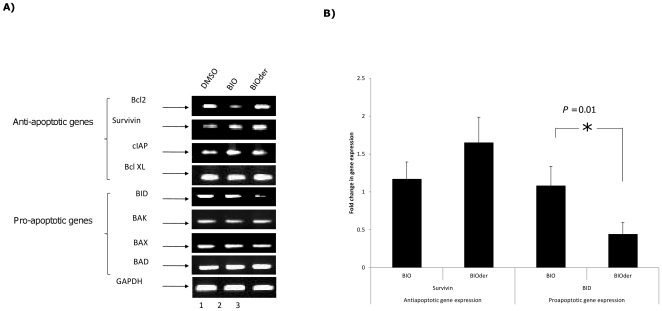
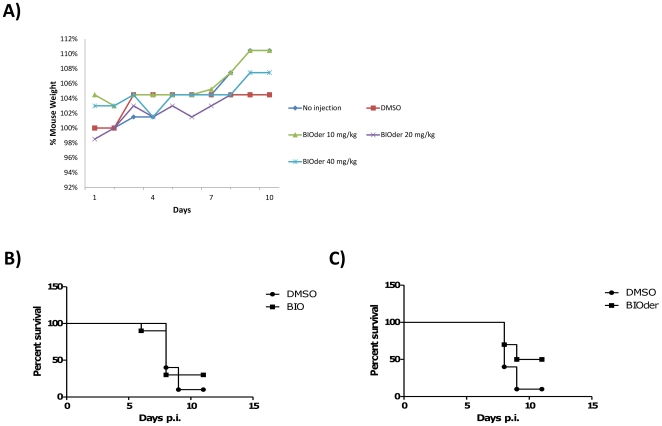
Alphaviruses, including Venezuelan Equine Encephalitis Virus (VEEV), cause disease in both equine and humans that exhibit overt encephalitis in a significant percentage of cases. Features of the host immune response and tissue-specific responses may contribute to fatal outcomes as well as the development of encephalitis. It has previously been shown that VEEV infection of mice induces transcription of pro-inflammatory cytokines genes (e.g., IFN-γ, IL-6, IL-12, iNOS and TNF-α) within 6 h. GSK-3β is a host protein that is known to modulate pro-inflammatory gene expression and has been a therapeutic target in neurodegenerative disorders such as Alzheimer's. Hence inhibition of GSK-3β in the context of encephalitic viral infections has been useful in a neuroprotective capacity. Small molecule GSK-3β inhibitors and GSK-3β siRNA experiments indicated that GSK-3β was important for VEEV replication. Thirty-eight second generation BIO derivatives were tested and BIOder was found to be the most potent inhibitor, with an IC(50) of ∼0.5 µM and a CC(50) of >100 µM. BIOder was a more potent inhibitor of GSK-3β than BIO, as demonstrated through in vitro kinase assays from uninfected and infected cells. Size exclusion chromatography experiments demonstrated that GSK-3β is found in three distinct complexes in VEEV infected cells, whereas GSK-3β is only present in one complex in uninfected cells. Cells treated with BIOder demonstrated an increase in the anti-apoptotic gene, survivin, and a decrease in the pro-apoptotic gene, BID, suggesting that modulation of pro- and anti-apoptotic genes contributes to the protective effect of BIOder treatment. Finally, BIOder partially protected mice from VEEV induced mortality. Our studies demonstrate the utility of GSK-3β inhibitors for modulating VEEV infection.
Conflict of interest statement
Figures
References
-
- Olival KJ, Daszak P. The ecology of emerging neurotropic viruses. Journal of Neurovirology. 2005;11:441–446. - PubMed
-
- Gubler DJ. The global emergence/resurgence of arboviral diseases as public health problems. Archives of Medical Research. 2002;33:330–342. - PubMed
-
- Weaver SC, Salas R, RicoHesse R, Ludwig GV, Oberste MS, et al. Re-emergence of epidemic Venezuelan equine encephalomyelitis in South America. Lancet. 1996;348:436–440. - PubMed
-
- Weaver SC, Ferro C, Barrera R, Boshell J, Navarro JC. Venezuelan equine encephalitis. Annu Rev Entomol. 2004;49:141–174. - PubMed
Publication types
MeSH terms
Substances
Grants and funding
LinkOut - more resources
Full Text Sources
Other Literature Sources
Miscellaneous
