


Coordinated regulation of accessory genetic elements produces cyclic di-nucleotides for V. cholerae virulence
- PMID: 22500802
- PMCID: PMC3620040
- DOI: 10.1016/j.cell.2012.01.053
Coordinated regulation of accessory genetic elements produces cyclic di-nucleotides for V. cholerae virulence
Abstract
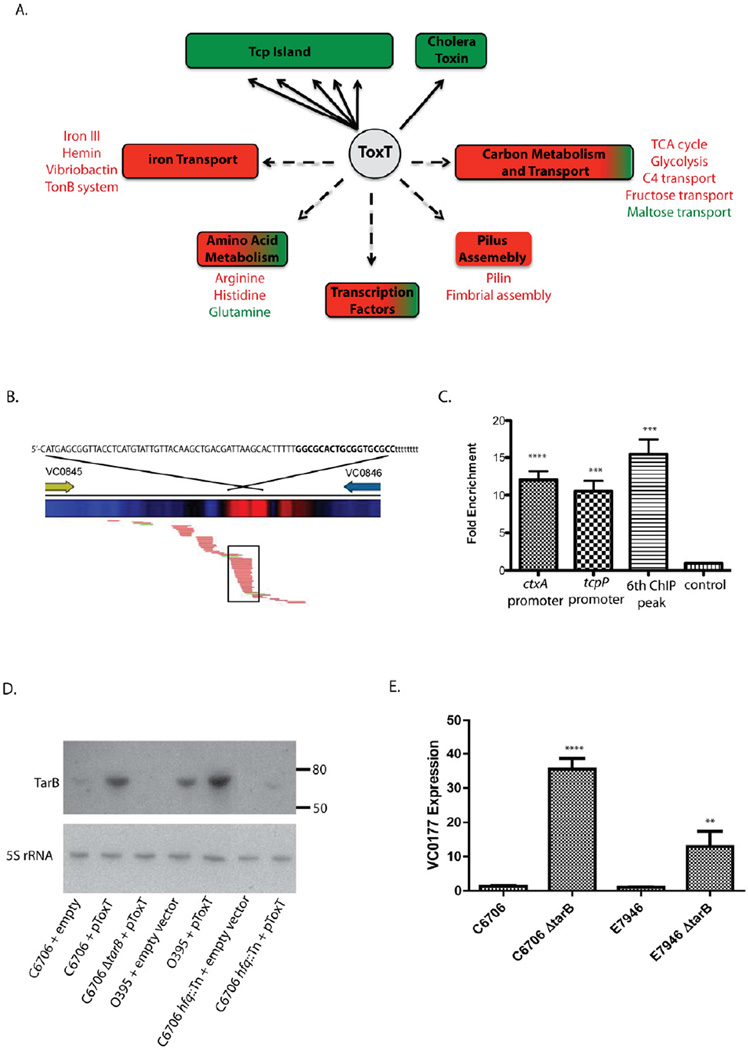
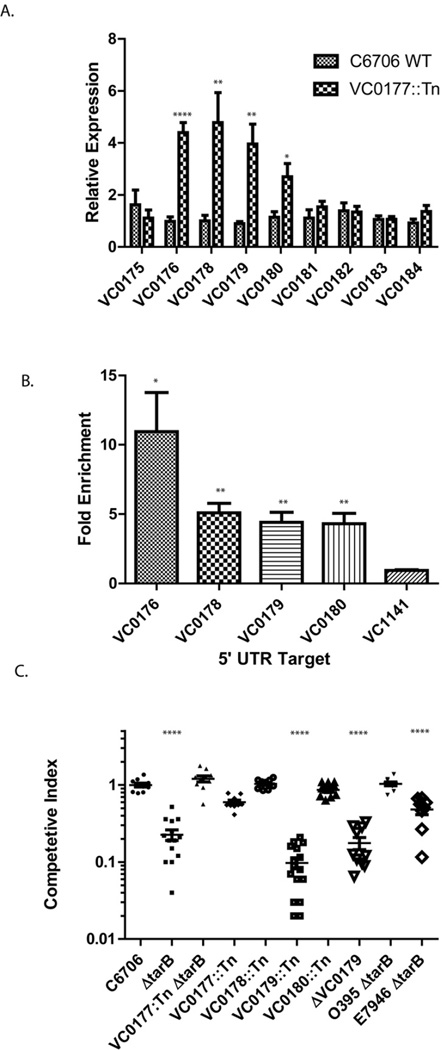
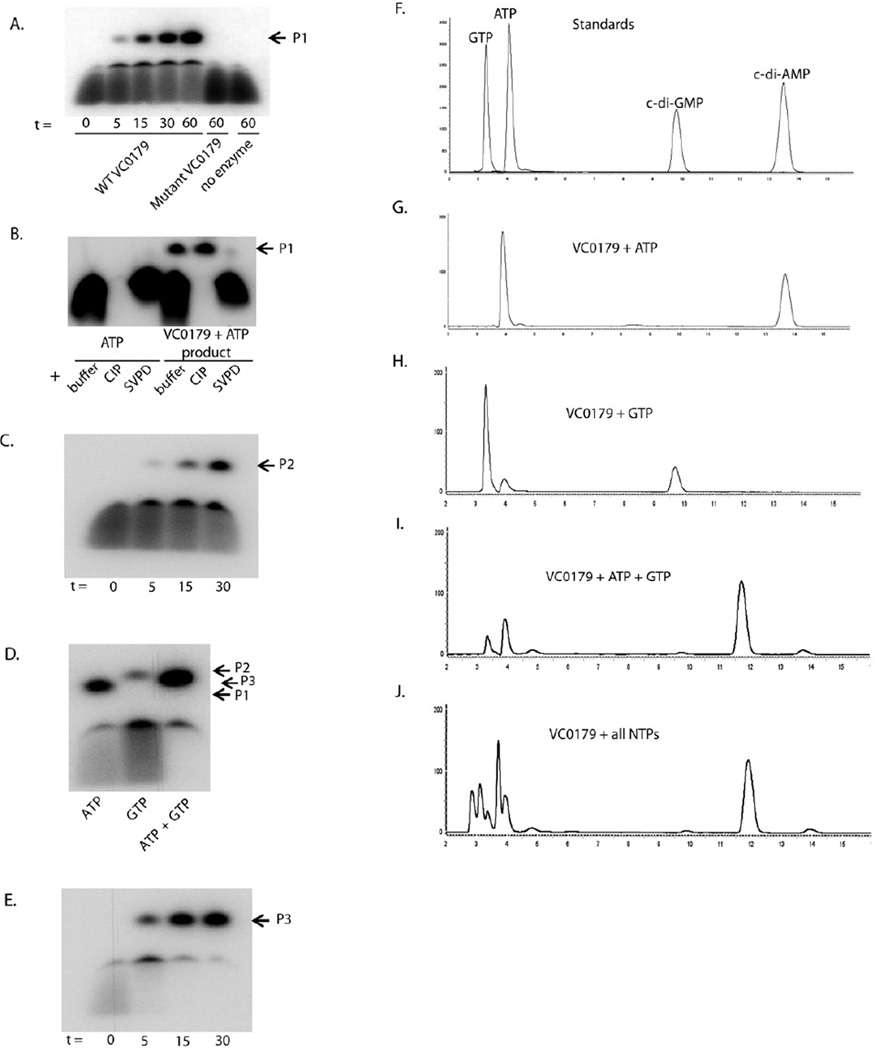
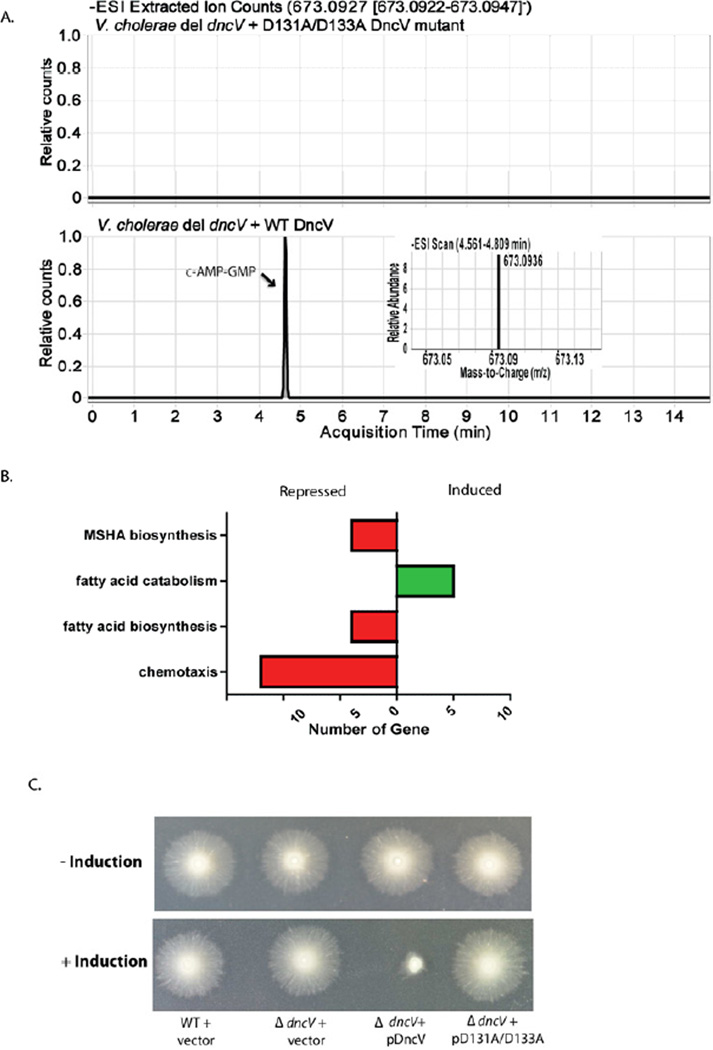
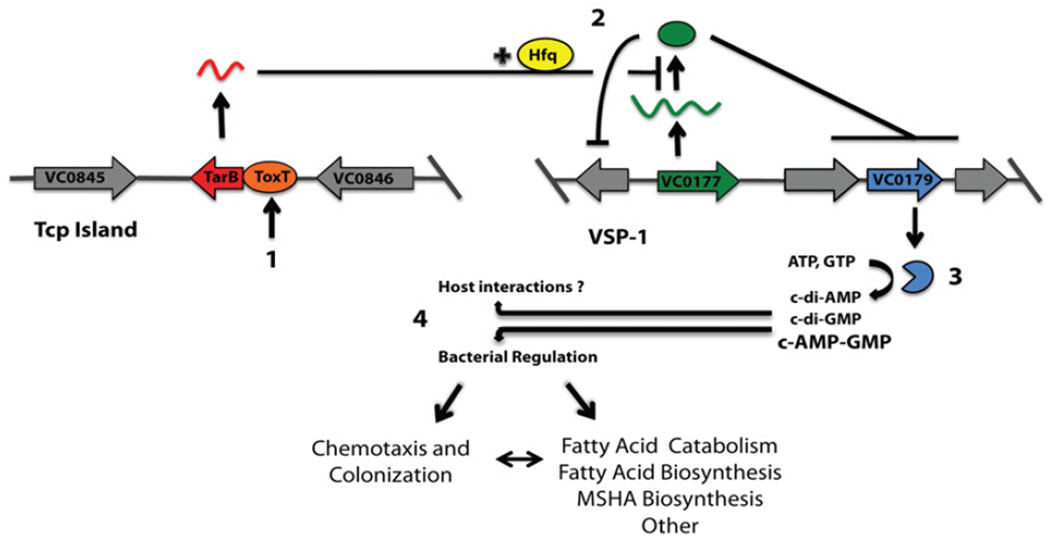
The function of the Vibrio 7(th) pandemic island-1 (VSP-1) in cholera pathogenesis has remained obscure. Utilizing chromatin immunoprecipitation sequencing and RNA sequencing to map the regulon of the master virulence regulator ToxT, we identify a TCP island-encoded small RNA that reduces the expression of a previously unrecognized VSP-1-encoded transcription factor termed VspR. VspR modulates the expression of several VSP-1 genes including one that encodes a novel class of di-nucleotide cyclase (DncV), which preferentially synthesizes a previously undescribed hybrid cyclic AMP-GMP molecule. We show that DncV is required for efficient intestinal colonization and downregulates V. cholerae chemotaxis, a phenotype previously associated with hyperinfectivity. This pathway couples the actions of previously disparate genomic islands, defines VSP-1 as a pathogenicity island in V. cholerae, and implicates its occurrence in 7(th) pandemic strains as a benefit for host adaptation through the production of a regulatory cyclic di-nucleotide.
Copyright © 2012 Elsevier Inc. All rights reserved.
Figures
Comment in
-
Bacterial virulence: A new pathogenicity island for Vibrio.Nat Rev Microbiol. 2012 May 8;10(6):376-7. doi: 10.1038/nrmicro2799. Nat Rev Microbiol. 2012. PMID: 22565129 No abstract available.
References
-
- Brennan RG, Link TM. Hfq structure, function and ligand binding. Curr Opin Microbiol. 2007;10:125–133. - PubMed
Publication types
MeSH terms
Substances
Associated data
- Actions
Grants and funding
LinkOut - more resources
Full Text Sources
Other Literature Sources
Molecular Biology Databases
