


Fungal origins of the bicyclo[2.2.2]diazaoctane ring system of prenylated indole alkaloids
- PMID: 22502590
- PMCID: PMC3485739
- DOI: 10.1021/np200954v
Fungal origins of the bicyclo[2.2.2]diazaoctane ring system of prenylated indole alkaloids
Abstract
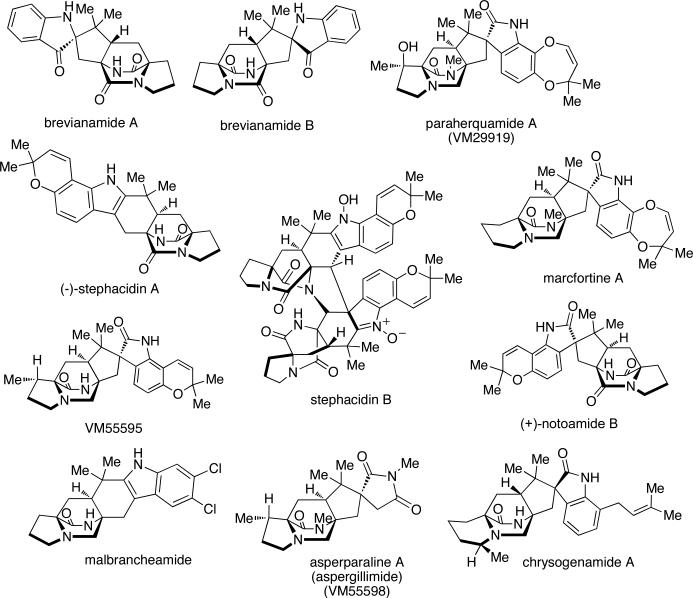
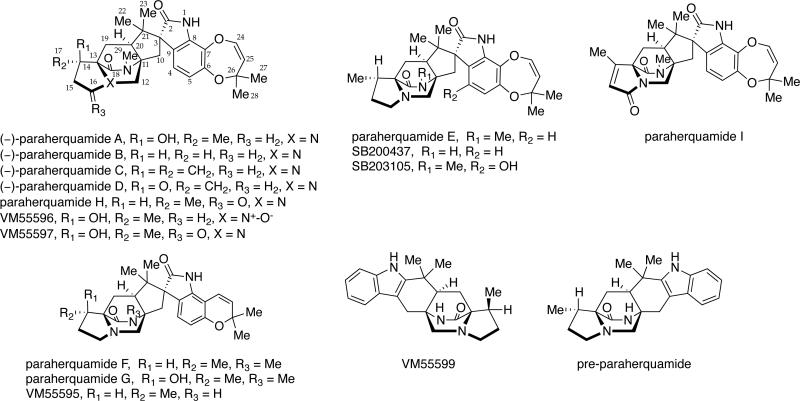
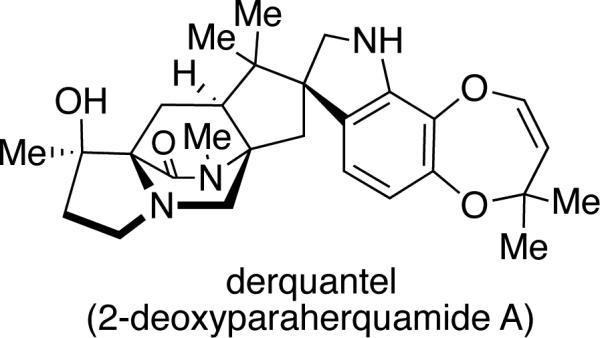
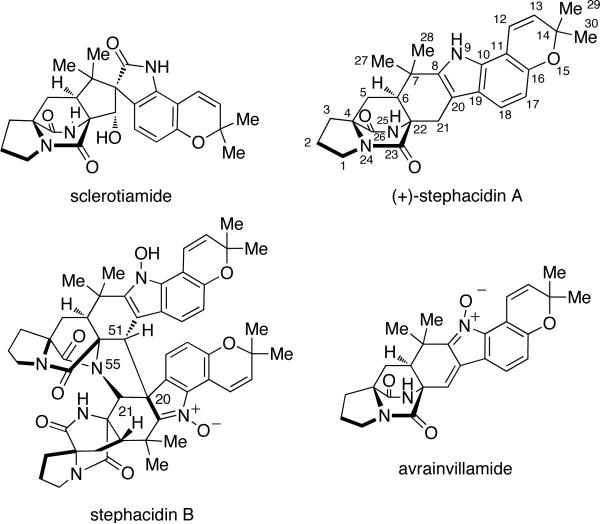
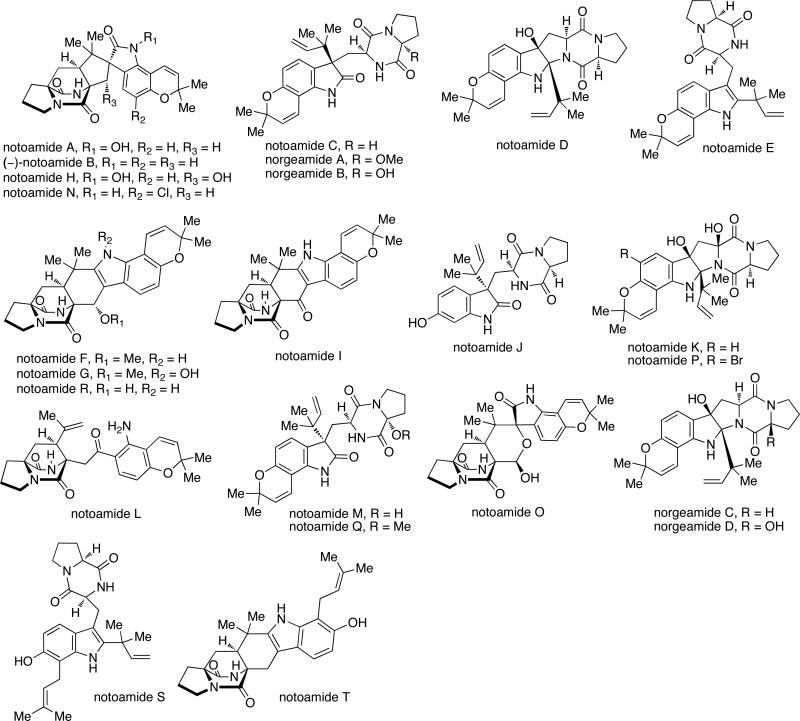
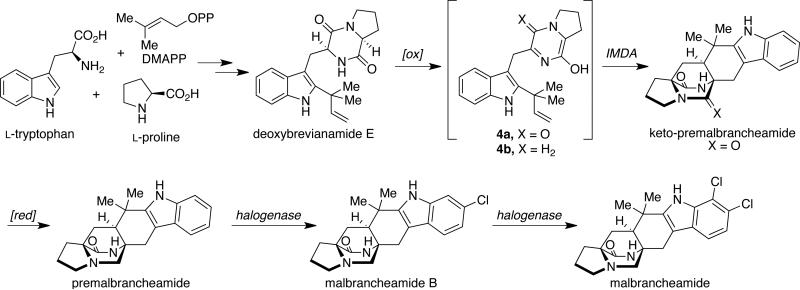
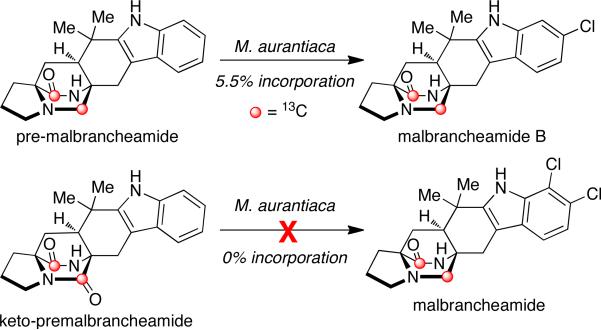
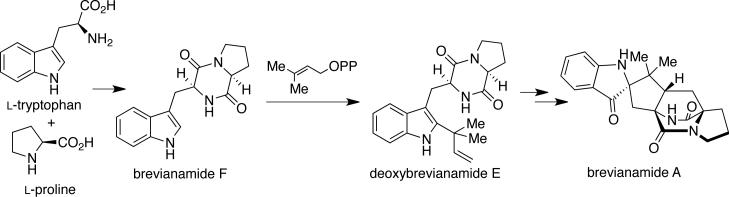
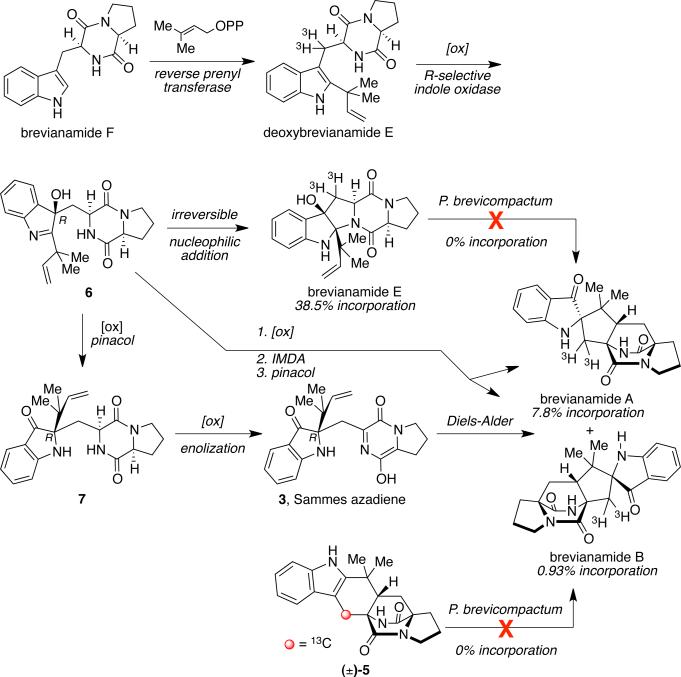
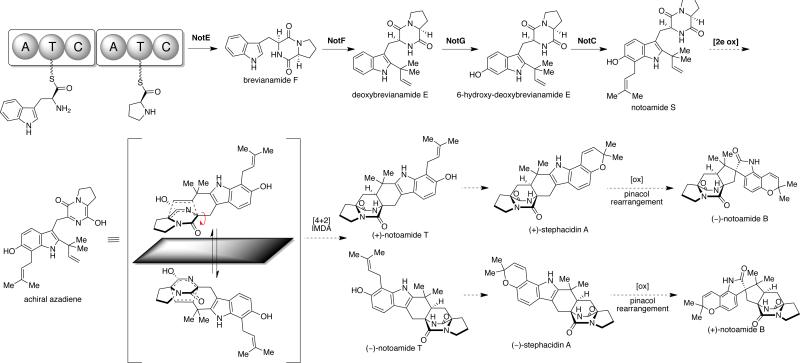
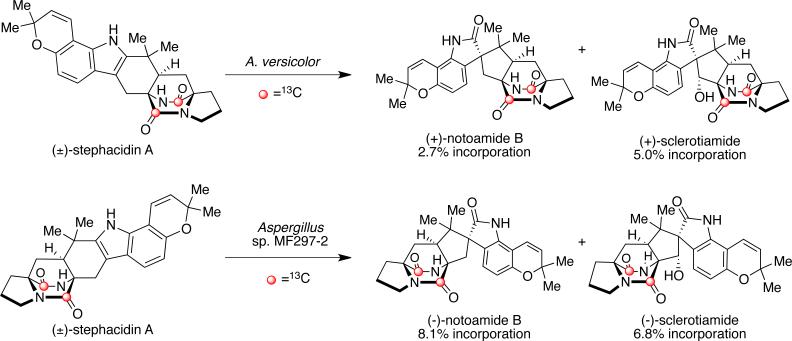
Over eight different families of natural products consisting of nearly 70 secondary metabolites that contain the bicyclo[2.2.2]diazaoctane ring system have been isolated from various Aspergillus, Penicillium, and Malbranchea species. Since 1968, these secondary metabolites have been the focus of numerous biogenetic, synthetic, taxonomic, and biological studies and, as such, have made a lasting impact across multiple scientific disciplines. This review covers the isolation, biosynthesis, and biological activity of these unique secondary metabolites containing the bridging bicyclo[2.2.2]diazaoctane ring system. Furthermore, the diverse fungal origin of these natural products is closely examined and, in many cases, updated to reflect the currently accepted fungal taxonomy.
© 2012 American Chemical Society and American Society of Pharmacognosy
Figures

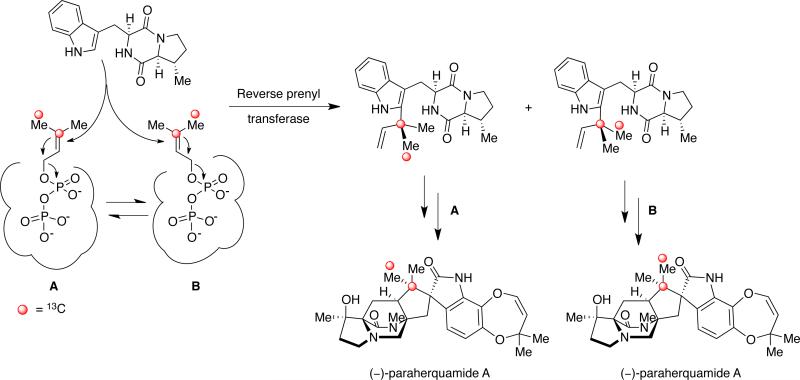
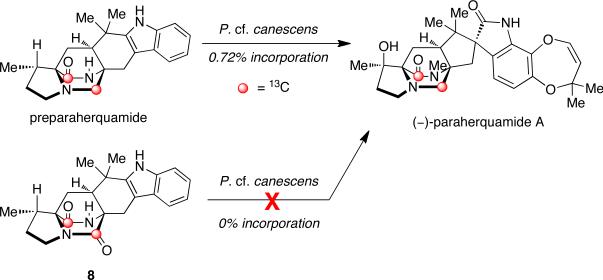
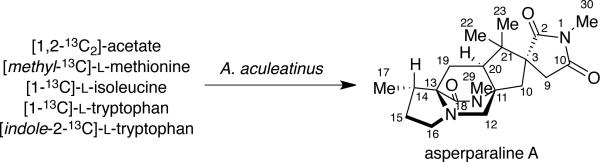
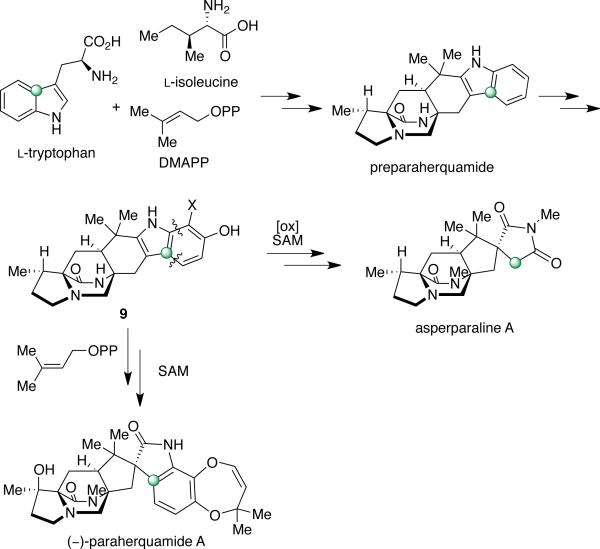
References
-
- Birch AJ, Wright JJ. J. Chem. Soc. Chem. Commun. 1969:644–645.
- Birch AJ, Wright JJ. Tetrahedron. 1970;26:2329–2344. - PubMed
- Birch AJ, Russel RA. Tetrahedron. 1972;28:2999–3008.
- Robbers JE, Straus JW, Tuite J. J. Nat. Prod. 1975;38:355–356. - PubMed
- Wilson BJ, Yang DTC, Harris TM. Appl. Microbiol. 1973;26:633–635. - PMC - PubMed
-
- Yamazaki M, Okuyama E, Kobayashi M, Inoue H. Tetrahedron Lett. 1981;22:135–136.
- Ondeyka JG, Goegelman RT, Schaeffer JM, Kelemen L, Zitano L. J. Antibiot. 1990;43:1375–1379. - PubMed
- Goegelman R, Ondeyka J. 1987 U. S. Patent 4,873,247.
- Lopez-Gresa MP, Gonzalez MC, Ciavatta L, Ayala I, Moya P, Primo J. J. Agric. Food Chem. 2006;54:2921–2925. - PubMed
- Blanchflower SE, Bank RM, Everett JR, Reading C. J. Antibiot. 1993;46:1355–1363. - PubMed
- Banks RM, Blanchflower SE, Everett JR, Manger BR, Reading C. J. Antibiot. 1997;50:840–846. - PubMed
- Blanchflower SE, Banks RM, Everett JR, Manger BR, Reading C. J. Antibiot. 1991;44:492–497. - PubMed
- Liesch JM, Wichmann CF. J. Antibiot. 1990;43:1380–1386. - PubMed
- Nielsen KF, Sumarah MW, Frisvad JC, Miller JD. J. Agric. Food Chem. 2006;54:3756–3763. - PubMed
- Ding Y, Gruschow S, Greshock TJ, Finefield JM, Sherman DH, Williams RM. J. Nat. Prod. 2008;71:1574–1578. - PMC - PubMed
- Antia BS, Aree T, Kasettrathat C, Wiyakrutta S, Ekpa OP, Ekpe UJ, Mahindol C, Ruchirawat S, Kittakop P. Phytochemistry. 2011;72:816–820. - PubMed
-
- Whyte AC, Gloer JB, Wicklow DT, Dowd PF. J. Nat. Prod. 1996;59:1093–1095. - PubMed
- Qian-Cutrone J, Krampitz KD, Shu Y-Z, Chang L-P, Lowe SE. 2001 U. S. Patent 6,291,461.
- Qian-Cutrone J, Huang S, Shu Y-Z, Vydas D, Fairchild C, Menendez A, Krampitz K, Dalterio R, Klohr SE, Gao Q. J. Am. Chem. Soc. 2002;124:14556–14557. - PubMed
- Fenical W, Jensen PR, Cheng XC. 2000 U. S. Patent 6,066,635.
- Sugie Y, Hirai H, Inagaki T, Ishiguro M, Kim Y-J, Kojima Y, Sakakibara T, Sakemi S, Sugiura A, Suzuki Y, Brennan L, Duignan J, Huang LH, Sutcliffe J, Kojima NJ. J. Antibiot. 2001;54:911–916. - PubMed
Publication types
MeSH terms
Substances
Grants and funding
LinkOut - more resources
Full Text Sources
Other Literature Sources
