. 2012 May 8;22(9):772-80.
doi: 10.1016/j.cub.2012.03.024. Epub 2012 Apr 12.

Ascaroside signaling is widely conserved among nematodes

Affiliations

Ascaroside signaling is widely conserved among nematodes

Andrea Choe et al. Curr Biol. .

Abstract

Background: Nematodes are among the most successful animals on earth and include important human pathogens, yet little is known about nematode pheromone systems. A group of small molecules called ascarosides has been found to mediate mate finding, aggregation, and developmental diapause in Caenorhabditis elegans, but it is unknown whether ascaroside signaling exists outside of the genus Caenorhabditis.

Results: To determine whether ascarosides are used as signaling molecules by other nematode species, we performed a mass spectrometry-based screen for ascarosides in secretions from a variety of both free-living and parasitic (plant, insect, and animal) nematodes. We found that most of the species analyzed, including nematodes from several different clades, produce species-specific ascaroside mixtures. In some cases, ascaroside biosynthesis patterns appear to correlate with phylogeny, whereas in other cases, biosynthesis seems to correlate with lifestyle and ecological niche. We further show that ascarosides mediate distinct nematode behaviors, such as retention, avoidance, and long-range attraction, and that different nematode species respond to distinct, but overlapping, sets of ascarosides.

Conclusions: Our findings indicate that nematodes utilize a conserved family of signaling molecules despite having evolved to occupy diverse ecologies. Their structural features and level of conservation are evocative of bacterial quorum sensing, where acyl homoserine lactones (AHLs) are both produced and sensed by many species of gram-negative bacteria. The identification of species-specific ascaroside profiles may enable pheromone-based approaches to interfere with reproduction and survival of parasitic nematodes, which are responsible for significant agricultural losses and many human diseases worldwide.


Figures

Figure 1
Figure 1. Structures, detection, and synthesis of ascarosides
(A) Structures of simple ascarosides (ascr) and indole ascarosides (icas) previously identified from C. elegans. In some cases, the (ω-1)-oxygenated ascrs are accompanied by their (ω)-oxygenation isomers (oscr). For ascaroside nomenclature, see www.smid-db.org. (B) HPLC-MS analysis of short and medium chain ascarosides from free-living C. elegans (mixed-stage), insect parasitic S. glaseri (adult), and rat parasitic N. brasiliensis (adult). Analysis of C. elegans exudate showed the known ascarosides (ascr#1, #3, #7, #9, #10, #12, #14, and #18), the indole ascarosides, icas#3, #9, as well as several (ω)-oxygenated isomers (oscr#9, #10, #18). The highly polar ascr#5 eluted outside of the shown retention time range. Cross species comparison of HPLC-MS data revealed that ascarosides are also found in many other nematode species, including S. glaseri and N. brasiliensis (peaks representing compounds also abundant in C. elegans shown in blue). (C) HPLC-MS identification of medium and long chain ascarosides in P. strongyloides (mixed-stage) and H. bacteriophora (adult). Ascr#18 (blue) is also produced in significant amounts by C. elegans, whereas longer chain homologs (red peaks) are abundantly produced by P. strongyloides and H. bacteriophora, but not wild-type C. elegans. (D) Synthesis of (ω)-oxygenated ascarosides, oscr#9 and oscr#10. See also Figure S1.
Figure 2
Figure 2
Ascarosides are produced by a wide range of nematode species. The shown plot summarizes the results from our HPLC-MS-based screen of worm exudate samples (see also Figure S2). Colors in this heatmap represent relative abundance of ascarosides detected by HPLC-MS, as indicated in the bar diagram on the right. As an example, of the ascarosides detected in S. glaseri infective juveniles, the total was composed of 5.7% ascr#11, 92.2% ascr#9, 2.1% ascr#12, and 0.1% ascr#10. The phylogenetic tree was constructed by comparison of small subunit ribosomal DNA (SSU rDNA) sequences obtained from GenBank. *Clade designation adapted from Holterman, M. et al. (2006) [25].
Figure 3
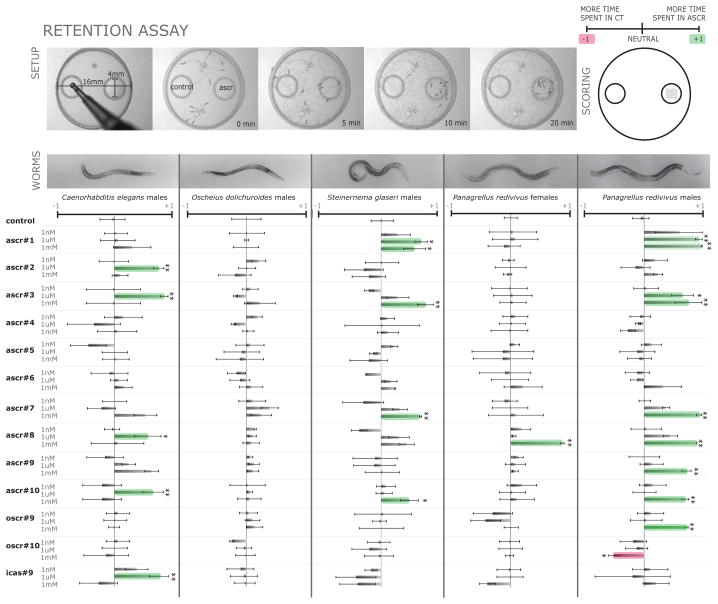
Figure 3. Species-specific behavioral responses to ascarosides
Several nematode species were scored for their response to areas conditioned with different amounts of synthesized ascarosides (0.6 fmol, pmol, and nmol) per scoring area. Their occupancy in the conditioned region was compared to occupancy in the control region for 20 minutes. Experiments in which nematodes spent significantly more time in regions conditioned with ascaroside are highlighted in green. Experiments in which nematodes spent significantly more time in control regions are highlighted in red, indicating avoidance of the ascaroside. Error bars are S.D. Statistical significance for each value was calculated in comparison to the response to water, shown first in each set. (One-factor ANOVA followed by Dunnett’s post-test, * p < 0.05, ** p < 0.01). See also Figure S3.
Figure 4
Figure 4
Attraction of C. elegans males to other nematode species and selected synthetic ascarosides. (A) Long-range attraction of C. elegans males to conspecific hermaphrodites was established by scoring chemotaxis to a hermaphrodite or ascaroside-conditioned point source on a 10 cm agar plate. Hermaphrodites were suspended in M9 buffer and placed within a copper cylinder on the agar plate, for 6 hours before they were removed and the paralyzing agent sodium azide was added. The same was done with an M9 buffer control in a copper cylinder, on the opposite side. C. elegans males were placed in the center of the plate and allowed to wander until they became paralyzed in either spot. We then calculated the attraction index (adapted from Bargmann, et al. [47]), comparing numbers of worms that became paralyzed in the control vs. cue region. (B) C. elegans males can detect and chemotax towards point sources conditioned by C. elegans hermaphrodites, as well as point sources of ascr#2, ascr#3, but not ascr#8. Error bars are S.D. Statistical significance for each value was calculated in comparison to the control, shown in Figure 4B. (C) C. elegans males are attracted to a point source conditioned by 50 conspecific hermaphrodites. They demonstrate partial attraction to P. redivivus females, but not to S. carpocapsae, P. pacificus, or P. strongyloides females/hermaphrodites. (One-factor ANOVA followed by Dunnett’s post-test, * p < 0.05, ** p < 0.01).
Figure 5
Figure 5
Similar assembly of signaling molecules in nematodes and bacteria N-acyl homoserine lactones (AHLs) are a family of small molecules that mediate bacterial quorum sensing. AHLs are based on a homoserine lactone and feature species-specific variations in the N-acyl chain [38]. Ascarosides are assembled in a very similar fashion, using the dideoxysugar ascarylose as scaffold to which variable lipid chains are attached [21]. Both groups of signaling molecules play significant roles in mediating survival strategies of the producing organisms.

Comment in

References

    1. Platt HM. Foreword. In: Lorenzen S, editor. The phylogenetic systematics of free-living nematodes. London, U.K: The Ray Society; 1994. pp. i–ii.
    1. Nussbaumer AD, Bright M, Baranyi C, Beisser CJ, Ott JA. Attachment mechanism in a highly specific association between ectosymbiotic bacteria and marine nematodes. Aquatic Microbial Ecology. 2004;34:239–246.
    1. Andrássy I. In: Evolution as a basis for the systematization of nematodes. Andrássy I, editor. University of California; Pitman: 1976.
    1. Tietjen JH. Ecology of deep-sea nematodes from the Puerto Rico Trench area and Hatteras Abyssal Plain. Deep-Sea Research. 1989;36:1579–1594.
    1. Aben-Athar J. Mechanism producing elephantiasis in filariasis (F. wucheria and F. bancrofti) Rev Bras Med. 1951;2:89–94. - PubMed

Publication types

LinkOut - more resources