


Endometrial tumorigenesis in Pten(+/-) mice is independent of coexistence of estrogen and estrogen receptor α
- PMID: 22503752
- PMCID: PMC3378854
- DOI: 10.1016/j.ajpath.2012.03.006
Endometrial tumorigenesis in Pten(+/-) mice is independent of coexistence of estrogen and estrogen receptor α
Abstract
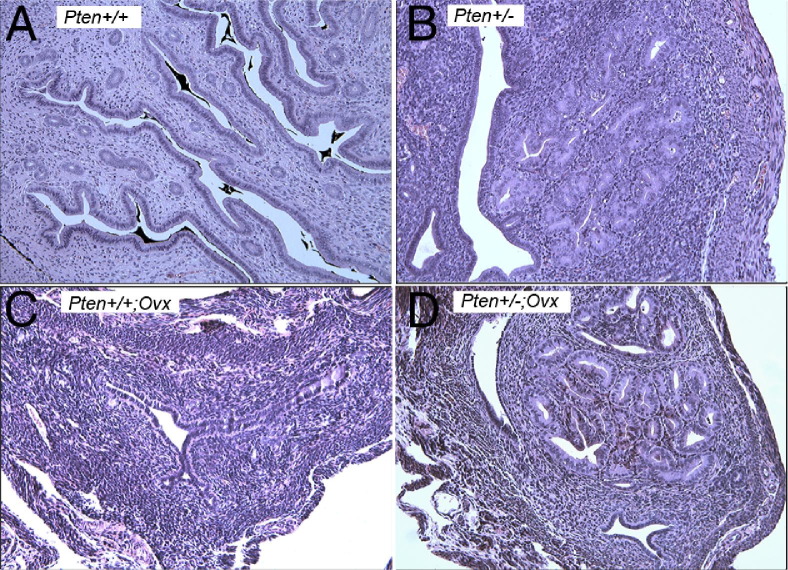
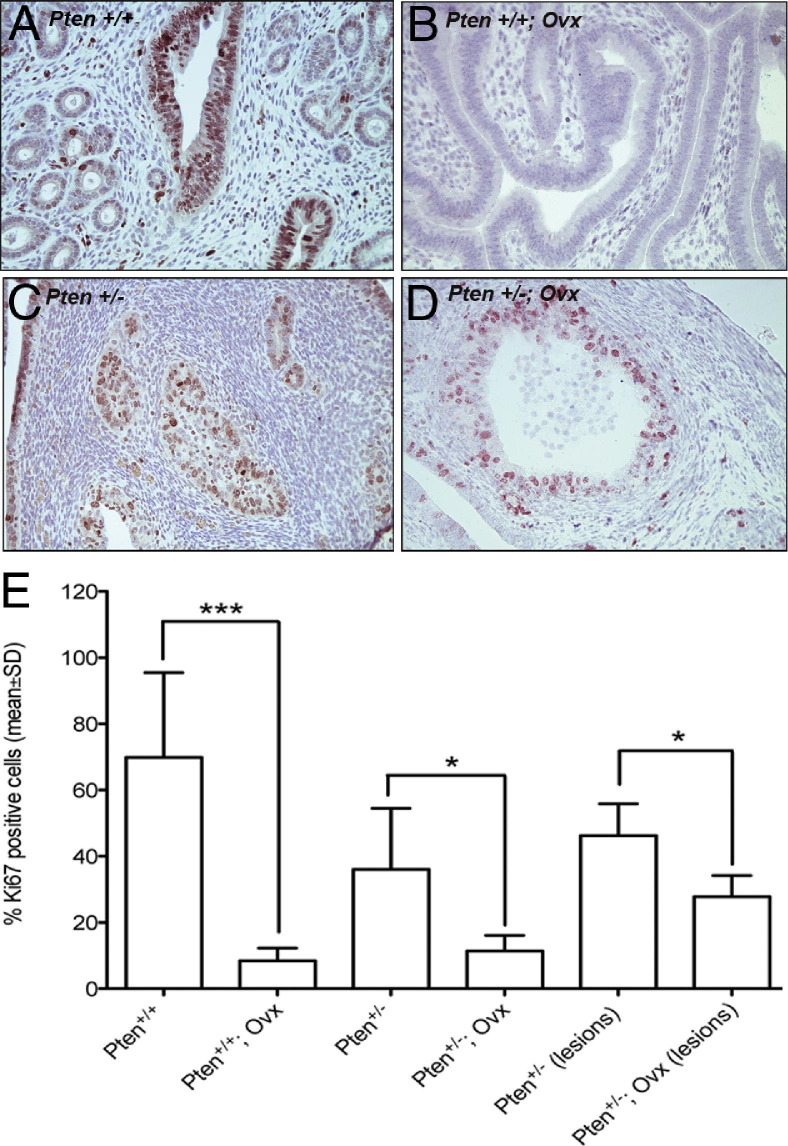
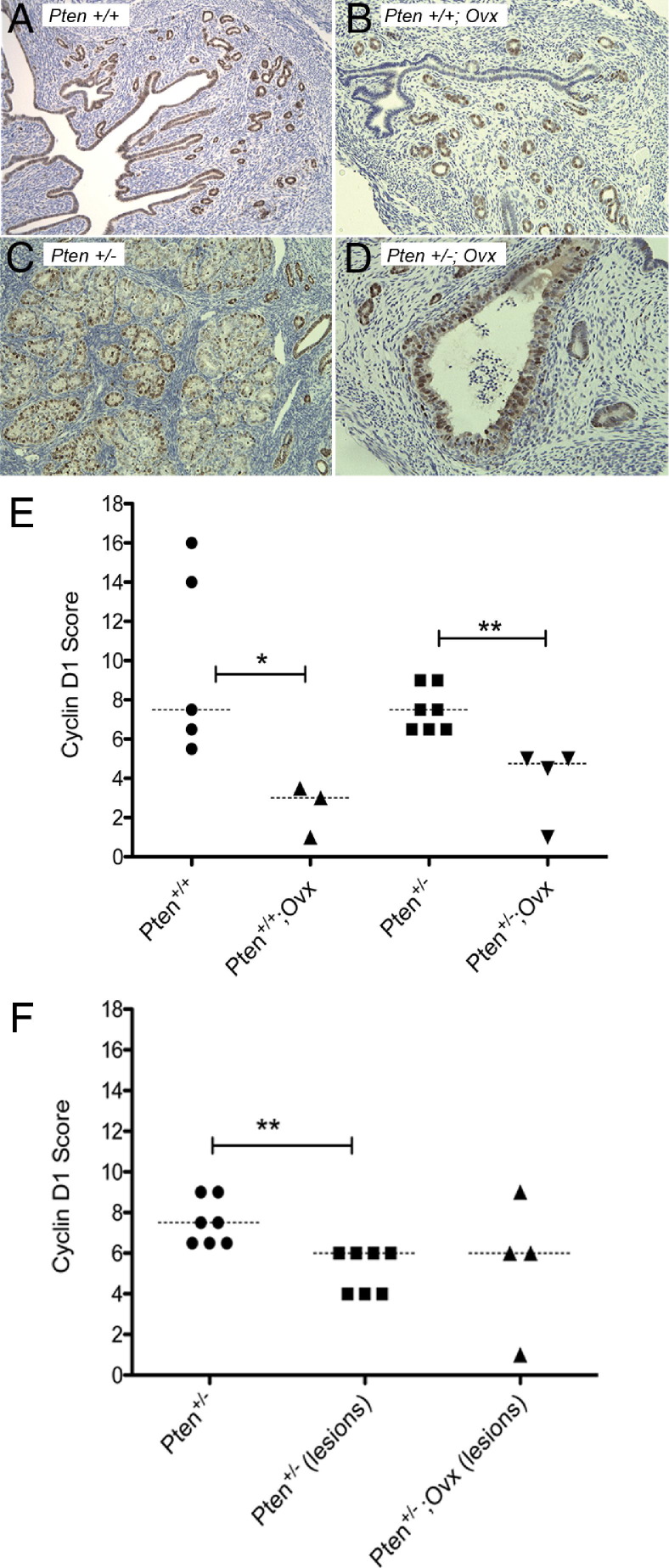
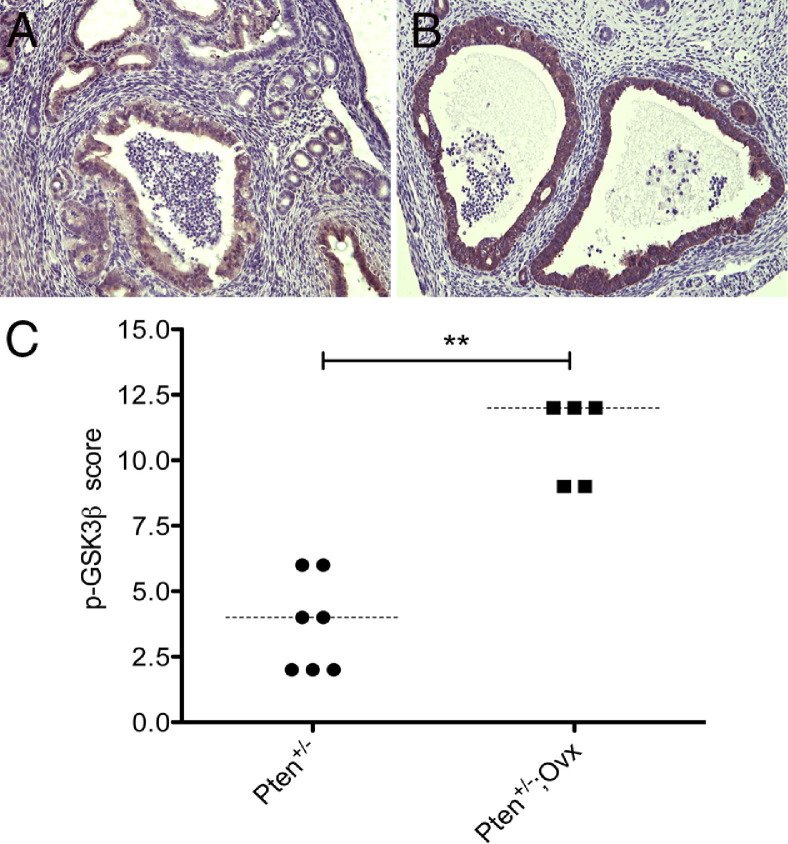
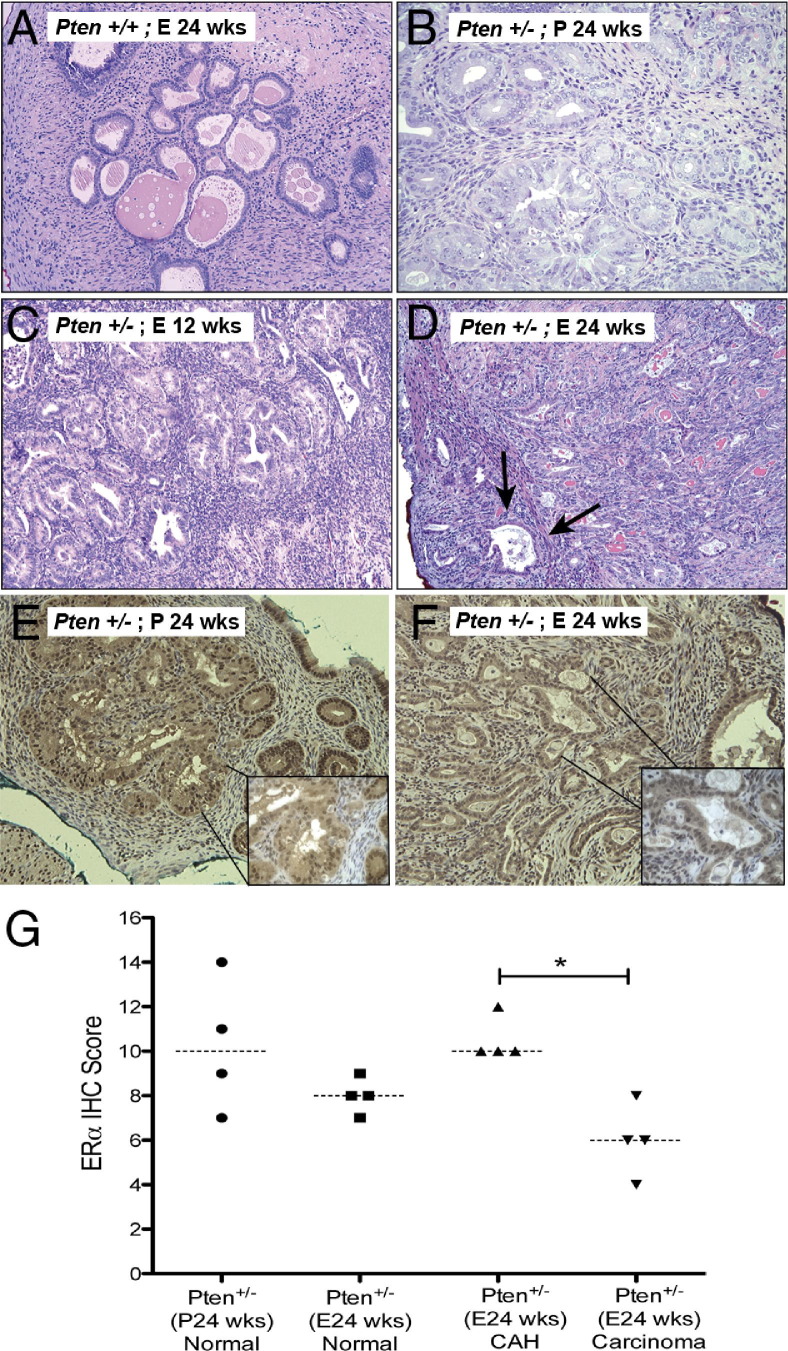
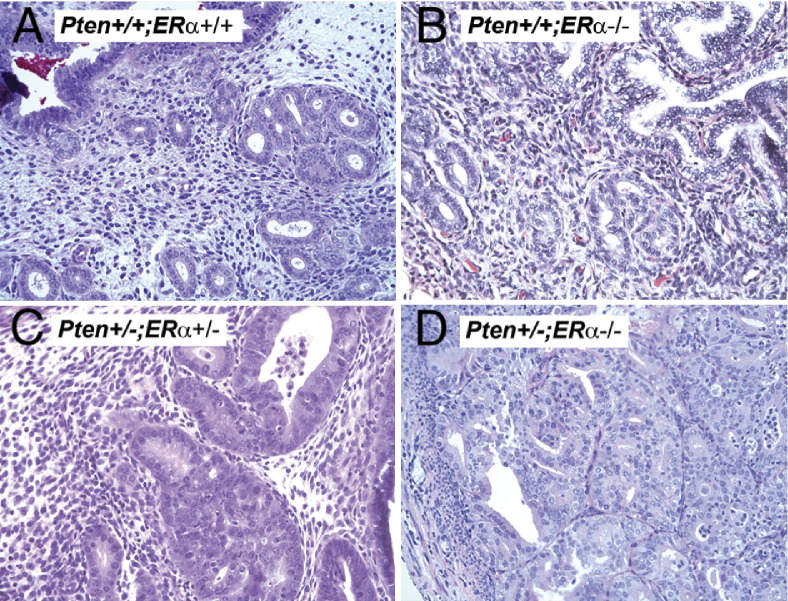
Numerous studies support the role for mutations in the phosphatase and tensin homologue (PTEN) tumor suppressor gene and unopposed estrogen stimulation in the pathogenesis of uterine endometrioid carcinoma. However, the relation between PTEN signaling and estrogen/estrogen receptor in endometrial tumorigenesis remains unresolved. We used genetically engineered mice as a model to address this relation. Mice with a single deleted Pten allele (Pten(+/-)) spontaneously develop complex atypical hyperplasia and ~20% develop endometrial cancer. To determine the effect of removing endogenous estrogen, we performed oophorectomies on Pten(+/-) mice. Although there was a reduction in the number and severity of hyperplastic lesions, the endometrial phenotype persisted, suggesting that Pten mutation, independent of estrogen, can initiate the development of complex atypical hyperplasia. To recapitulate the situation in women with unopposed estrogen, we implanted 17β-estradiol pellets in adult female Pten heterozygous mice, resulting in increased carcinoma incidence. Because studies have shown that estrogen largely acts on the endometrium via estrogen receptor ERα, we generated Pten(+/-)ERα(-/-) mice. Strikingly, 88.9% of Pten(+/-)ERα(-/-) mice developed endometrial hyperplasia/carcinoma. Furthermore, Pten(+/-)ERα(-/-) mice showed a higher incidence of in situ and invasive carcinoma, suggesting that endometrial tumorigenesis can progress in the absence of ERα. Thus, the relation between Pten alterations and estrogen signaling in the development of endometrial carcinoma is complex; the results presented herein have important implications for the treatment of endometrial hyperplasia and carcinoma in women.
Copyright © 2012 American Society for Investigative Pathology. Published by Elsevier Inc. All rights reserved.
Figures
References
-
- Di Cristofano A., Ellenson L.H. Endometrial carcinoma. Annu Rev Pathol. 2007;2:57–85. - PubMed
-
- Risinger J.I., Hayes A.K., Berchuck A., Barrett J.C. PTEN/MMAC1 mutations in endometrial cancers. Cancer Res. 1997;57:4736–4738. - PubMed
-
- Tashiro H., Blazes M.S., Wu R., Cho K.R., Bose S., Wang S.I., Li J., Parsons R., Ellenson L.H. Mutations in PTEN are frequent in endometrial carcinoma but rare in other common gynecological malignancies. Cancer Res. 1997;57:3935–3940. - PubMed
-
- Levine R.L., Cargile C.B., Blazes M.S., van Rees B., Kurman R.J., Ellenson L.H. PTEN mutations and microsatellite instability in complex atypical hyperplasia, a precursor lesion to uterine endometrioid carcinoma. Cancer Res. 1998;58:3254–3258. - PubMed
-
- Maxwell G.L., Risinger J.I., Gumbs C., Shaw H., Bentley R.C., Barrett J.C., Berchuck A., Futreal P.A. Mutation of the PTEN tumor suppressor gene in endometrial hyperplasias. Cancer Res. 1998;58:2500–2503. - PubMed
Publication types
MeSH terms
Substances
Grants and funding
LinkOut - more resources
Full Text Sources
Molecular Biology Databases
Research Materials
