. 2012 Jul;53(7):1254-67.
doi: 10.1194/jlr.M021725. Epub 2012 Apr 13.

Lack of "immunological fitness" during fasting in metabolically challenged animals

Affiliations

Lack of "immunological fitness" during fasting in metabolically challenged animals

Ingrid Wernstedt Asterholm et al. J Lipid Res. 2012 Jul.

Abstract

Subclinical inflammation is frequently associated with obesity. Here, we aim to better define the acute inflammatory response during fasting. To do so, we analyzed representatives of immune-related proteins in circulation and in tissues as potential markers for adipose tissue inflammation and modulation of the immune system. Lipopolysaccharide treatment or high-fat diet led to an increase in circulating serum amyloid (SAA) and α1-acid glycoprotein (AGP), whereas adipsin levels were reduced. Mouse models that are protected against diet-induced challenges, such as adiponectin-overexpressing animals or mice treated with PPARγ agonists, displayed lower SAA levels and higher adip-sin levels. An oral lipid gavage, as well as prolonged fasting, increased circulating SAA concurrent with the elevation of free FA levels. Moreover, prolonged fasting was associated with an increased number of Mac2-positive crown-like structures, an increased capillary permeability, and an increase in several M2-type macrophage markers in adipose tissue. This fasting-induced increase in SAA and M2-type macrophage markers was impaired in metabolically challenged animals. These data suggest that metabolic inflexibility is associated with a lack of "immunological fitness."


Figures
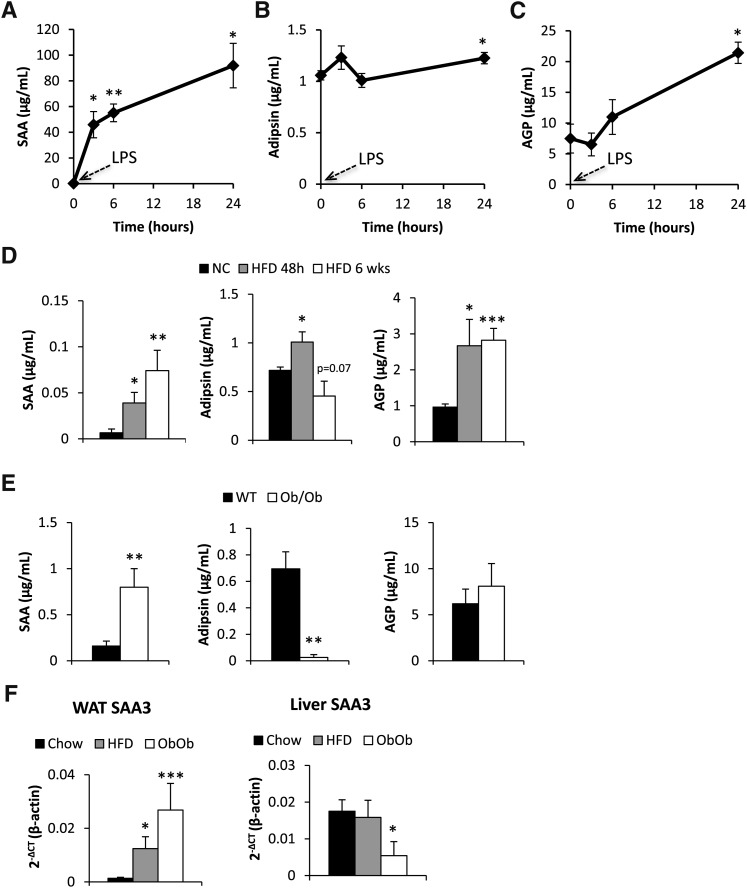
Fig. 1.
Fig. 1.
Circulating serum SAA, adipsin, and AGP levels in response to 0.1 mg/kg LPS i.p. (A–C) or high-fat diet for 48 h or for 6 weeks (D), as well as in genetically obese ob/ob mice (E). SAA3 mRNA levels in gonadal adipose tissue (WAT) and in liver from chow-fed, 8 weeks high-fat diet-fed and ob/ob mice (F). [* Significant difference as compared with baseline(A–C), normal chow (D, F) or WT (E)].
Fig. 2.
Fig. 2.
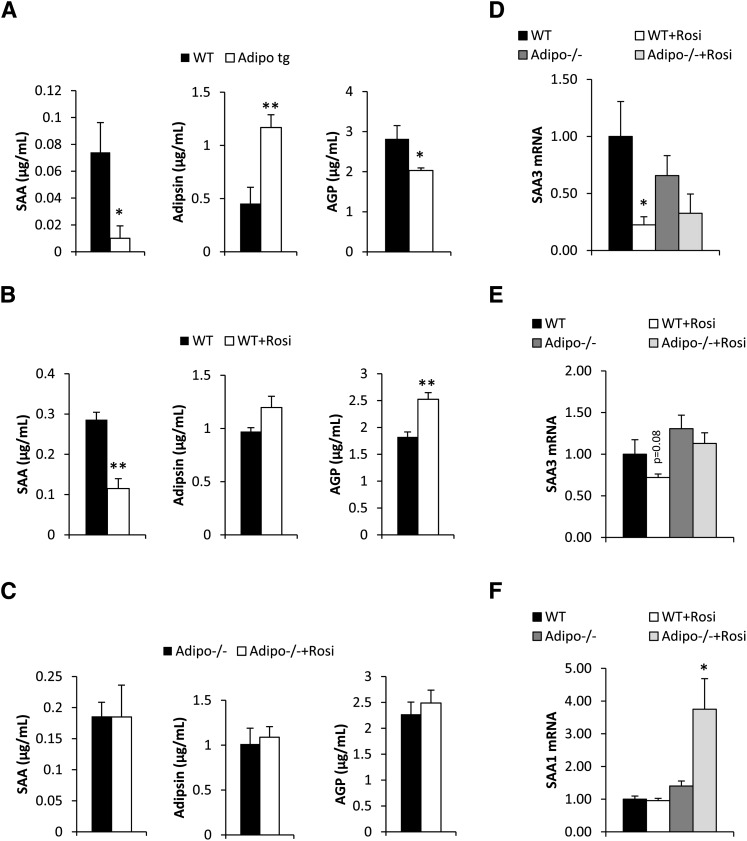
Circulating serum SAA, adipsin, and AGP levels in high-fat diet-fed wild-type and adipo tg mice (A), in wild-type (B), and adipo−/− mice (C) on high-fat high-sucrose diet with or without rosiglitazone treatment (11 days of treatment) and inguinal adipose SAA3 mRNA (D), liver SAA1 (E), and liver SAA3 expression (F) in the same mice as used in panels B and C (* significant difference as compared with WT).
Fig. 3.
Fig. 3.
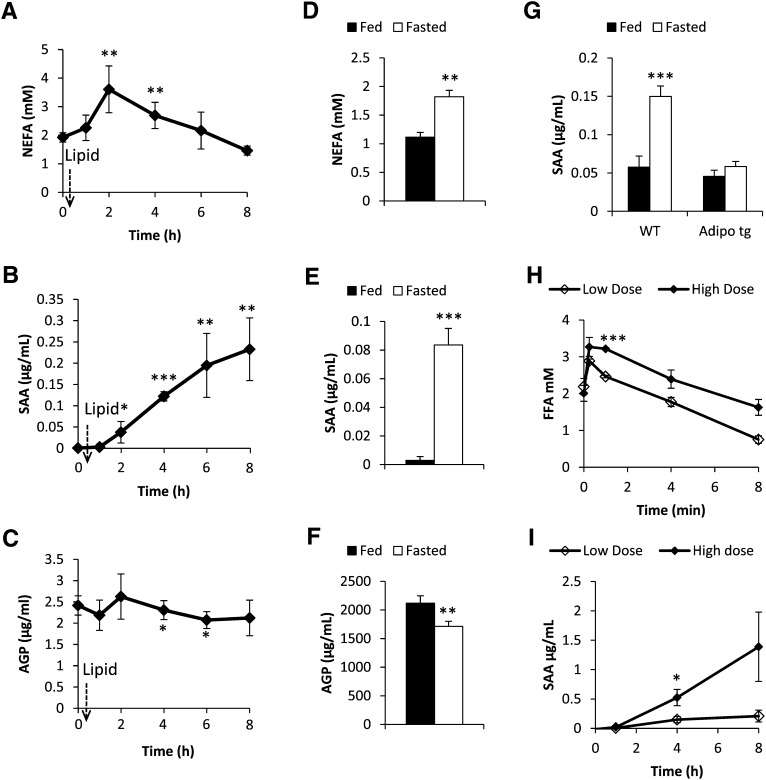
Circulating serum FFA, SAA, and AGP levels in wild-type mice in response to an oral load of lipids (A, B, C) or in response to a 24 h fast (D, E, F). Serum SAA in fed and fasted wild-type mice in comparison to adiponectin-overexpressing mice (G). H, I: Circulating FFA and SAA levels, respectively, in response to a low dose (0.1 mg/kg i.p.) and a high dose (1.0 mg/kg i.p.) of β3AR-agonist. [* Significant difference as composed with baseline (A–C), fed (D–G) or low dose (H–I)].
Fig. 4.
Fig. 4.
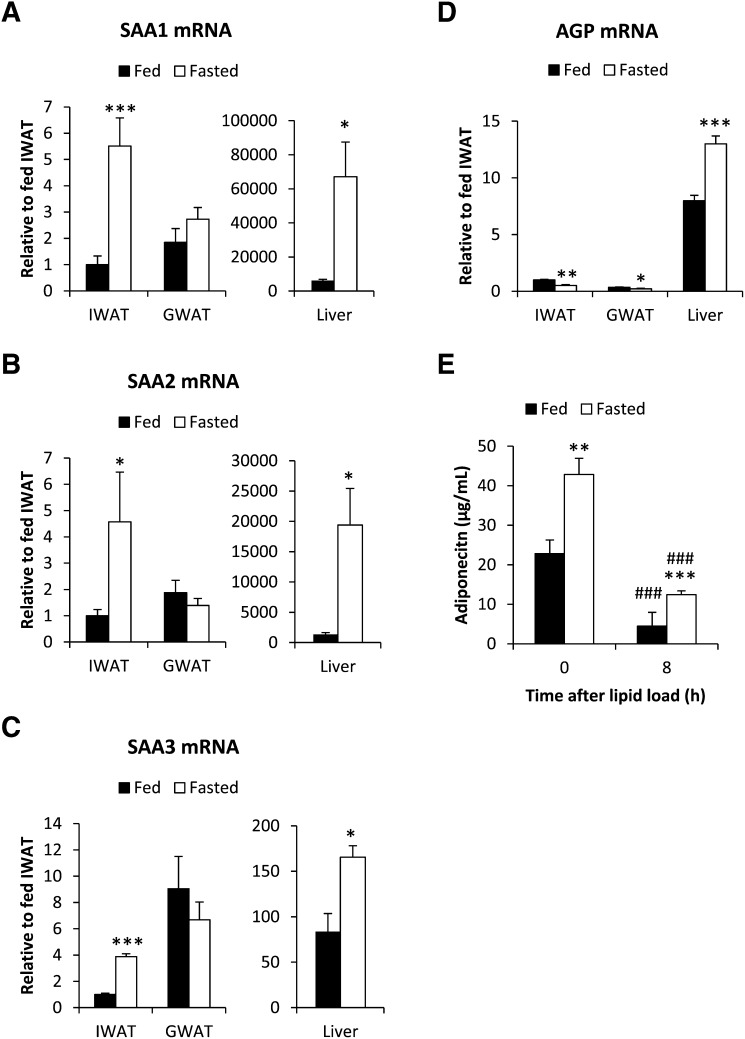
SAA1 (A), SAA2 (B), SAA3 (C), and AGP (D) mRNA expression in inguinal adipose tissue (IWAT), gonadal adipose tissue (GWAT), and liver of fed and 24 h-fasted wild-type FVB mice. E: Circulating adiponectin levels in fed and overnight-fasted wild-type FVB mice before and after an oral lipid load. (* Significant difference as compared with fed.)
Fig. 5.
Fig. 5.
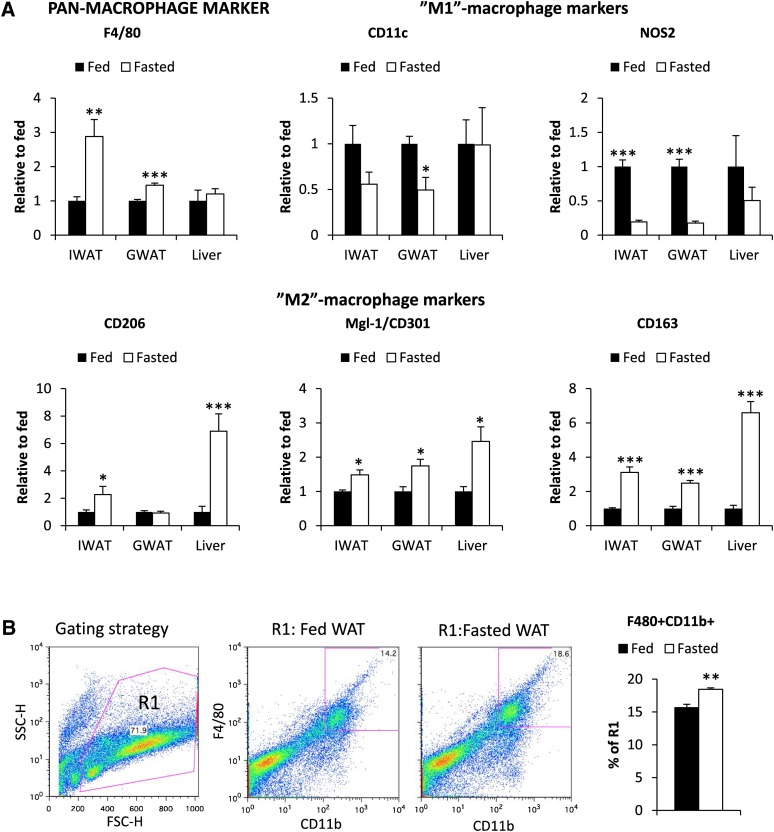
Expression of macrophage mRNA markers in inguinal adipose tissue (IWAT), gonadal adipose tissue (GWAT), and livers of fed and 24 h-fasted wild-type FVB mice (A). Analysis of the relative abundance of F480+CD11b+ cells of R1 (live cells) in the stromal vascular fraction from pooled IWAT and GWAT from fed and overnight-fasted wild-type FVB mice (B). (* Significant difference as compared with fed.)
Fig.6.
Fig.6.
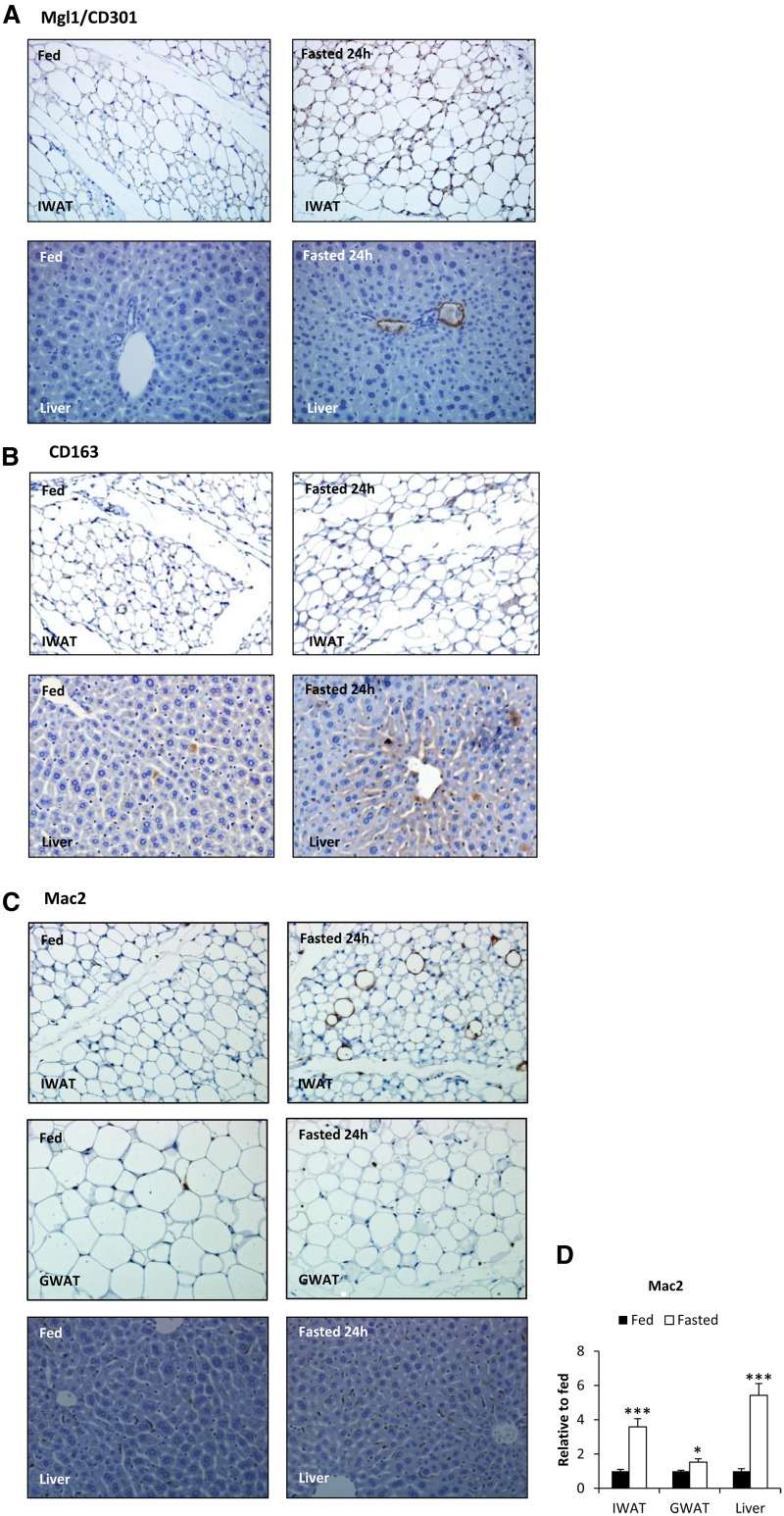
Immunohistochemical analyses of Mgl1/CD301 (A) and CD163 (B) expression in inguinal adipose tissue (IWAT) and livers of fed and 24 h-fasted wild-type FVB mice. Immunohistochemical analyses of Mac2 (C) expression in inguinal adipose tissue (IWAT), gonadal adipose tissue (GWAT), and in livers of fed and 24 h-fasted wild-type FVB mice. D: Mac2 mRNA expression levels from the same animals.
Fig. 7.
Fig. 7.
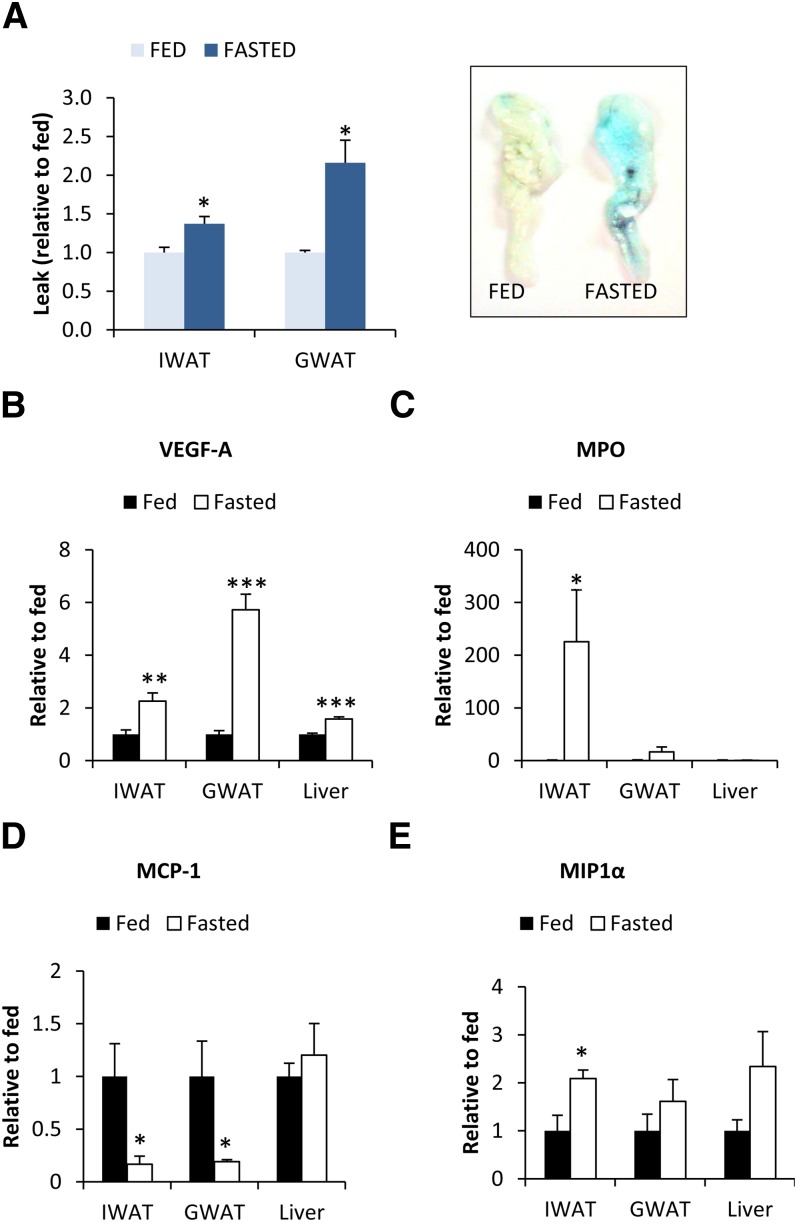
Differences in vascular permeability as judged by the extracted amount of Evans Blue inguinal adipose tissue (IWAT) and gonadal adipose tissue (GWAT) after the tail vein administration of the dye to fed and fasted wild-type FVB mice (A). mRNA expression of VEGF-A, the neutrophil marker MPO, and the chemoattractants MCP-1 and MIP-1α in inguinal adipose tissue (IWAT), gonadal adipose tissue (GWAT) and livers of fed and 24 h-fasted wild-type FVB mice (B–E). (* Significant difference as compared with fed.)
Fig. 8.
Fig. 8.
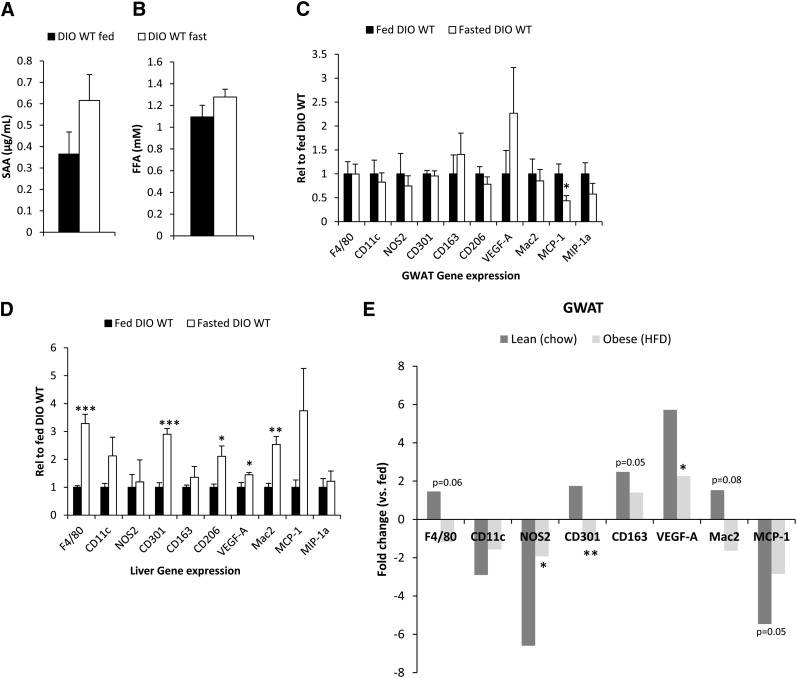
Differences in SAA (A) and FFA levels (B) in fed and fasted animals after an 8 week HFD. Changes in critical macrophage markers in gonadal fat (C) and liver (D). A direct comparison between fasting-induced changes in adipose tissue is shown in E. [* Signifi cant difference as compared with fed (A-D) or lean (E).]

References

    1. Sun K., Kusminski C. M., Scherer P. E. 2011. Adipose tissue remodeling and obesity. J. Clin. Invest. 121: 2094–2101 - PMC - PubMed
    1. Unger R. H., Scherer P. E. 2010. Gluttony, sloth and the metabolic syndrome: a roadmap to lipotoxicity. Trends Endocrinol. Metab. 21: 345–352 - PMC - PubMed
    1. Holland W. L., Summers S. A. 2008. Sphingolipids, insulin resistance, and metabolic disease: new insights from in vivo manipulation of sphingolipid metabolism. Endocr. Rev. 29: 381–402 - PMC - PubMed
    1. Holland W. L., Miller R. A., Wang Z. V., Sun K., Barth B. M., Bui H. H., Davis K. E., Bikman B. T., Halberg N., Rutkowski J. M., et al. 2011. Receptor-mediated activation of ceramidase activity ini-tiates the pleiotropic actions of adiponectin. Nat. Med. 17: 55–63 - PMC - PubMed
    1. Holland W. L., Brozinick J. T., Wang L. P., Hawkins E. D., Sargent K. M., Liu Y., Narra K., Hoehn K. L., Knotts T. A., Siesky A., et al. 2007. Inhibition of ceramide synthesis ameliorates glucocorticoid-, saturated-fat-, and obesity-induced insulin resistance. Cell Metab. 5: 167–179 - PubMed

Publication types

LinkOut - more resources