


Searching for cellular partners of hantaviral nonstructural protein NSs: Y2H screening of mouse cDNA library and analysis of cellular interactome
- PMID: 22506017
- PMCID: PMC3323627
- DOI: 10.1371/journal.pone.0034307
Searching for cellular partners of hantaviral nonstructural protein NSs: Y2H screening of mouse cDNA library and analysis of cellular interactome
Abstract
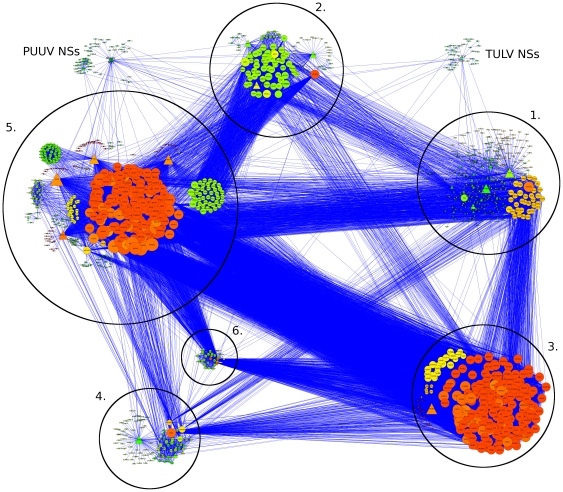
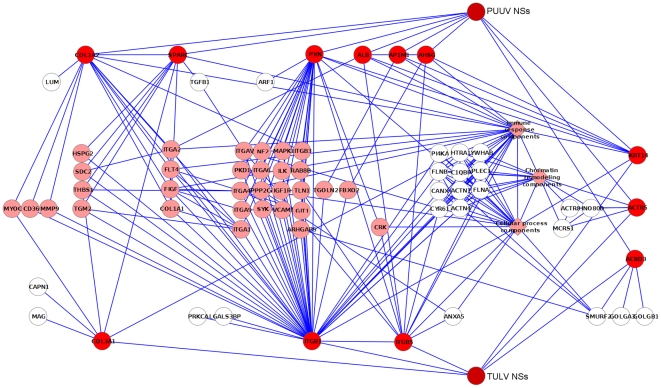
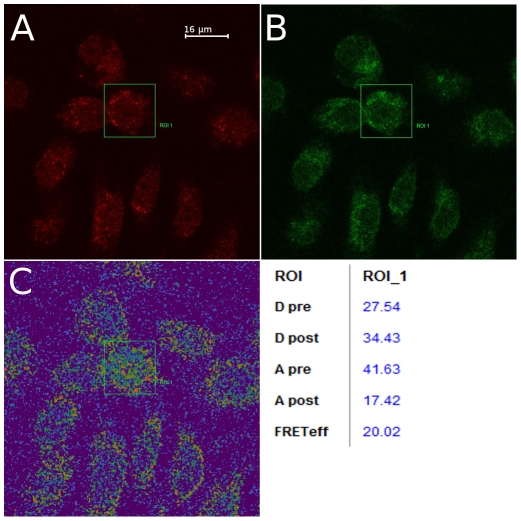
Hantaviruses (Bunyaviridae) are negative-strand RNA viruses with a tripartite genome. The small (S) segment encodes the nucleocapsid protein and, in some hantaviruses, also the nonstructural protein (NSs). The aim of this study was to find potential cellular partners for the hantaviral NSs protein. Toward this aim, yeast two-hybrid (Y2H) screening of mouse cDNA library was performed followed by a search for potential NSs protein counterparts via analyzing a cellular interactome. The resulting interaction network was shown to form logical, clustered structures. Furthermore, several potential binding partners for the NSs protein, for instance ACBD3, were identified and, to prove the principle, interaction between NSs and ACBD3 proteins was demonstrated biochemically.
Conflict of interest statement
Figures
References
-
- Plyusnin A, Beaty BJ, Elliott RM, Goldbach R, Kormelink R, et al. Bunyaviridae. In Virus taxonomy: classification and nomenclature of viruses. Ninth Report of the International Committee on Taxonomy of Viruses. San Diego: Elsevier; 2011. pp. 693–709.
-
- Wilson DE, Reeder DM. Mammal Species of the World. A Taxonomic and Geographic Reference (3rd ed) Baltimore: Johns Hopkins University Press; 2005. 2000
-
- Lundkvist Å, Plyusnin A. Molecular epidemiology of hantavirus infections. In: Leitner T, editor. The Molecular Epidemiology of Human Viruses. Boston: Kluwer Academic Publishers; 2002. pp. 351–384.
-
- Vaheri A, Mills JN, Spiropoulou CF, Hjelle B. Hantaviruses. In: Palmer SR, Lord Soulsby, Torgerson PR, Brown DWG, editors. Oxford Textbook of Zoonoses - Biology, Clinical Practice and Public Health Control 2nd Edition. Oxford: Oxford University Press; 2011. pp. 307–322.
-
- Plyusnin A. Genetics of hantaviruses: implications to taxonomy. Arch Virol. 2002;147:665–682. - PubMed
Publication types
MeSH terms
Substances
LinkOut - more resources
Full Text Sources
