


Factors related to voluntary parental decision-making in pediatric oncology
- PMID: 22508918
- PMCID: PMC3340596
- DOI: 10.1542/peds.2011-3056
Factors related to voluntary parental decision-making in pediatric oncology
Abstract
Objective: The aim of the current study was to examine demographic and contextual correlates of voluntariness in parents making research or treatment decisions for their children with cancer.
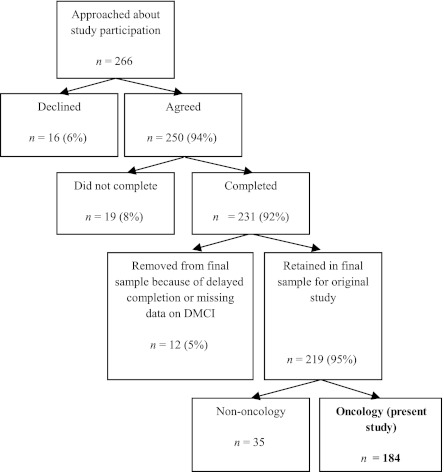
Methods: Participants included 184 parents of children with cancer who made a decision about enrolling the child in a research or treatment protocol within the previous 10 days. Parents completed questionnaires that assessed voluntariness, external influence by others, concern that the child's care would be negatively affected if the parent did not agree, time pressure, information adequacy, and demographics.
Results: Lower perceived voluntariness was associated with lower education, male gender, minority status, and not having previous experience with a similar decision. Parents who reported lower voluntariness also perceived more external influence and time pressure, had more concern about the child's care being negatively affected if they declined, and perceived that they had either too much or not enough information about the decision. In a multivariate regression, education, minority status, gender, external influence, and too little information remained significantly associated with voluntariness.
Conclusions: Several groups of parents appear to be at risk for decreased voluntariness when making research or treatment decisions for their seriously ill children, including fathers, nonwhite parents, and those with less education. Parental voluntariness may be enhanced by helping parents to mitigate the effects of unhelpful or unwanted influences by others and ensuring that their information needs are met.
References
-
- Kodish E, Eder M, Noll RB, et al. Communication of randomization in childhood leukemia trials. JAMA. 2004;291(4):470–475 - PubMed
-
- Miller VA, Drotar D, Burant C, Kodish E. Clinician-parent communication during informed consent for pediatric leukemia trials. J Pediatr Psychol. 2005;30(3):219–229 - PubMed
-
- Tait AR, Voepel-Lewis T, Malviya S. Do they understand? (part I): parental consent for children participating in clinical anesthesia and surgery research. Anesthesiology. 2003;98(3):603–608 - PubMed
-
- Zupancic JA, Gillie P, Streiner DL, Watts JL, Schmidt B. Determinants of parental authorization for involvement of newborn infants in clinical trials. Pediatrics. 1997;99(1). Available at: www.pediatrics.org/cgi/content/full/99/1/e6. - PubMed
-
- Rothmier JD, Lasley MV, Shapiro GG. Factors influencing parental consent in pediatric clinical research. Pediatrics. 2003;111(5 Pt 1):1037–1041 - PubMed
Publication types
MeSH terms
Grants and funding
LinkOut - more resources
Full Text Sources
Miscellaneous
