


Genetic, molecular, and biochemical basis of fungal tropolone biosynthesis
- PMID: 22508998
- PMCID: PMC3356636
- DOI: 10.1073/pnas.1201469109
Genetic, molecular, and biochemical basis of fungal tropolone biosynthesis
Abstract
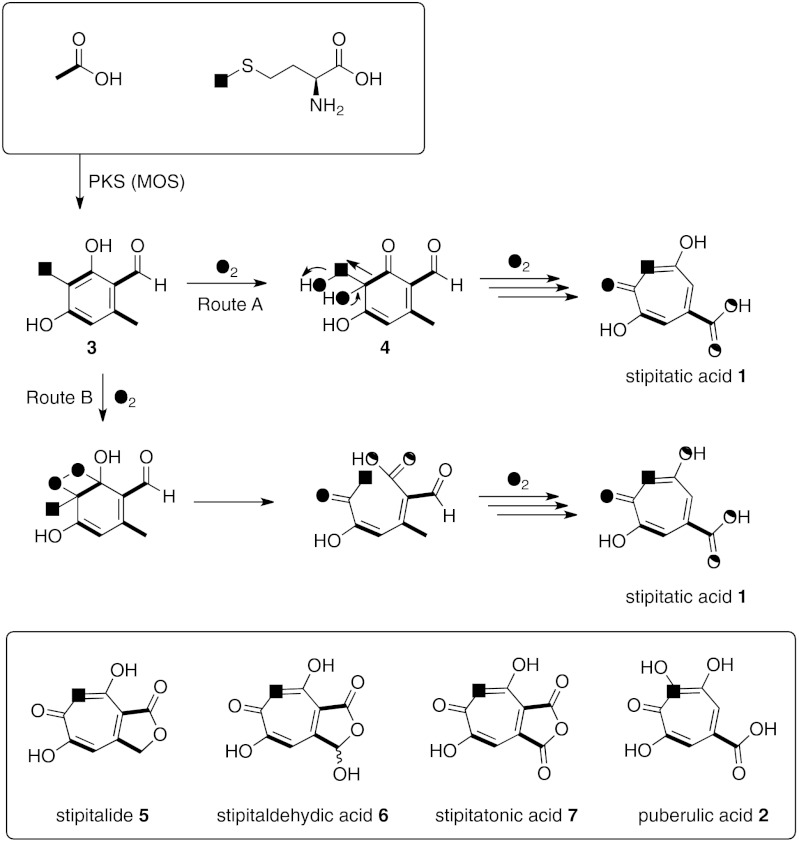
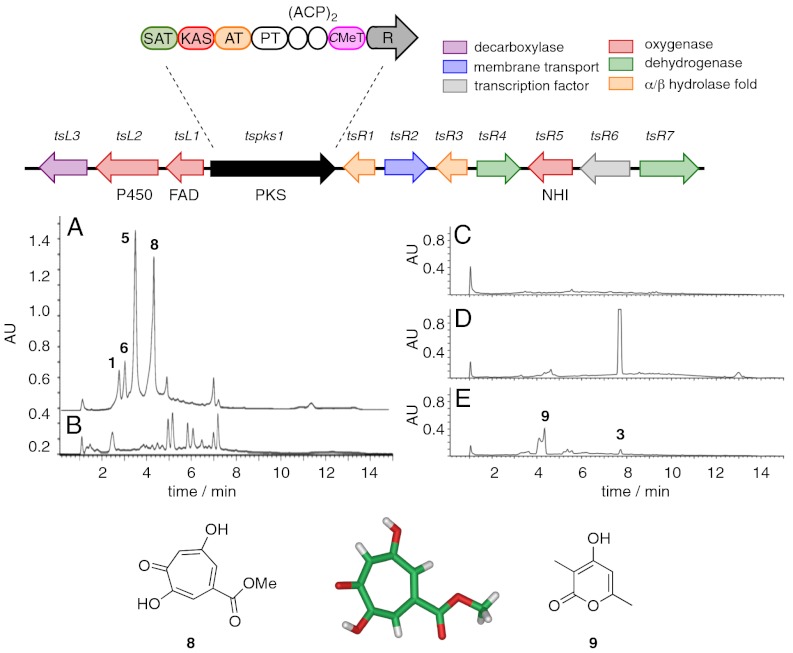
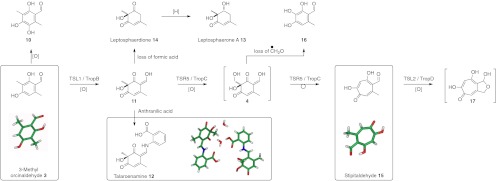
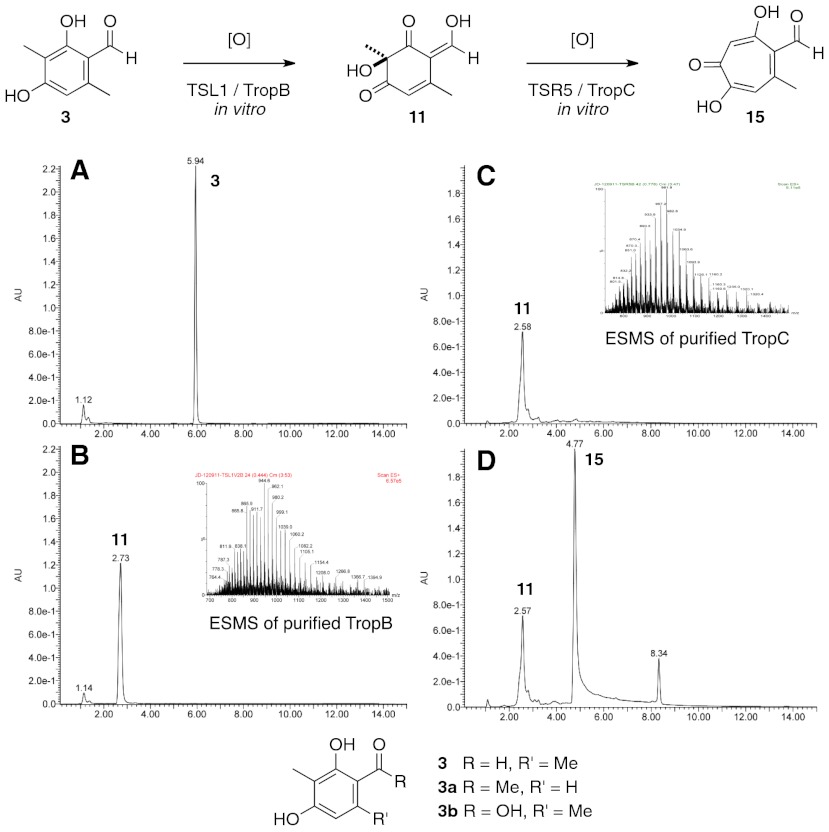
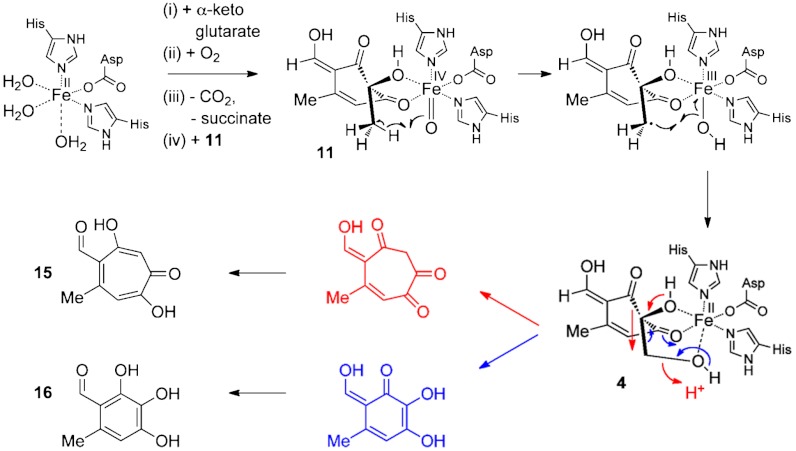
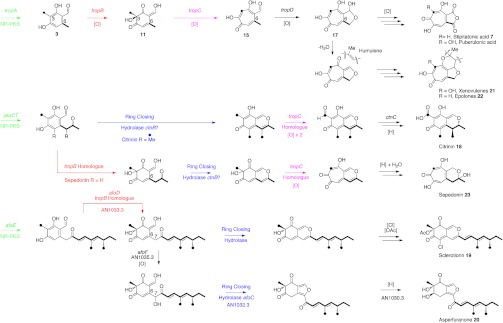
A gene cluster encoding the biosynthesis of the fungal tropolone stipitatic acid was discovered in Talaromyces stipitatus (Penicillium stipitatum) and investigated by targeted gene knockout. A minimum of three genes are required to form the tropolone nucleus: tropA encodes a nonreducing polyketide synthase which releases 3-methylorcinaldehyde; tropB encodes a FAD-dependent monooxygenase which dearomatizes 3-methylorcinaldehyde via hydroxylation at C-3; and tropC encodes a non-heme Fe(II)-dependent dioxygenase which catalyzes the oxidative ring expansion to the tropolone nucleus via hydroxylation of the 3-methyl group. The tropA gene was characterized by heterologous expression in Aspergillus oryzae, whereas tropB and tropC were successfully expressed in Escherichia coli and the purified TropB and TropC proteins converted 3-methylorcinaldehyde to a tropolone in vitro. Finally, knockout of the tropD gene, encoding a cytochrome P450 monooxygenase, indicated its place as the next gene in the pathway, probably responsible for hydroxylation of the 6-methyl group. Comparison of the T. stipitatus tropolone biosynthetic cluster with other known gene clusters allows clarification of important steps during the biosynthesis of other fungal compounds including the xenovulenes, citrinin, sepedonin, sclerotiorin, and asperfuranone.
Conflict of interest statement
The authors declare no conflict of interest.
Figures
Comment in
-
Microbial genome mining answers longstanding biosynthetic questions.Proc Natl Acad Sci U S A. 2012 May 15;109(20):7589-90. doi: 10.1073/pnas.1205361109. Epub 2012 May 1. Proc Natl Acad Sci U S A. 2012. PMID: 22550177 Free PMC article. No abstract available.
References
-
- Birkinshaw JH. Harold Raistrick, 1890–1971. Biogr Mem Fellows R Soc. 1972;18:488–509. - PubMed
-
- Dewar MJS. Structure of stipitatic acid. Nature. 1945;155:50–51.
-
- Corbett R, Johnson A, Todd AR. The structure of stipitatic acid. J Chem Soc. 1950:147–149.
-
- Dewar MJS. Tropolone. Nature. 1950;166:790–791. - PubMed
Publication types
MeSH terms
Substances
LinkOut - more resources
Full Text Sources
Other Literature Sources
Molecular Biology Databases
Miscellaneous
