


Promiscuous restriction is a cellular defense strategy that confers fitness advantage to bacteria
- PMID: 22509013
- PMCID: PMC3356625
- DOI: 10.1073/pnas.1119226109
Promiscuous restriction is a cellular defense strategy that confers fitness advantage to bacteria
Abstract
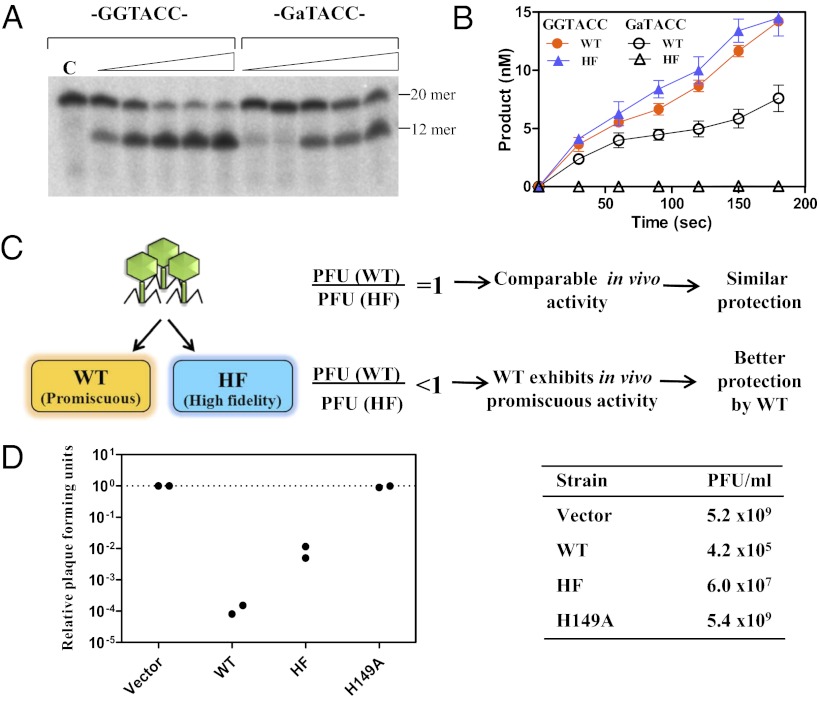
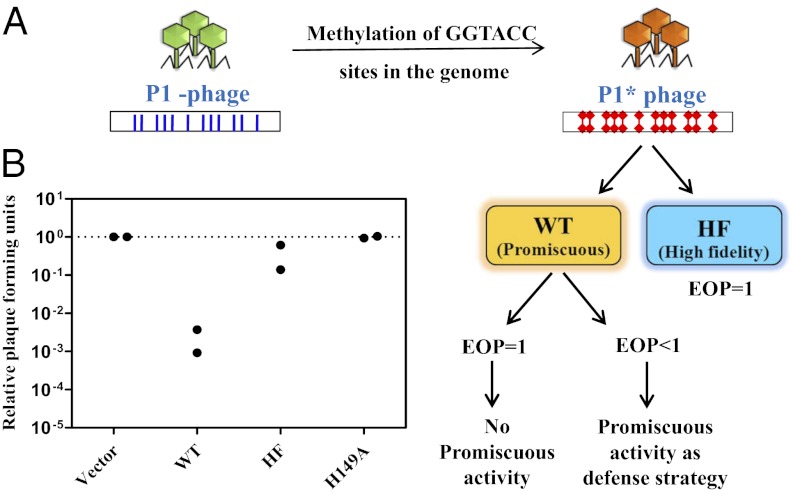
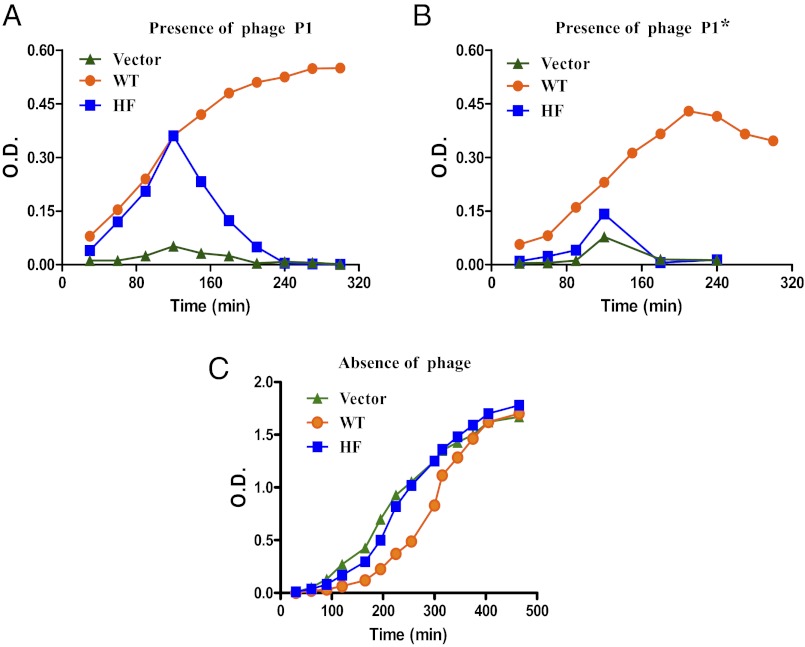
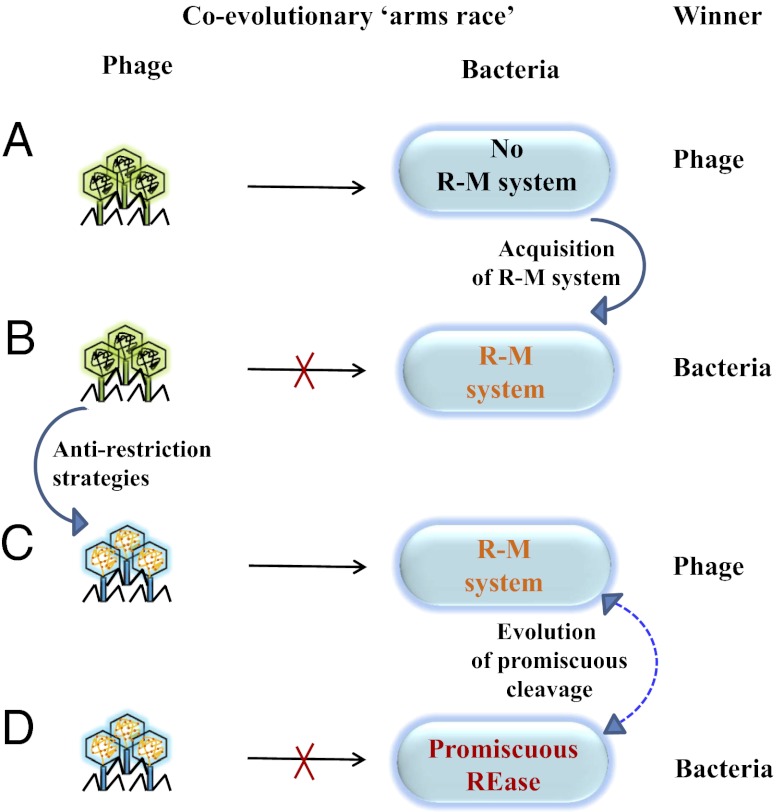
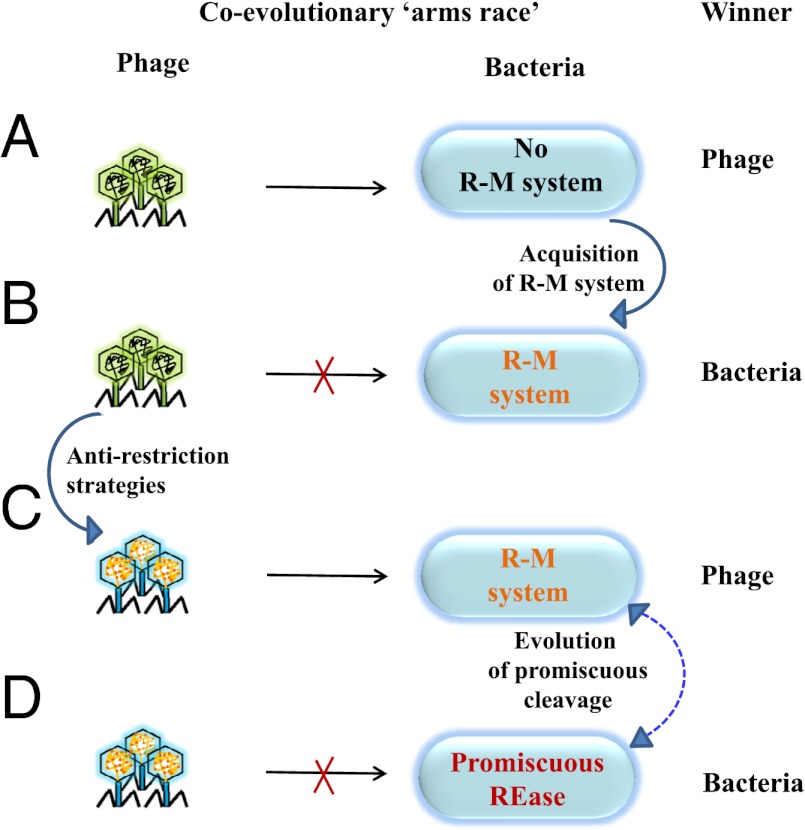
Most bacterial genomes harbor restriction-modification systems, encoding a REase and its cognate MTase. On attack by a foreign DNA, the REase recognizes it as nonself and subjects it to restriction. Should REases be highly specific for targeting the invading foreign DNA? It is often considered to be the case. However, when bacteria harboring a promiscuous or high-fidelity variant of the REase were challenged with bacteriophages, fitness was maximal under conditions of catalytic promiscuity. We also delineate possible mechanisms by which the REase recognizes the chromosome as self at the noncanonical sites, thereby preventing lethal dsDNA breaks. This study provides a fundamental understanding of how bacteria exploit an existing defense system to gain fitness advantage during a host-parasite coevolutionary "arms race."
Conflict of interest statement
The authors declare no conflict of interest.
Figures
References
-
- Khersonsky O, Roodveldt C, Tawfik DS. Enzyme promiscuity: Evolutionary and mechanistic aspects. Curr Opin Chem Biol. 2006;10:498–508. - PubMed
-
- Jensen RA. Enzyme recruitment in evolution of new function. Annu Rev Microbiol. 1976;30:409–425. - PubMed
-
- O’Brien PJ, Herschlag D. Catalytic promiscuity and the evolution of new enzymatic activities. Chem Biol. 1999;6:R91–R105. - PubMed
-
- Aharoni A, et al. The ‘evolvability’ of promiscuous protein functions. Nat Genet. 2005;37:73–76. - PubMed
-
- Yoshikuni Y, Ferrin TE, Keasling JD. Designed divergent evolution of enzyme function. Nature. 2006;440:1078–1082. - PubMed
Publication types
MeSH terms
Substances
LinkOut - more resources
Full Text Sources
Other Literature Sources
Molecular Biology Databases
