


Phenotype and polyp landscape in serrated polyposis syndrome: a series of 100 patients from genetics clinics
- PMID: 22510757
- PMCID: PMC3354022
- DOI: 10.1097/PAS.0b013e31824e133f
Phenotype and polyp landscape in serrated polyposis syndrome: a series of 100 patients from genetics clinics
Abstract
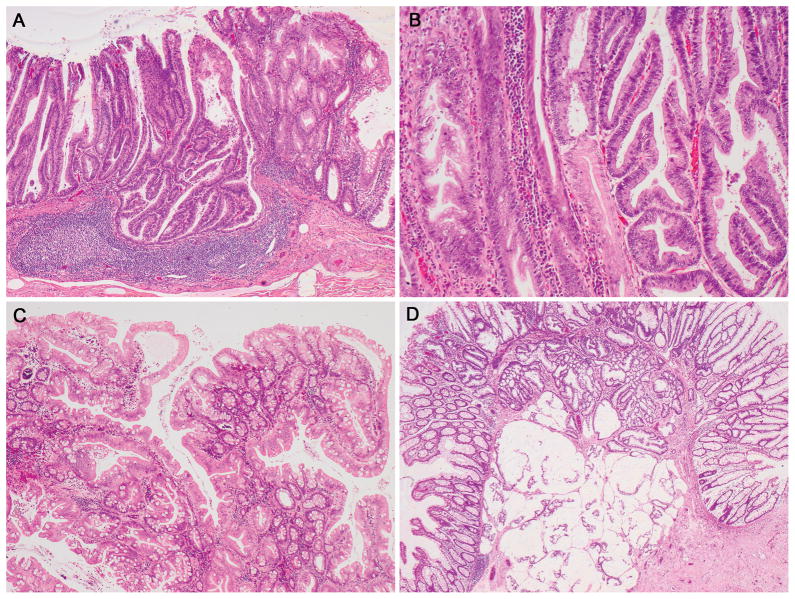
Serrated polyposis syndrome (SPS), also known as hyperplastic polyposis, is a syndrome of unknown genetic basis defined by the occurrence of multiple serrated polyps in the large intestine and associated with an increased risk of colorectal cancer (CRC). There are a variety of SPS presentations, which may encompass a continuum of phenotypes modified by environmental and genetic factors. To explore the phenotype of SPS, we recorded the histologic and molecular characteristics of multiple colorectal polyps in patients with SPS recruited between 2000 and 2010 from genetics clinics in Australia, New Zealand, Canada, and the United States. Three specialist gastrointestinal pathologists reviewed the polyps, which they classified into conventional adenomas or serrated polyps, with various subtypes, according to the current World Health Organization criteria. Mutations in BRAF and KRAS and mismatch repair protein expression were determined in a subset of polyps. A total of 100 patients were selected for the study, of whom 58 were female and 42 were male. The total polyp count per patient ranged from 6 to 150 (median 30). The vast majority of patients (89%) had polyposis affecting the entire large intestine. From this cohort, 406 polyps were reviewed. Most of the polyps (83%) were serrated polyps: microvesicular hyperplastic polyps (HP) (n=156), goblet cell HP (n=25), sessile serrated adenoma/polyps (SSA/P) (n=110), SSA/P with cytologic dysplasia (n=28), and traditional serrated adenomas (n=18). A further 69 polyps were conventional adenomas. BRAF mutation was mainly detected in SSA/P with dysplasia (95%), SSA/P (85%), microvesicular HP (76%), and traditional serrated adenoma (54%), whereas KRAS mutation was present mainly in goblet cell HP (50%) and in tubulovillous adenoma (45%). Four of 6 SSA/Ps with high-grade dysplasia showed loss of MLH1/PMS2 expression. CRC was diagnosed in 39 patients who were more often found to have a conventional adenoma compared with patients without CRC (P=0.003). Patients with SPS referred to genetics clinics had a pancolonic disease with a high polyp burden and a high rate of BRAF mutation. The occurrence of CRC was associated with the presence of conventional adenoma.
Conflict of interest statement
Figures
References
-
- Boparai KS, Reitsma JB, Lemmens V, et al. Increased colorectal cancer risk in first-degree relatives of patients with hyperplastic polyposis syndrome. Gut. 2010;59:1222–1225. - PubMed
-
- Boparai KS, van den Broek FJ, van Eeden S, et al. Increased polyp detection using narrow band imaging compared with high resolution endoscopy in patients with hyperplastic polyposis syndrome. Endoscopy. 2011;43:676–682. - PubMed
Publication types
MeSH terms
Substances
Grants and funding
LinkOut - more resources
Full Text Sources
Medical
Research Materials
Miscellaneous
