


Review
doi: 10.1038/nrm3335.
Intercellular communication: diverse structures for exchange of genetic information
Affiliations
- PMID: 22510790
- PMCID: PMC3738855
- DOI: 10.1038/nrm3335
Item in Clipboard
Review
Intercellular communication: diverse structures for exchange of genetic information
Nat Rev Mol Cell Biol.
.
Abstract
An emerging concept is that cellular communication in mammals can be mediated by the exchange of genetic information, mainly in the form of microRNAs. This can occur when extracellular vesicles, such as exosomes, secreted by a donor cell are taken up by an acceptor cell. Transfer of genetic material can also occur through intimate membrane contacts between donor and acceptor cells. Specialized cell-cell contacts, such as synapses, have the potential to combine these modes of genetic transfer.
Figures
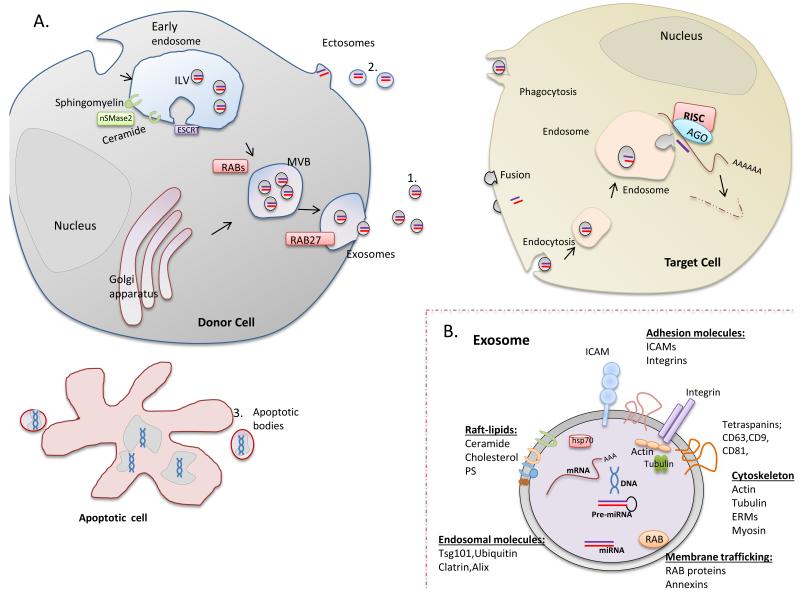
A. EVs originate through at least three mechanisms. 1) Fusion of multivesicular bodies (MVBs) with the plasma membrane and release of their intraluminal vesicles (ILVs) as exosomes. Neutral sphingomyelinase 2 (nSMase2) is essential for formation of ILVs in the early endosome. Some proteins are channelled by the ESCRT machinery to the MVB route. Rab proteins such as RAB11, RAB27 and RAB35, known to participate in vesicle trafficking between intracellular compartments, have been shown to play a role in exosome secretion. 2) Blebbing of the cellular plasma membrane (ectosomes). 3) Breakdown of dying cells into apoptotic bodies. EVs, which are secreted into the extracellular environment, contain functional mRNA, microRNA and DNA molecules that can be taken up by recipient cells through mechanisms including fusion with the plasma membrane, phagocytosis, or endocytosis. B. All exosomes contain proteins involved in membrane transport and fusion (Rab proteins, Annexins). Cytoskeletal proteins, adhesion molecules and tetraspanins are also abundant. Exosome membranes are enriched in RAFT-lipids (cholesterol, ceramide, sphingolipids). ERM, ezrin–radixin– moesin; HSP, heat shock protein; ICAM, intercellular cell adhesion molecule. Exosomes also contain RNA, mainly microRNA.
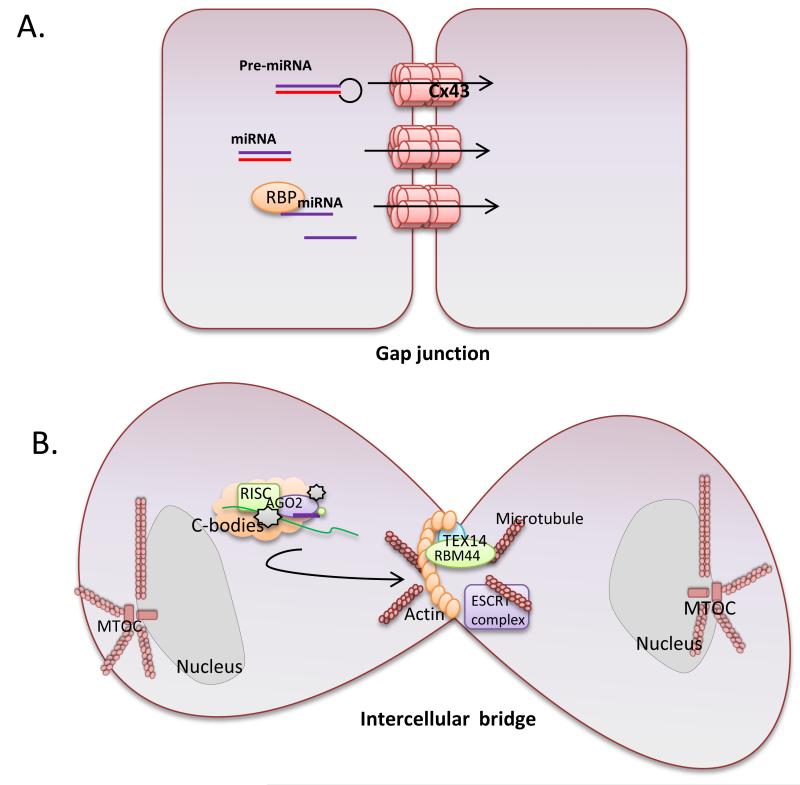
Intercellular communication can occur over short distances through the establishment of gap junctions or germ cells intercellular bridges. A. Gap junctions are composed of hexameric connexin oligomers that allow trafficking of small molecules between adjacent cells. The silencing signal might be transported as single-stranded RNA associated with RNA-binding proteins (RBP) or as double-stranded small RNA. B. Intercellular bridges are formed in the germline by incomplete cytokinesis and contain an actin ring. TEX14 and the RNA binding motif protein 44 (RBM44) locates at intercellular bridges. These bridges support cell-to-cell transfer of chromatoid bodies (c-bodies). C-bodies are cytoplasmic granules enriched in microRNA, mRNAs, and proteins of the miRNA-RISC complex.
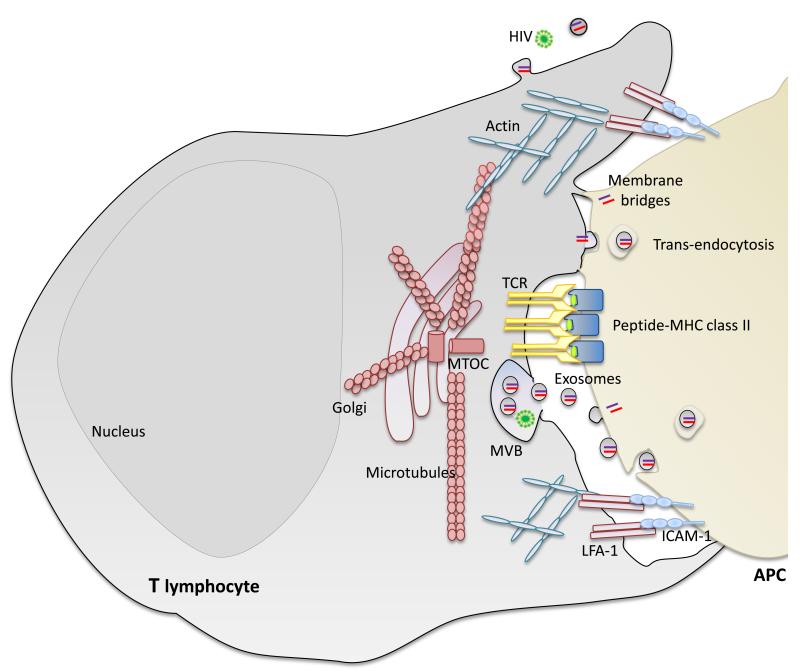
During immune synapsis, the molecules involved in antigen recognition (TCR and peptide-loaded-MHC class II) locate at a central cluster surrounded by a peripheral ring enriched in adhesion molecules (integrin LFA-1 and ICAMs) and the actin cytoskeleton. The T lymphocyte orients its MTOC and secretory compartments (Golgi apparatus and MVBs) toward the APC. We propose that the IS provides a more efficient path for the exchange of genetic material through the combination of different mechanisms, including the polarized secretion of microRNA-loaded exosomes, trans-endocytosis and membrane bridges. Pathogens, including bacteria and viruses, hijack biological synapses to spread from cell to cell. APC, antigen presenting cell; MVB, multivesicular body.
References
-
- Brosnan CA, Voinnet O. Cell-to-cell and long-distance siRNA movement in plants: mechanisms and biological implications. Curr Opin Plant Biol. 2011;14:580–7. - PubMed
-
- Dunoyer P, et al. Small RNA duplexes function as mobile silencing signals between plant cells. Science. 2010;328:912–6. - PubMed
-
- Molnar A, et al. Small silencing RNAs in plants are mobile and direct epigenetic modification in recipient cells. Science. 2010;328:872–5. - PubMed
Publication types
MeSH terms
Substances
Grants and funding
LinkOut - more resources
Full Text Sources
Other Literature Sources
