


Gastrointestinal dysfunction in autism: parental report, clinical evaluation, and associated factors
- PMID: 22511450
- PMCID: PMC3335766
- DOI: 10.1002/aur.237
Gastrointestinal dysfunction in autism: parental report, clinical evaluation, and associated factors
Abstract
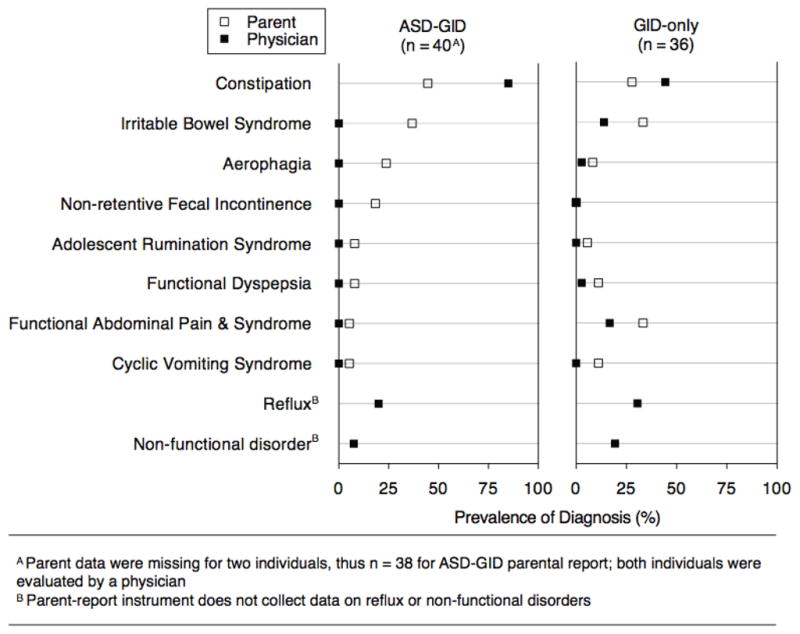
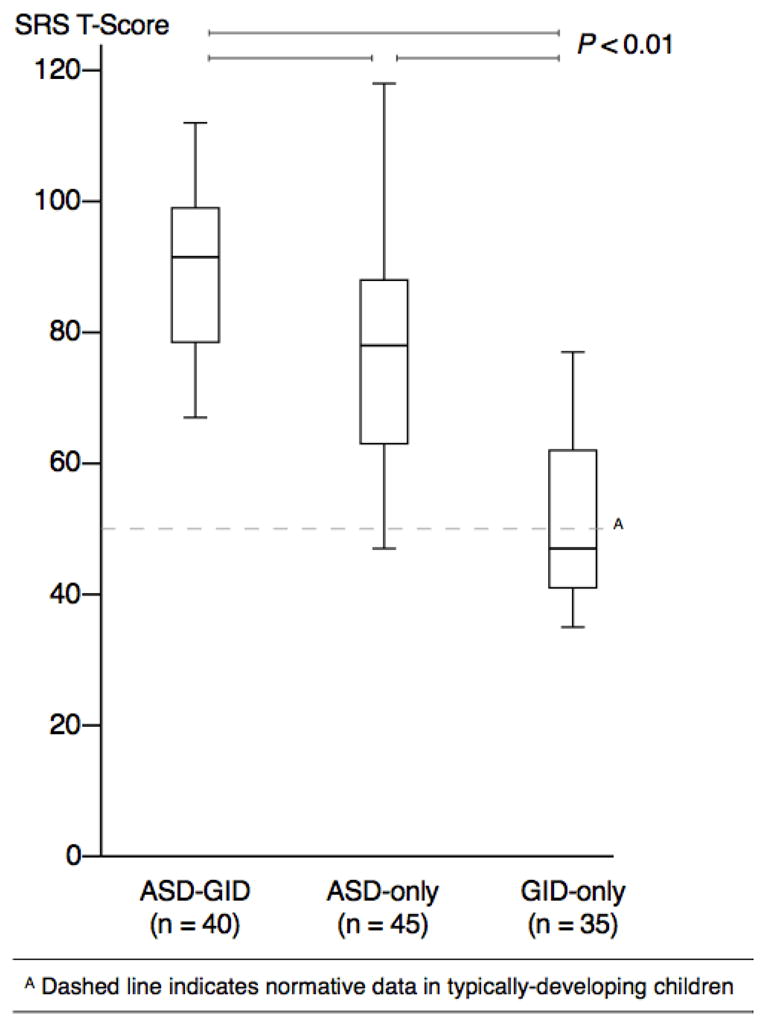
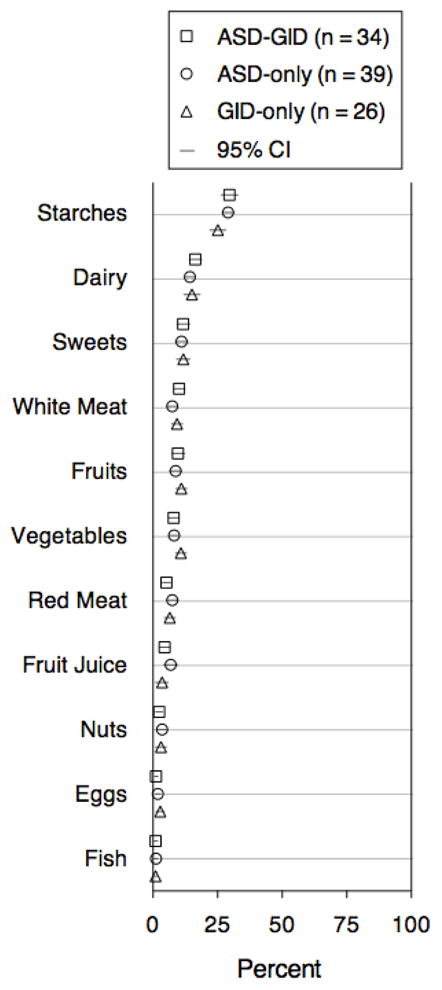
The objectives of this study were to characterize gastrointestinal dysfunction (GID) in autism spectrum disorder (ASD), to examine parental reports of GID relative to evaluations by pediatric gastroenterologists, and to explore factors associated with GID in ASD. One hundred twenty-one children were recruited into three groups: co-occurring ASD and GID, ASD without GID, and GID without ASD. A pediatric gastroenterologist evaluated both GID groups. Parents in all three groups completed questionnaires about their child's behavior and GI symptoms, and a dietary journal. Functional constipation was the most common type of GID in children with ASD (85.0%). Parental report of any GID was highly concordant with a clinical diagnosis of any GID (92.1%). Presence of GID in children with ASD was not associated with distinct dietary habits or medication status. Odds of constipation were associated with younger age, increased social impairment, and lack of expressive language (adjusted odds ratio in nonverbal children: 11.98, 95% confidence interval 2.54-56.57). This study validates parental concerns for GID in children with ASD, as parents were sensitive to the existence, although not necessarily the nature, of GID. The strong association between constipation and language impairment highlights the need for vigilance by health-care providers to detect and treat GID in children with ASD. Medications and diet, commonly thought to contribute to GID in ASD, were not associated with GID status. These findings are consistent with a hypothesis that GID in ASD represents pleiotropic expression of genetic risk factors.
© 2011 International Society for Autism Research, Wiley Periodicals, Inc.
Figures
References
-
- Buie T, Campbell DB, Fuchs GJ, 3rd, Furuta GT, Levy J, Vandewater J, et al. Evaluation, diagnosis, and treatment of gastrointestinal disorders in individuals with ASDs: a consensus report. Pediatrics. 2010;125(Suppl 1):S1–18. - PubMed
Publication types
MeSH terms
Grants and funding
- TL1RR024978/RR/NCRR NIH HHS/United States
- TL1 RR024978/RR/NCRR NIH HHS/United States
- R21 HD065289/HD/NICHD NIH HHS/United States
- UL1 TR000130/TR/NCATS NIH HHS/United States
- T32GM07347/GM/NIGMS NIH HHS/United States
- KL2 RR024977/RR/NCRR NIH HHS/United States
- R01HD23264/HD/NICHD NIH HHS/United States
- R01 HD023264/HD/NICHD NIH HHS/United States
- T32 GM007347/GM/NIGMS NIH HHS/United States
- UL1RR024975/RR/NCRR NIH HHS/United States
- UL1 RR024975/RR/NCRR NIH HHS/United States
- R21HD065289/HD/NICHD NIH HHS/United States
LinkOut - more resources
Full Text Sources
Other Literature Sources
Medical
