


The essential role of AMPA receptor GluR2 subunit RNA editing in the normal and diseased brain
- PMID: 22514516
- PMCID: PMC3324117
- DOI: 10.3389/fnmol.2012.00034
The essential role of AMPA receptor GluR2 subunit RNA editing in the normal and diseased brain
Abstract
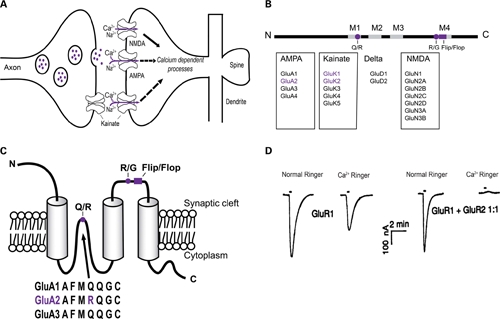
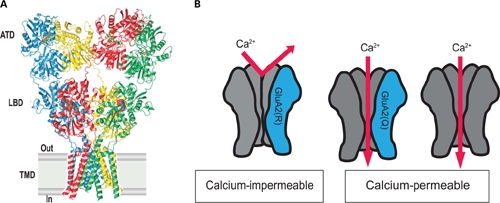
α-Amino-3-hydroxy-5-methyl-4-isoxazolepropionic acid (AMPA) receptors are comprised of different combinations of GluA1-GluA4 (also known asGluR1-GluR4 and GluR-A to GluR-D) subunits. The GluA2 subunit is subject to RNA editing by the ADAR2 enzyme, which converts a codon for glutamine (Gln; Q), present in the GluA2 gene, to a codon for arginine (Arg; R) found in the mRNA. AMPA receptors are calcium (Ca(2+))-permeable if they contain the unedited GluA2(Q) subunit or if they lack the GluA2 subunit. While most AMPA receptors in the brain contain the edited GluA2(R) subunit and are therefore Ca(2+)-impermeable, recent evidence suggests that Ca(2+)-permeable AMPA receptors are important in synaptic plasticity, learning, and disease. Strong evidence supports the notion that Ca(2+)-permeable AMPA receptors are usually GluA2-lacking AMPA receptors, with little evidence to date for a significant role of unedited GluA2 in normal brain function. However, recent detailed studies suggest that Ca(2+)-permeable AMPA receptors containing unedited GluA2 do in fact occur in neurons and can contribute to excitotoxic cell loss, even where it was previously thought that there was no unedited GluA2.This review provides an update on the role of GluA2 RNA editing in the healthy and diseased brain and summarizes recent insights into the mechanisms that control this process. We suggest that further studies of the role of unedited GluA2 in normal brain function and disease are warranted, and that GluA2 editing should be considered as a possible contributing factor when Ca(2+)-permeable AMPA receptors are observed.
Keywords: AMPA receptor; GluA2; GluR-B; GluR2; RNA editing; adenosine deaminases acting on RNA; excitotoxicity.
Figures
References
-
- Aizawa H., Sawada J., Hideyama T., Yamashita T., Katayama T., Hasebe N., Kimura T., Yahara O., Kwak S. (2010). TDP-43 pathology in sporadic ALS occurs in motor neurons lacking the RNA editing enzyme ADAR2. Acta Neuropathol. 120 75–84 - PubMed
-
- Akbarian S., Smith M. A., Jones E. G. (1995). Editing for an AMPA receptor subunit RNA in prefrontal cortex and striatum in Alzheimer’s disease, Huntington’s disease and schizophrenia. Brain Res. 699 297–304 - PubMed
-
- Bartus R. T., Hayward N. J., Elliott P. J., Sawyer S. D., Baker K. L., Dean R. L., Akiyama A., Straub J. A., Harbe-son S. L., Li Z. (1994). Calpain inhibitor AK295 protects neurons from focal brain ischemia. Effects of postocclusion intra-arterial administration. Stoke 25 2265–2270 - PubMed
LinkOut - more resources
Full Text Sources
Other Literature Sources
Miscellaneous
