


Mouse estrous cycle identification tool and images
- PMID: 22514749
- PMCID: PMC3325956
- DOI: 10.1371/journal.pone.0035538
Mouse estrous cycle identification tool and images
Abstract
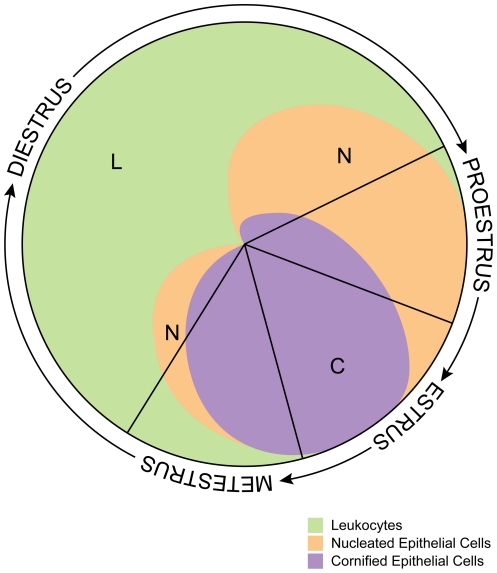
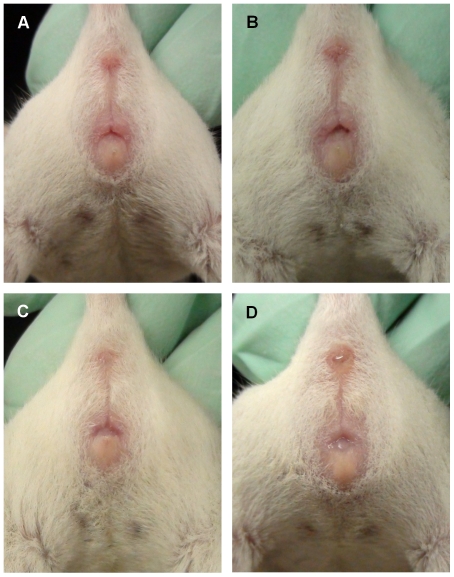
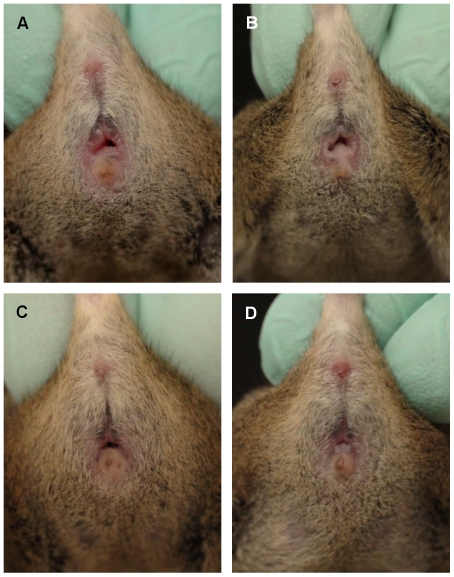
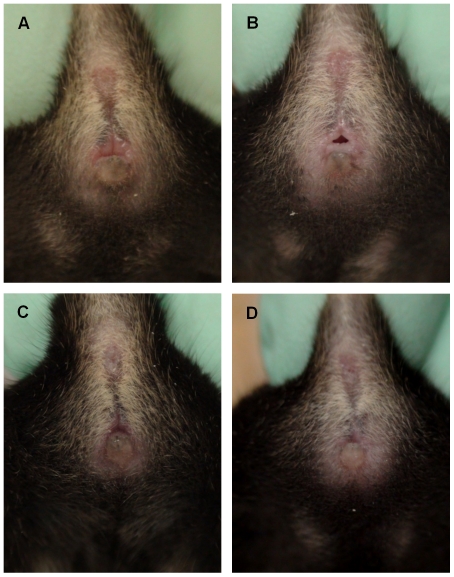
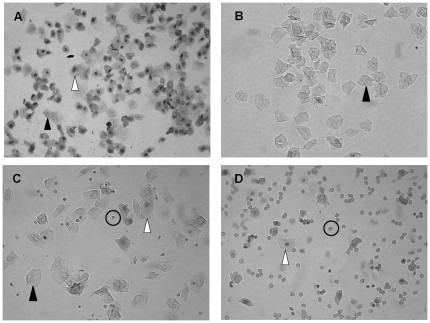
The efficiency of producing timed pregnant or pseudopregnant mice can be increased by identifying those in proestrus or estrus. Visual observation of the vagina is the quickest method, requires no special equipment, and is best used when only proestrus or estrus stages need to be identified. Strain to strain differences, especially in coat color can make it difficult to determine the stage of the estrous cycle accurately by visual observation. Presented here are a series of images of the vaginal opening at each stage of the estrous cycle for 3 mouse strains of different coat colors: black (C57BL/6J), agouti (CByB6F1/J) and albino (BALB/cByJ). When all 4 stages (proestrus, estrus, metestrus, and diestrus) need to be identified, vaginal cytology is regarded as the most accurate method. An identification tool is presented to aid the user in determining the stage of estrous when using vaginal cytology. These images and descriptions are an excellent resource for learning how to determine the stage of the estrous cycle by visual observation or vaginal cytology.
Conflict of interest statement
Figures
References
-
- Allen E. The oestrous cycle in the mouse. American Journal of Anatomy. 1922;30:297–371.
-
- Bronson FH, Dagg CP, Snell GD. Reproduction. In: Green EL, editor. Biology of the laboratory mouse. 2nd ed. New York: McGraw-Hill Book Company; 1966. pp. 187–204.
-
- Nelson JF, Felicio LS, Randall PK, Sims C, Finch CE. A longitudinal study of estrous cyclicity in aging C57BL/6J mice: I. Cycle frequency, length and vaginal cytology. Biol Reprod. 1982;27:327–339. - PubMed
-
- Green E, editor. Biology of the Laboratory Mouse. 2nd ed. 1968.
MeSH terms
LinkOut - more resources
Full Text Sources
