. 2012 Aug 1;318(13):1517-27.
doi: 10.1016/j.yexcr.2012.03.023. Epub 2012 Apr 1.

Tumor cell and carcinoma-associated fibroblast interaction regulates matrix metalloproteinases and their inhibitors in oral squamous cell carcinoma

Affiliations

Tumor cell and carcinoma-associated fibroblast interaction regulates matrix metalloproteinases and their inhibitors in oral squamous cell carcinoma

Alexandra Fullár et al. Exp Cell Res. .

Abstract

Co-culture of periodontal ligament (PDL) fibroblasts and SCC-25 oral squamous carcinoma cells (OSCC), results in conversion of PDLs into carcinoma-associated fibroblasts (CAFs). Paracrin circuits between CAFs and OSCC cells were hypothesized to regulate the gene expression of matrix remodeling enzymes in their co-culture, which was performed for 7days, followed by analysis of the mRNA/protein expression and activity of metalloproteinases (MMPs), their tissue inhibitors (TIMPs) and other relevant genes. Interleukin1-β, transforming growth factor-β1, fibronectin and αvβ6 integrin have shown to be involved in the regulation of the MMP and TIMP gene expression in co-culture of CAFs and tumor cells. In addition, these cells also cooperated in activation of MMP pro-enzymes. It is particularly interesting that the fibroblast-produced inactive MMP-2 has been activated by the tumor-cell-produced membrane-type 1 matrix metalloproteinase (MT1-MMP). The crosstalk between cancer- and the surrounding fibroblast stromal-cells is essential for the fine tuning of cancer cells invasivity.


Figures

None
Graphical abstract
Fig. 1
Fig. 1
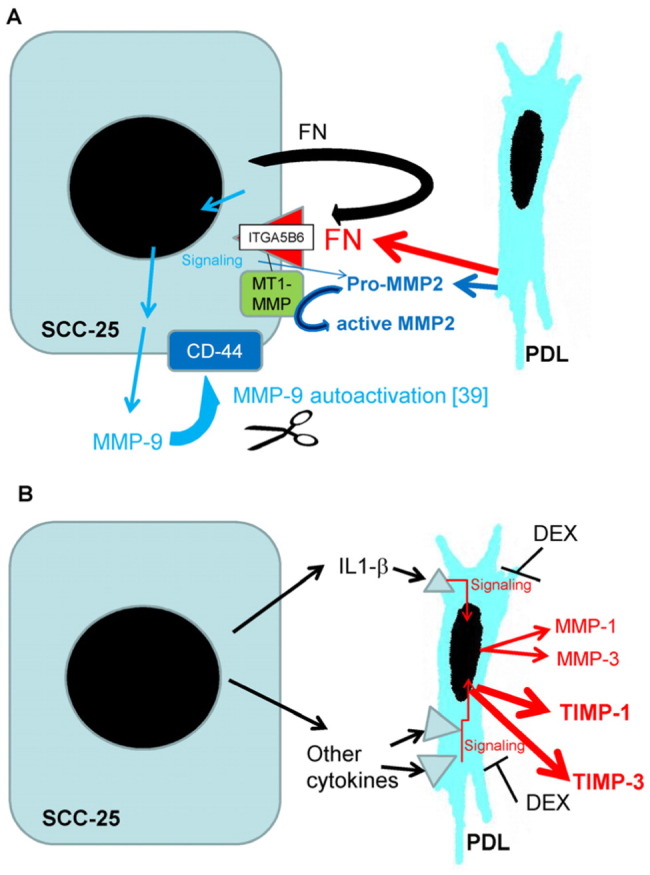
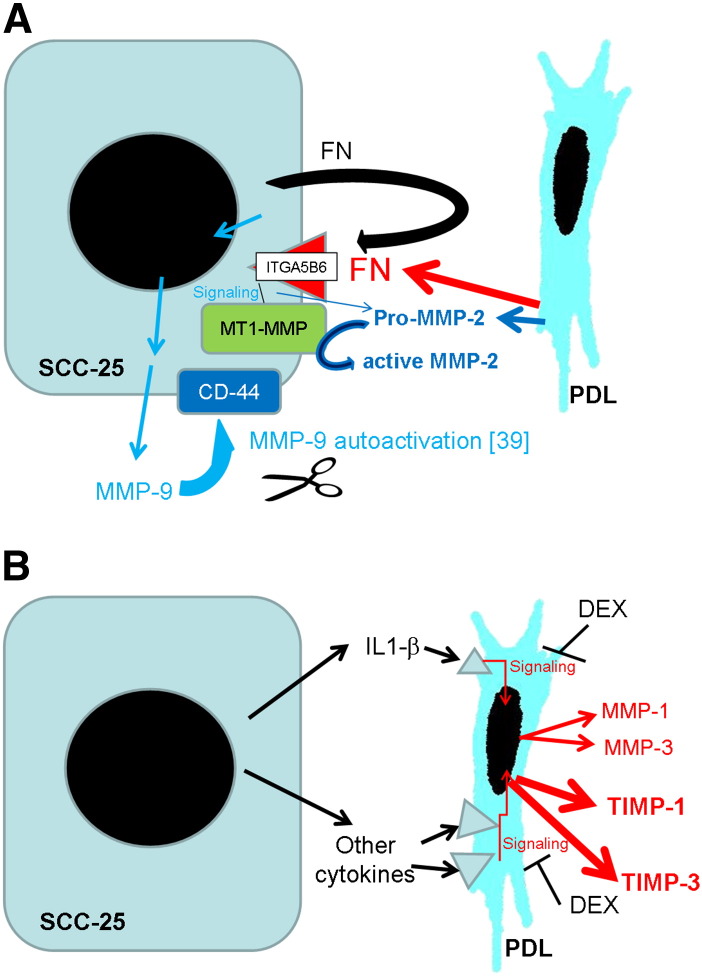
Summary of the suggested mechanism for the regulation of MMPs and TIMPs in the paracrine interplay between SCC-25 cells and fibroblasts. MMP-9 showed a tumor specific expression, regulated presumably by the fibronectin ITGA5B6 pathway. The ITGA5 was inducible in both SCC-25 and PDL fibroblasts in co-culture, but ITGB6 expression was tumor (SCC-25) specific. Based on a previous report , MMP-9 might be activated in interaction with CD-44, and according to our gelatinase assay results, it remains bound with the tumor cells (A). The results of this study suggest that MMP-2 is secreted in its pro- (inactive-) form by CAFs surrounding the tumor cells, and at a lower extent also by the tumor cells themselves. Activation of MMP-2 either requires MT1-MMP localized on the SCC-25 cancer cells , or integrins, where the involvement of αv integrins (ITGA5) is expected (A). MMPs-1, -3 and TIMPs-1, -3 are produced in the PDL fibroblasts, and their expression might be regulated by inflammatory cytokines, including IL1-β produced by SCC-25 cells. The gene expression of MMP-1, MMP-2, TIMP-1 and TIMP-3 was reduced by dexamethasone (DEX) (B).
Fig. 2
Fig. 2
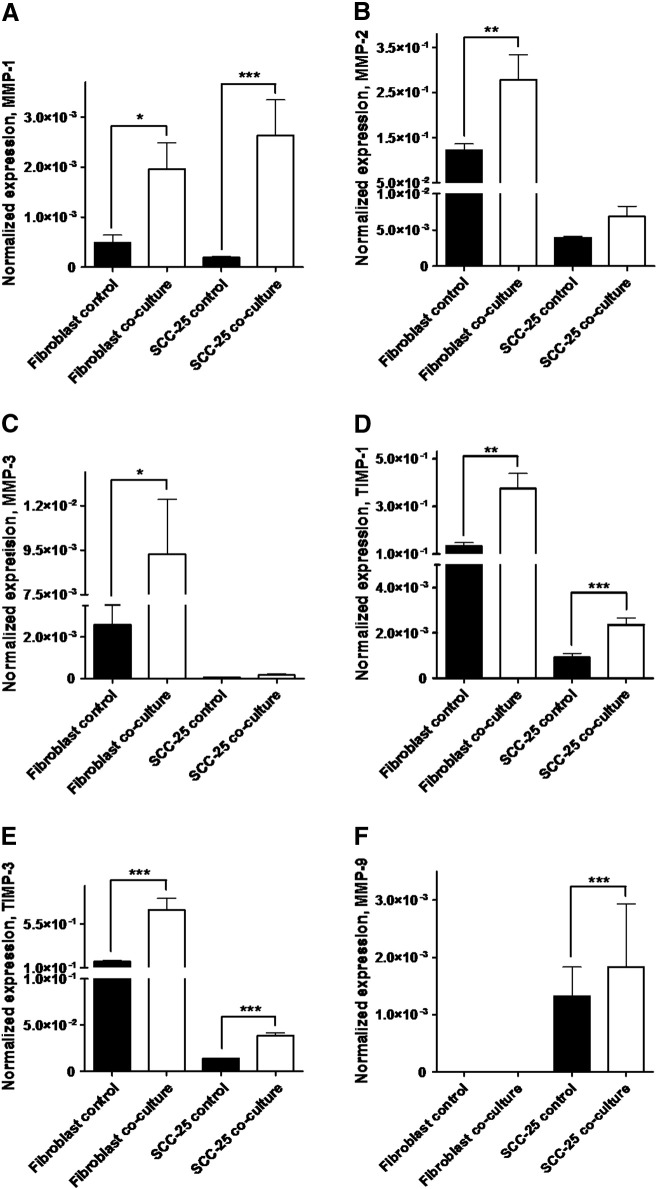
mRNA expression of MMP-1 (A), MMP-2 (B), MMP-3 (C), TIMP-1 (D), TIMP-3 (E) and MMP-9 (F) in PDL fibroblasts and SCC-25 cells in control and co-cultured conditions. *: p < 0.05; **: p < 0.01, ***: p < 0.001.
Fig. 3
Fig. 3
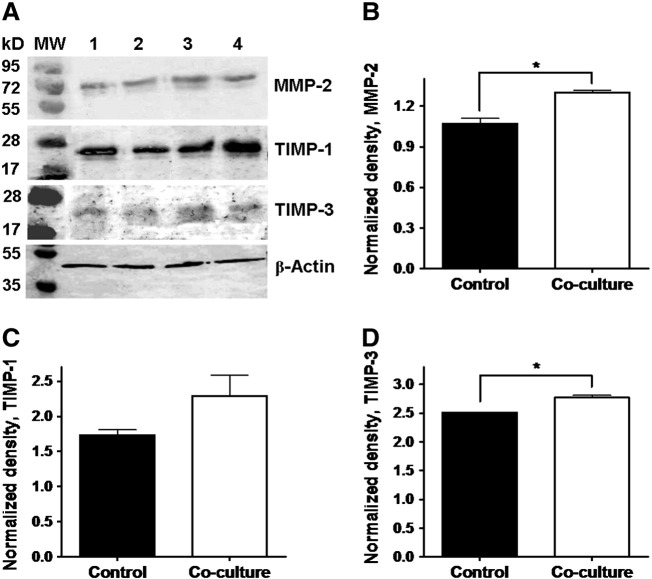
Western blot analysis of MMP-2 (A, B), TIMP-1 (A, C) and TIMP-3 (A, D) related to loading control (β-actin) in PDL fibroblasts in control (1–2) and co-cultured (3–4) conditions. Densitometry of the detected bands normalized to the β-actin band densities. MMP-2 (B), TIMP-1 (C), TIMP-3 (D), *: p < 0.05.
Fig. 4
Fig. 4
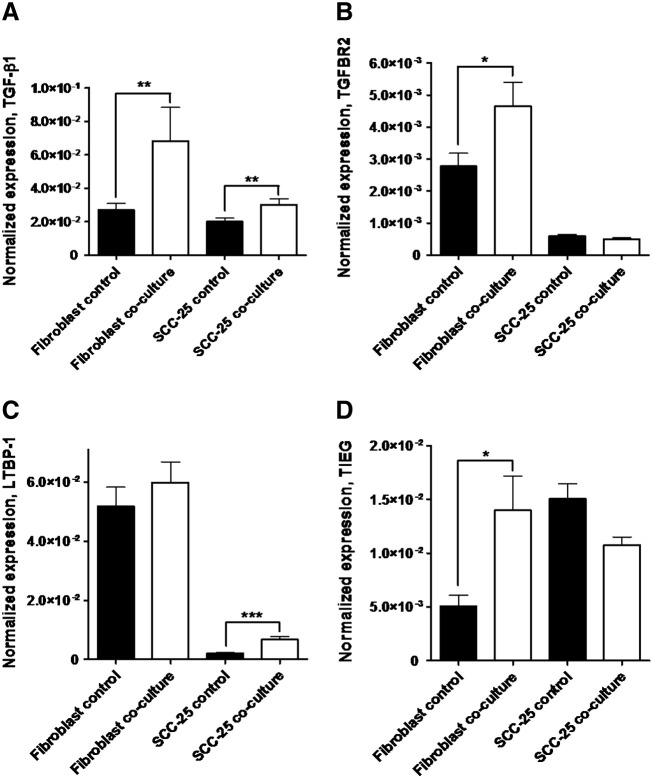
mRNA expression of TGF-β1 (A), TGFBR2 (B), LTBP-1 (C) and TIEG (D) in fibroblasts and SCC-25 cells in control and co-cultured conditions. *: p < 0.05; **: p < 0.01, ***: p < 0.001.
Fig. 5
Fig. 5
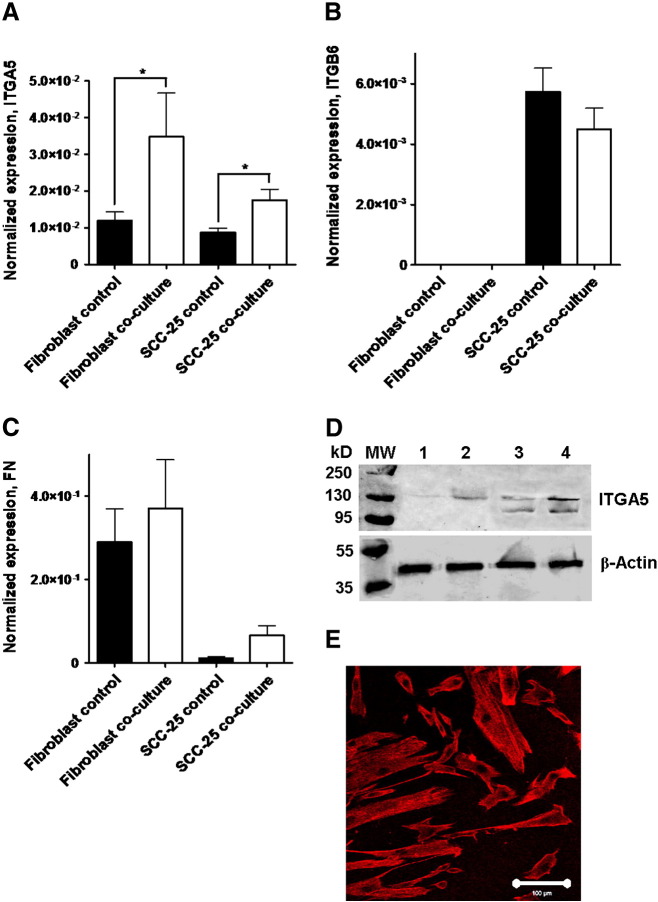
mRNA expression of ITGA5 (A), ITGB6 (B) and fibronectin (C), in PDL fibroblasts and SCC-25 cells in control and co-cultured conditions. *: p < 0.05; **: p < 0.01, ***: p < 0.001. Western blot of ITGA5 and loading control β-actin (D) in nuclear-free extracts of control (1) and co-cultured (2) fibroblasts, control (3) and co-cultured (4) SCC-25 cells. Confocal microscopy of EDA-fibronectin (red detected by Alexa fluor 647–conjugated anti-mouse IgG) in PDLs, bar: 100 μm.
Fig. 6
Fig. 6
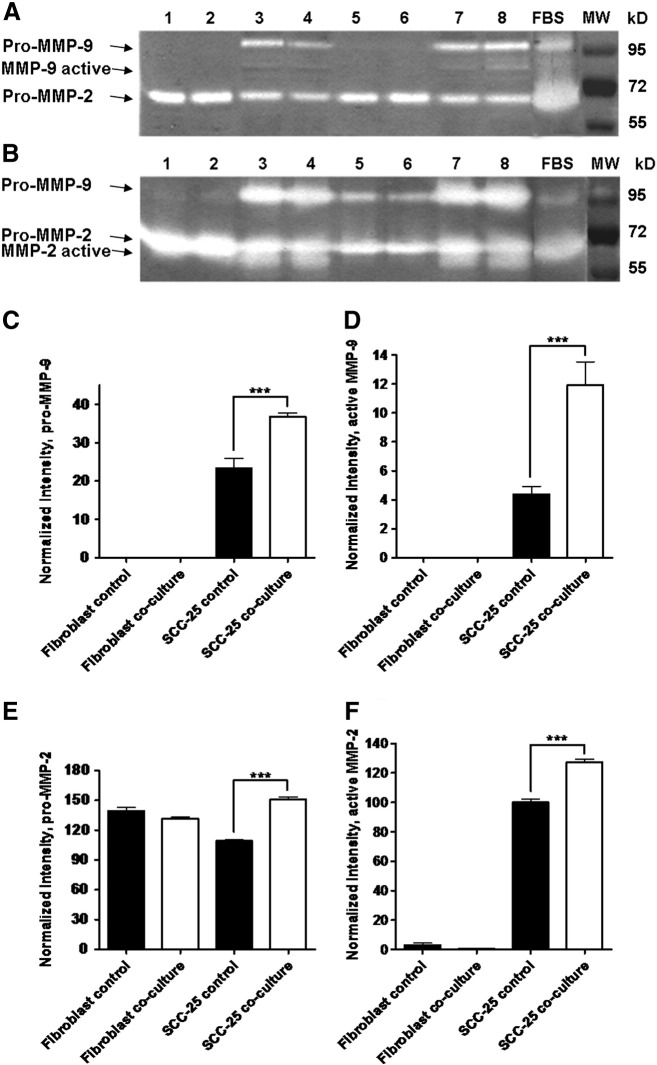
Detection of MMP-2 and MMP-9 gelatinase activity in cell lysate (A) and supernatant (B) of fibroblasts and SCC-25 cells by combined gelatinase zymography. 1–2: fibroblast control, 3–4: SCC-25 control, 5–6: fibroblast co-culture, 7–8: SCC-25 co-culture. Densitometry of MMP-2 and MMP-9 gelatinase zymography (C–F). C and D represent the densitometry of pro-MMP-9 (C) and active MMP-9 (D) bands in cell lysates. E and F show the densitometry of pro-MMP-2 (E) and active MMP-2 (F) form from supernatants.

References

    1. Mamelle G., Pampurik J., Luboinski B., Lancar R., Lusinchi A., Bosq J. Lymph node prognostic factors in head and neck squamous cell carcinomas. Am. J. Surg. 1994;168:494–498. - PubMed
    1. Hensen E.F., De Herdt M.J., Goeman J.J., Oosting J., Smit V.T., Cornelisse C.J., Baatenburg de Jong R.J. Gene-expression of metastasized versus non-metastasized primary head and neck squamous cell carcinomas: a pathway-based analysis. BMC Cancer. 2008;8:168. - PMC - PubMed
    1. Villaret D.B., Wang T., Dillon D., Xu J., Sivam D., Cheever M.A., Reed S.G. Identification of genes overexpressed in head and neck squamous cell carcinoma using a combination of complementary DNA subtraction and microarray analysis. Laryngoscope. 2000;110:374–381. - PubMed
    1. El Badry A.A., El-Fadle A.A., El-Balshy A.L. Tissue inhibitor of matrix metalloproteinase-2 in nasopharyngeal carcinoma. MedGenMed. 2007;9:3. - PMC - PubMed
    1. Ruokolainen H., Paakko P., Turpeenniemi-Hujanen T. Tissue inhibitor of matrix metalloproteinase-1 is prognostic in head and neck squamous cell carcinoma: comparison of the circulating and tissue immunoreactive protein. Clin. Cancer Res. 2005;11:3257–3264. - PubMed

Publication types

MeSH terms