


Anti-inflammatory activity of lactobacillus on carrageenan-induced paw edema in male wistar rats
- PMID: 22518342
- PMCID: PMC3299308
- DOI: 10.1155/2012/752015
Anti-inflammatory activity of lactobacillus on carrageenan-induced paw edema in male wistar rats
Abstract
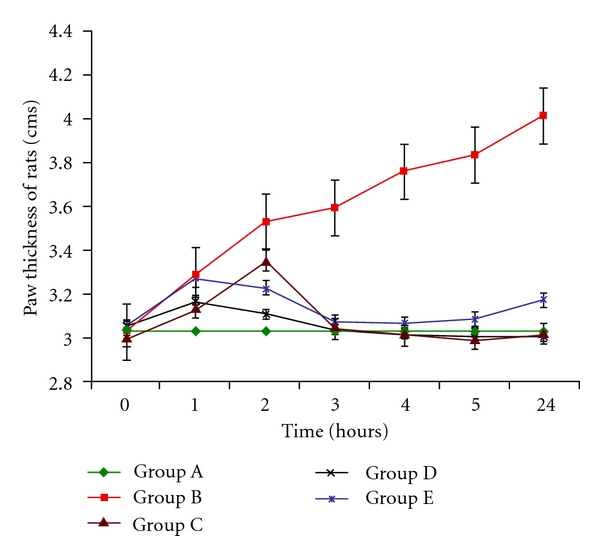
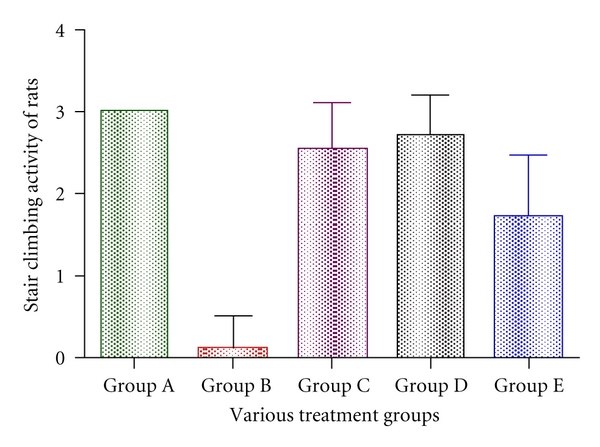
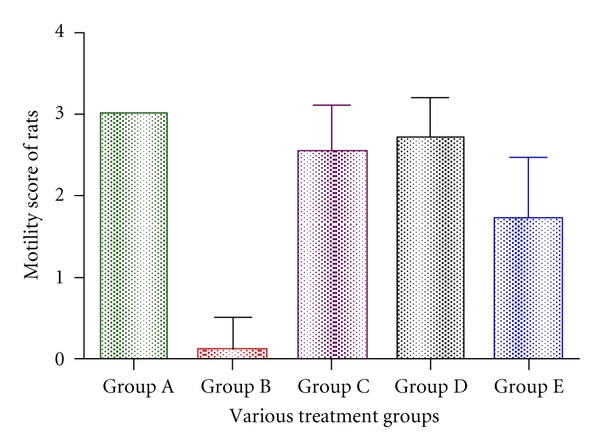
Introduction. Lactobacillus casei and Lactobacillus acidophilus were used to assess the anti-inflammatory properties in carrageenan induced acute inflammatory model. Materials and Methods. Diclofenac sodium was used as standard drug at concentration of 150 mg/kg of body weight. Culture of Lactobacillus 2 × 10(7) CFU/ml was given orally. Edema was induced with 1% carrageenan to all the groups after one hour of the oral treatments. Paw thickness was checked at t = 1, 2, 3, 4, 5, and 24 hours. Stair climbing score and motility score were assessed at t = 24 hours. Cytokines assay for IL-6, IL-10, and TNF-α was performed on serum samples. Results. Lactobacillus showed a statistically significant decrease in paw thickness at P < 0.001. L. acidophilus and L. casei decreased by 32% and 28% in paw thickness. They both significantly increased the stair climbing and motility score. Lactobacillus treatment significantly downregulated IL-6 and TNF-α while upregulated IL-10 at P < 0.0001. Conclusion. L. casei and L. acidophilus significantly decreased the inflammatory reactions induced by carrageenan. This study has also proposed that Lactobacillus ameliorated the inflammatory reaction by downregulating the proinflammatory cytokines pathway.
Figures
References
-
- Mahat MA, Patil BM. Evaluation of antiinflammatory activity of methanol extract of Phyllanthus amarus in experimental animal models. Indian Journal of Pharmaceutical Sciences. 2007;69(1):33–36.
-
- Sosa S, Balick MJ, Arvigo R, et al. Screening of the topical anti-inflammatory activity of some Central American plants. Journal of Ethnopharmacology. 2002;81(2):211–215. - PubMed
-
- Zhang Y, Du R, Wang L, Zhang H. The antioxidative effects of probiotic Lactobacillus casei Zhang on the hyperlipidemic rats. European Food Research and Technology. 2010;231(1):151–158.
-
- Singh V, Singh K, Amdekar S, et al. Innate and specific gut-associated immunity and microbial interference. FEMS Immunology and Medical Microbiology. 2009;55(1):6–12. - PubMed
LinkOut - more resources
Full Text Sources
Molecular Biology Databases
