. 2013 Jan-Feb;27(1):23-8.
doi: 10.1016/j.jdiacomp.2012.03.020. Epub 2012 Apr 18.

Human C-reactive protein accentuates macrophage activity in biobreeding diabetic rats

Affiliations

Human C-reactive protein accentuates macrophage activity in biobreeding diabetic rats

Ishwarlal Jialal et al. J Diabetes Complications. 2013 Jan-Feb.

Abstract

Objective: Type 1 diabetes (T1DM) is a pro-inflammatory state characterized by high C-reactive protein (CRP) levels. However, there is a paucity of data examining the role of CRP in promoting the pro-inflammatory state of diabetes. Thus, we examined the pro-inflammatory effects of human CRP using spontaneously diabetic bio-breeding (BB) rats.

Methods: Diabetic rats (n=9/group) were injected with Human serum albumin (huSA) or Human CRP (hCRP, 20 mg/kg body weight; i.p.) for 3 consecutive days. Blood and peritoneal macrophages (MØ) were obtained following euthanasia. Peritoneal macrophages were used for measuring superoxide anion release, NF-κB DNA binding activity, proinflammatory mediator secretion.

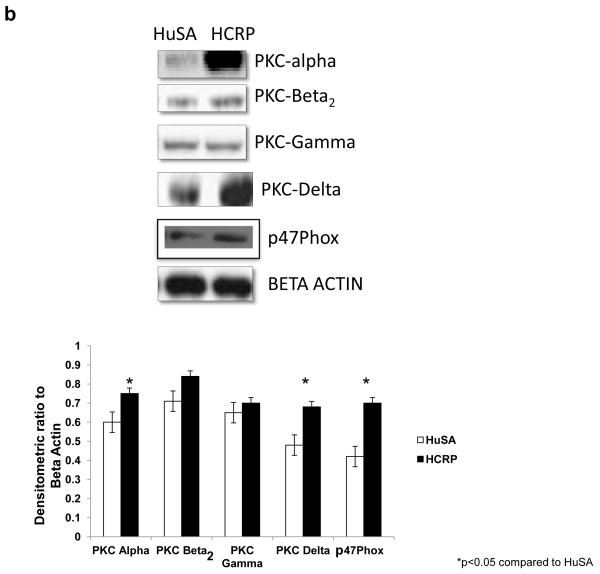
Results: hCRP administration resulted in significantly increased superoxide anion production, along with increased release of cytokines/chemokines, and plasminogen activator inhibitor (PAI-1) and Tissue Factor (TF) activity in diabetic rats compared to huSA. hCRP-treated BB rat MØ showed significant induction of protein kinase C (PKC)-alpha, PKC-delta and p47 phox expression and NF-κB compared to huSA.

Conclusions: Thus, our data suggest that human CRP exacerbates in-vivo the pro-inflammatory, pro-oxidant and procoagulant states of diabetes predominantly via increased macrophage activity and this could have implications with respect to vascular complications and anti-inflammatory therapies.


Figures

Fig 1a
Fig 1a
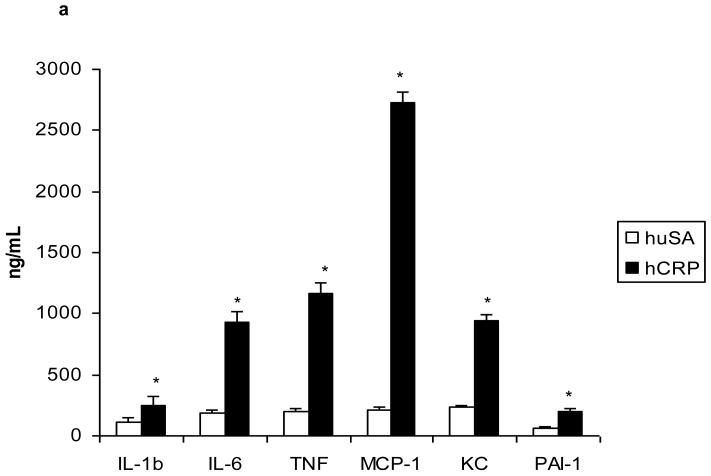
Circulating levels of pro-inflammatory cytokines and chemokines in sera following hCRP or huSA administration to diabetic BB rats (20mg/kg body weight for 3 days, n=9/group) were examined by multiplex assays as described in Methods. Values are expressed as ng/ml (mean ± SD). *P<0.005 vs. huSA. huSA=human serum albumin; hCRP=human C-reactive protein
Fig 1b
Fig 1b
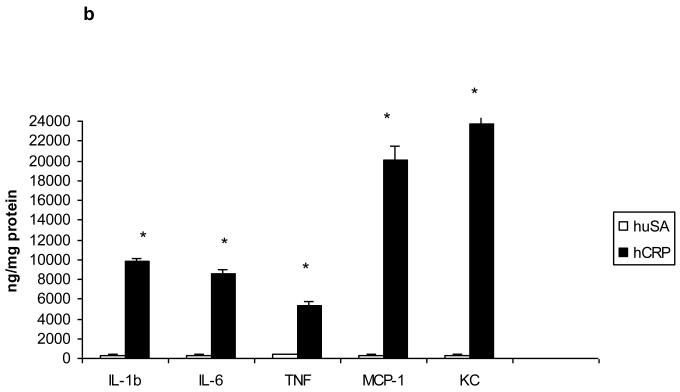
Pro-inflammatory cytokines and chemokines release by peritoneal macrophages of hCRP or huSA administration to BB rats (n=9/group) were measured by Multiplex assay as described in Methods. Values are expressed as ng/mg cell protein (mean ± SD). *P<0.005 vs. huSA. huSA=human serum albumin; hCRP=human C-reactive protein
Fig 2a
Fig 2a
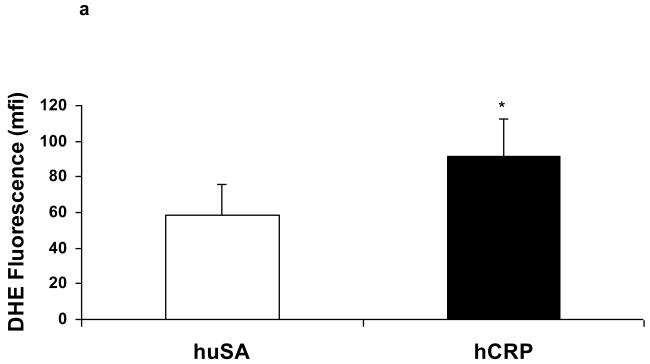
Superoxide anion release in hCRP or huSA (20 mg/kg b.w. for 3 days, n=9/group) administered by diabetic BB rat macrophages. Superoxide anion release was assessed by DHE fluorescence. Results are expressed as mean ± SD mean fluorescence intensity (MFI) *P< 0.005 vs. huSA. huSA=human serum albumin; hCRP=human C-reactive protein.
Fig 2b
Fig 2b
Tissue factor activity in hCRP or huSA (20 mg/kg b.w. for 3 days, n=9/group) administered by the BB rat macrophages. The rats were sacrificed on the 4th day and peritoneal macrophages were isolated and tissue factor was assessed as described in methods. Results are expressed as mean ± SD pg/mg cell protein. *P<0.005 vs. huSA. huSA=human serum albumin; hCRP=human C-reactive protein
Fig 2c
Fig 2c
Plasminogen activator inhibitor-1 (PAI-1) antigen in hCRP or huSA (20 mg/kg b.w. for 3 days, n=9/group) administered diabetic BB rat macrophages. The rats were sacrificed on the 4th day and peritoneal macrophages were isolated and PAI-1 levels were determined as described in methods. Results are expressed as mean ± SD pg/mg cell protein. *P<0.005 vs. huSA. huSA=human serum albumin; hCRP=human C-reactive protein.
Fig 3a
Fig 3a
NF-κB DNA binding activity in hCRP or huSA (20mg/kg b.w. for 3 days, n=9/group) administered diabetic BB rat macrophages. The rats were sacrificed on the 4th day and peritoneal macrophages were isolated and NF-κB DNA binding activity was assessed as described in methods. Results are expressed as mean ± SD ng/mg cell protein. *P<0.05 vs. huSA. huSA=human serum albumin; hCRP= human C-reactive protein; NF-κB=Nuclear factor-κB.
Fig 3b
Fig 3b
Representative Western blot depicting PKC isoforms, and p47phox protein expression in peritoneal macrophage cell lysates of hCRP or huSA (20mg/kg b.w. for 3 days, n=9/group) administered diabetic BB rats. Beta-actin was used as internal loading control.

References

    1. Bassuk SS, Rifai N, Ridker PM. High-sensitivity C-reactive protein: clinical importance. Curr Probl Cardiol. 2004;29:439–493. - PubMed
    1. Bieg S, Koike G, Jiang J, et al. Genetic isolation of iddm 1 on chromosome 4 in the biobreeding (BB) rat. Mamm Genome. 1998;9:324–326. - PubMed
    1. Bisoendial RJ, Birjmohun RS, Akdim F, et al. C - reactive protein elicits white blood cell activation in humans. Am J. Med. 2009;122(6):582e1–582e9. - PubMed
    1. Bruno G, Fornengo P, Novelli G, et al. C-reactive protein and 5-year suvival in Type 2 diabetes: The Casale Monferrato study. Diabetes. 2009;58:926–933. - PMC - PubMed
    1. Centers for Disease Control and Prevention . General Information and National Estimates on Diabetes in the United States. US Dept of Health and Human Services; Atlanta, GA: 2005. National Diabetes Fact Sheet. 2005.

Publication types

MeSH terms