


Comment
doi: 10.1016/j.chom.2012.04.002.
UnZIPping mechanisms of effector-triggered immunity in animals
Affiliations
- PMID: 22520459
- PMCID: PMC3335200
- DOI: 10.1016/j.chom.2012.04.002
Item in Clipboard
Comment
UnZIPping mechanisms of effector-triggered immunity in animals
Cell Host Microbe.
.
Abstract
The mechanisms by which epithelial cells distinguish pathogens from commensal microbes have long puzzled us. Now, McEwan et al. (2012) and Dunbar et al. (2012), in this issue of Cell Host & Microbe, demonstrate that in C. elegans, microbial toxin-induced inhibition of host cellular functions, especially blockade of protein translation, activates the effector-triggered immune response dependent on the transcription factor ZIP-2.
Copyright © 2012 Elsevier Inc. All rights reserved.
Figures
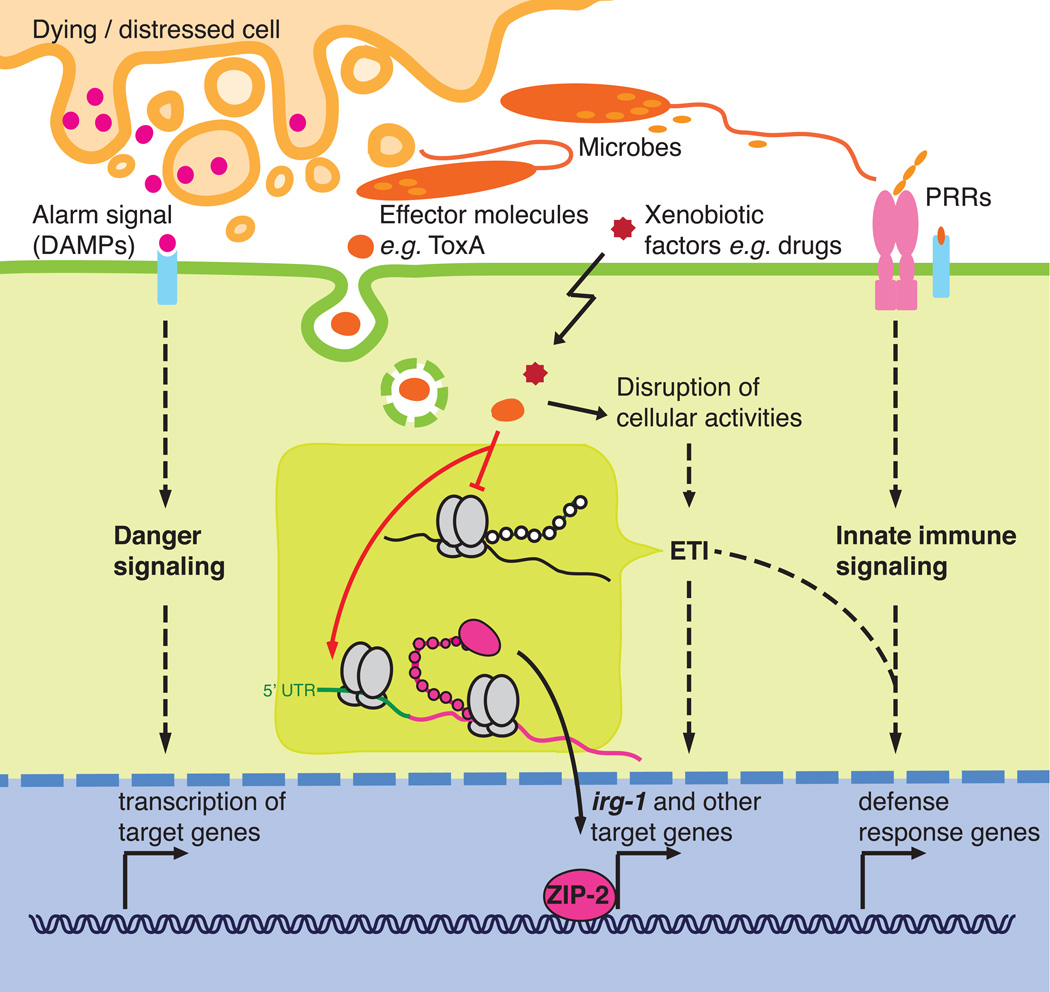
Pattern recognition receptors (PRRs) bind microbial components and trigger signaling cascades, which lead to the transcription of potent antimicrobial peptides, cytokines, and other defense response genes. To discriminate harmless commensal microbes from pathogens and to indirectly sense the presence of pathogenic effector molecules (toxins/virulence factors) that PRRs fail to recognize, cells monitor alarm signals from distressed or dying neighboring cells (Danger model) and/or the integrity of essential cellular functions in the effector-triggered immunity model (ETI). For example, inhibition of translation by bacterial toxins or drugs activates translation of the ZIP-2 message and the induction of the irg-1 response in C. elegans.
Comment on
-
Host translational inhibition by Pseudomonas aeruginosa Exotoxin A Triggers an immune response in Caenorhabditis elegans.Cell Host Microbe. 2012 Apr 19;11(4):364-74. doi: 10.1016/j.chom.2012.02.007. Cell Host Microbe. 2012. PMID: 22520464 Free PMC article.
-
C. elegans detects pathogen-induced translational inhibition to activate immune signaling.Cell Host Microbe. 2012 Apr 19;11(4):375-86. doi: 10.1016/j.chom.2012.02.008. Cell Host Microbe. 2012. PMID: 22520465 Free PMC article.
References
Publication types
Grants and funding
LinkOut - more resources
Full Text Sources
