. 2012 Apr 19;11(4):364-74.
doi: 10.1016/j.chom.2012.02.007.

Host translational inhibition by Pseudomonas aeruginosa Exotoxin A Triggers an immune response in Caenorhabditis elegans

Affiliations

Host translational inhibition by Pseudomonas aeruginosa Exotoxin A Triggers an immune response in Caenorhabditis elegans

Deborah L McEwan et al. Cell Host Microbe. .

Abstract

Intestinal epithelial cells are exposed to both innocuous and pathogenic microbes, which need to be distinguished to mount an effective immune response. To understand the mechanisms underlying pathogen recognition, we investigated how Pseudomonas aeruginosa triggers intestinal innate immunity in Caenorhabditis elegans, a process independent of Toll-like pattern recognition receptors. We show that the P. aeruginosa translational inhibitor Exotoxin A (ToxA), which ribosylates elongation factor 2 (EF2), upregulates a significant subset of genes normally induced by P. aeruginosa. Moreover, immune pathways involving the ATF-7 and ZIP-2 transcription factors, which protect C. elegans from P. aeruginosa, are required for preventing ToxA-mediated lethality. ToxA-responsive genes are not induced by enzymatically inactive ToxA protein but can be upregulated independently of ToxA by disruption of host protein translation. Thus, C. elegans has a surveillance mechanism to recognize ToxA through its effect on protein translation rather than by direct recognition of either ToxA or ribosylated EF2.


Figures

Figure 1
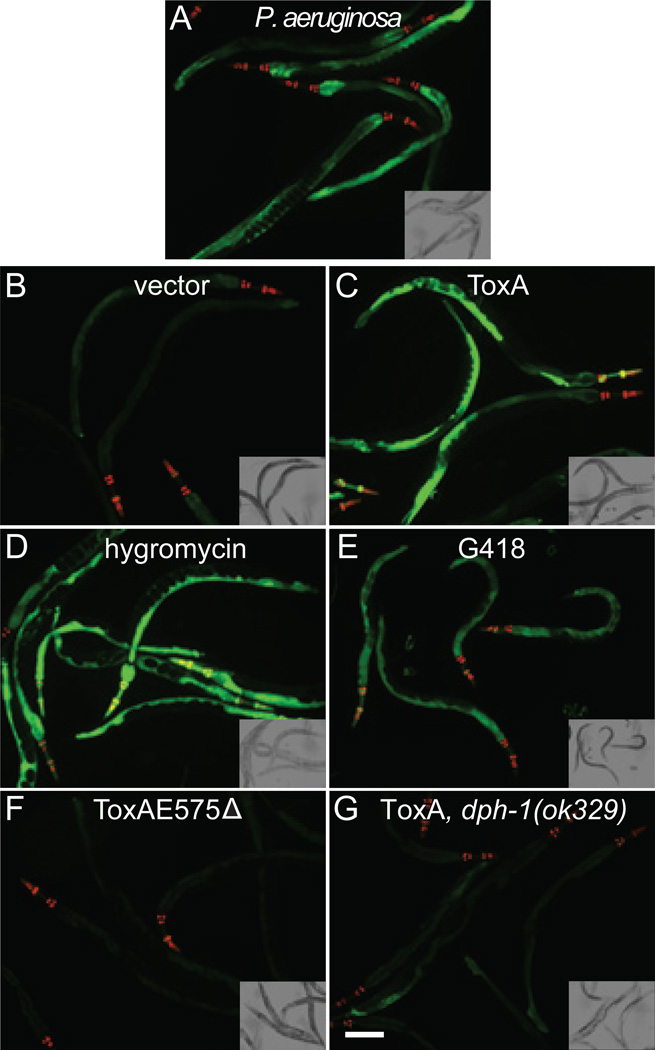
Figure 1. The immune reporter irg-1::GFP is activated by ToxA and translational inhibitors but not by inactive ToxA protein
A C. elegans strain containing the irg-1::GFP reporter was exposed to P. aeruginosa PA14 (A); E. coli expressing either an empty expression vector (B) or ToxA (C); the translational elongation inhibitors hygromycin (D) or G418 (E); or ToxA in conditions where it causes less cellular damage because it is missing an essential catalytic residue (ToxAE575Δ; F) or because C. elegans lacks its diphthamide target (dph-1 mutant; G). All animals were exposed to the indicated condition for 24 hours starting at the L4 stage. Red pharyngeal expression is due to the co-injection marker myo-2::mCherry and confirms the presence of the transgene. All images were taken at the same time using the same camera settings. Scale bar represents 100 μm. Insets are the corresponding bright field image. See also Figure S1.
Figure 2
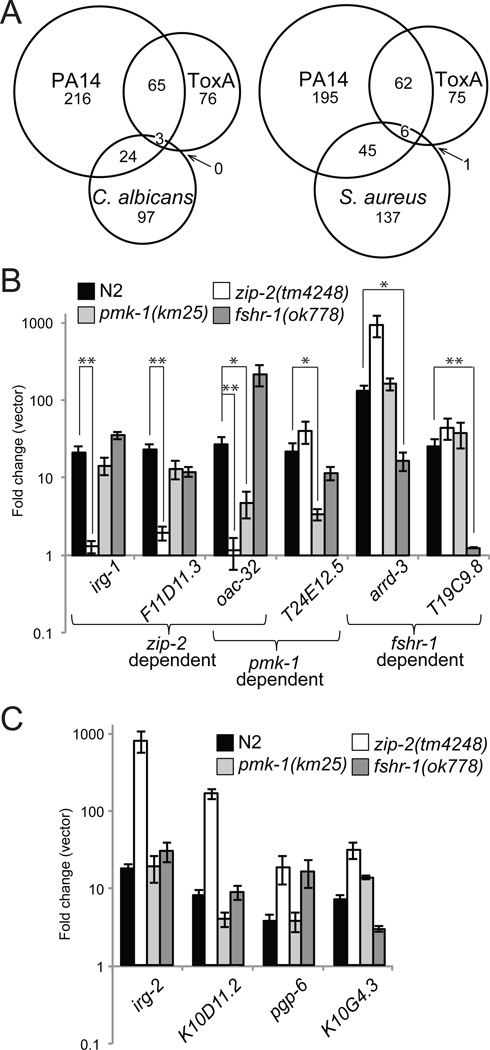
Figure 2. ToxA induces a subset of P. aeruginosa-induced genes through several signaling pathways
(A) Venn diagrams comparing the overlaps in genes activated by ToxA, Gram-negative P. aeruginosa PA14 (Troemel et al., 2006), and either the yeast C. albicans (Pukkila-Worley et al., 2011) or Gram-positive S. aureus (Irazoqui et al., 2010a). All microarrays were conducted with the Affymetrix GeneChip platform using animals infected at the L4/young adult stage and collected after 24 hours (ToxA), 8 hours (S. aureus), or 4 hours (PA14, C. albicans). See also Figure S2. (B and C) qRT-PCR analysis in different mutant backgrounds of genes normally activated by ToxA. ** Genes with ≥10-fold lower induction to ToxA as compared to wild-type N2 animals with p<0.05. * Genes with ≥5-fold lower induction to ToxA as compared to N2 with p<0.05. Results shown are an average of 6 (N2) or 3 (pmk-1, zip-2, fshr-1) biological replicates. Error bars represent SEM. P values determined with a 2-tailed unpaired t-test.
Figure 3
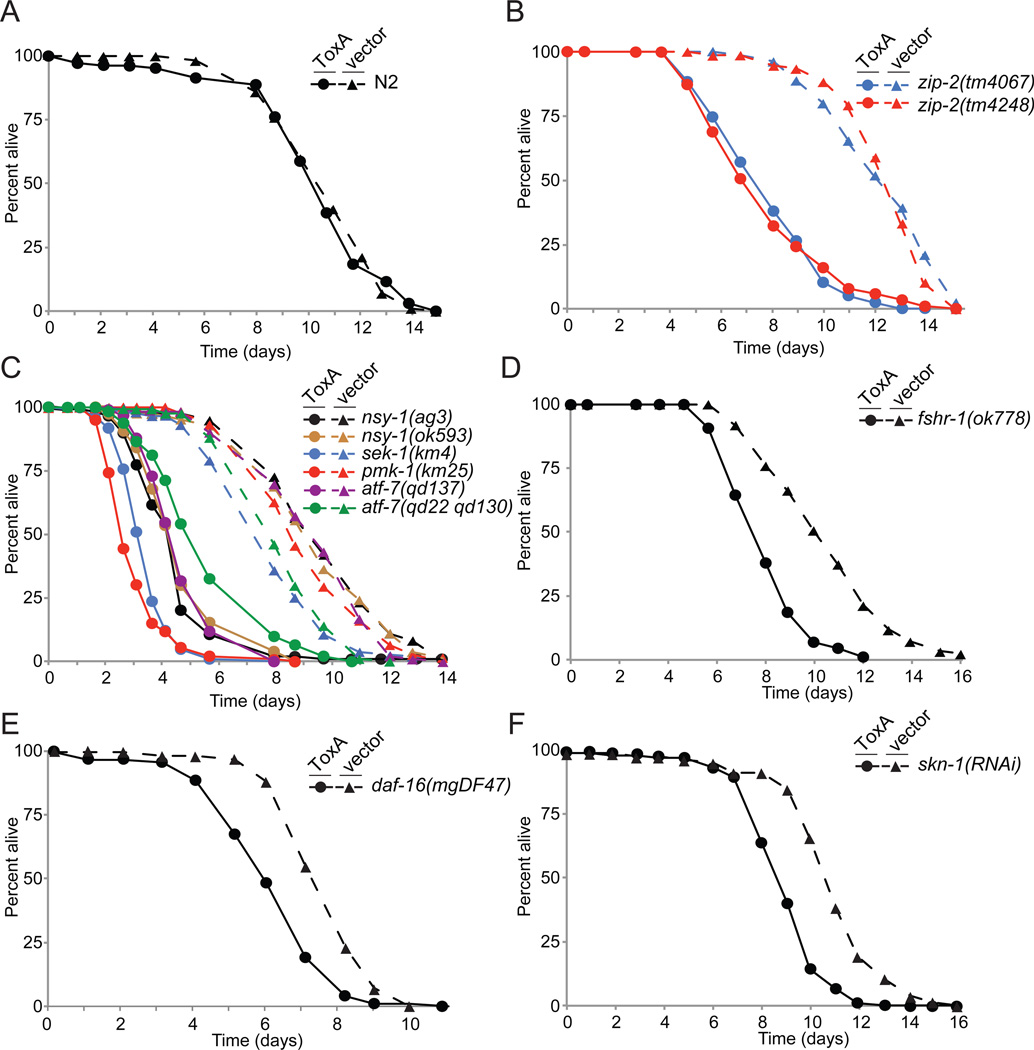
Figure 3. Multiple pathways contribute to ToxA resistance
Lifespan of wild-type N2 (A), zip-2 mutant (B), p38 MAP kinase pathway mutant (C), fshr-1 mutant (D), daf-16 mutant (E), or skn-1 RNAi (F) worms fed E. coli expressing either ToxA or an empty expression vector starting at the L4 stage. Circles represent animals fed ToxA and triangles indicate vector control food. See also Figure S3.
Figure 4
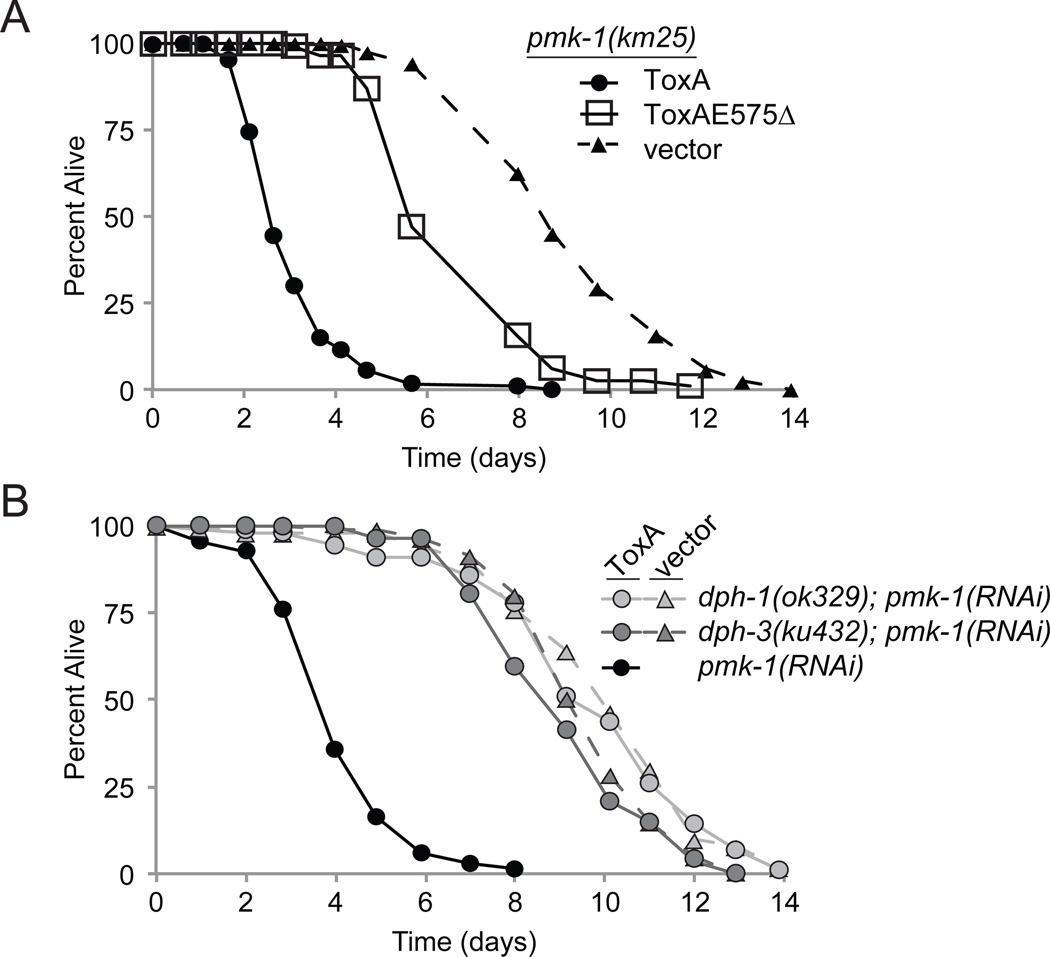
Figure 4. Mutating ToxA or removing the C. elegans diphthamide modification inhibits ToxA-mediated lethality
(A) Lifespan comparison of pmk-1(km25) mutants fed either wild-type ToxA, the catalytic mutant ToxAE575Δ, or vector control food. (B) Lifespan comparison between wild-type N2 and diphthamide synthesis mutants when fed ToxA following pmk-1 RNAi. All assays were started with L4 stage animals.
Figure 5
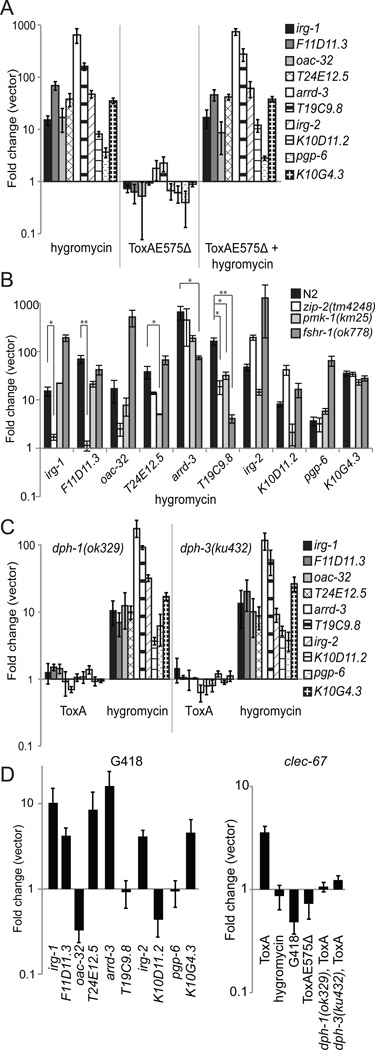
Figure 5. ToxA genes are upregulated by translational inhibition but not by catalytically inactive ToxA protein
(A-E) qRT-PCR analysis of ToxA-responsive genes exposed to the indicated condition. N2 animals were tested unless otherwise noted. As shown in B, 4 genes (irg-1, F11D11.3, T24E12.5, and arrd-3) required the same pathways to respond to both hygromycin and ToxA (compare to Figure 2B). Hygromycin-induced expression of oac-32 was reduced in zip-2 and pmk-1 mutants (7 and 2 fold respectively), but this reduction was not statistically significant (p>0.05). Both hygromycin and ToxA-induced expression of T19C9.8 required fshr-1 but only hygromycin-mediated activation additionally required zip-2 and pmk-1. None of these gene inductions depended on skn-1 but daf-16 was necessary for the upregulation of T19C9.8 in response to hygromycin [11-fold reduction in daf-16(mgDF47) mutants, p<0.05]. However, as with ToxA, exposure to hygromycin was not sufficient to cause strong nuclear translation of DAF-16 (not shown). ** Genes with ≥ 10-fold lower induction to hygromycin as compared to wild-type N2 animals with p<0.05. * Genes with ≥5-fold lower induction to hygromycin as compared to N2 with p<0.05. Results shown are an average of 6 (A, B and E N2 hygromycin; D ToxA) or 3 (all remaining conditions) biological replicates. Error bars represent SEM. P values determined with a 2-tailed unpaired t-test. See also Figure S4.

Comment in

References

    1. Bjorn MJ, Vasil ML, Sadoff JC, Iglewski BH. Incidence of exotoxin production by Pseudomonas species. Infect Immun. 1977;16:362–366. - PMC - PubMed
    1. Bolz DD, Tenor JL, Aballay A. A Conserved PMK-1/p38 MAPK Is Required in Caenorhabditis elegans Tissue-specific Immune Response to Yersinia pestis Infection. Journal of Biological Chemistry. 2010;285:10832–10840. - PMC - PubMed
    1. Boyer L, Magoc L, Dejardin S, Cappillino M, Paquette N, Hinault C, Charriere Guillaume M, Ip WKE, Fracchia S, Hennessy E, et al. Pathogen-Derived Effectors Trigger Protective Immunity via Activation of the Rac2 Enzyme and the IMD or Rip Kinase Signaling Pathway. Immunity. 2011;35:536–549. - PMC - PubMed
    1. Brenner S. The genetics of Caenorhabditis elegans. Genetics. 1974;77:71–94. - PMC - PubMed
    1. Curran SP, Ruvkun G. Lifespan Regulation by Evolutionarily Conserved Genes Essential for Viability. PLoS Genet. 2007;3:e56. - PMC - PubMed

Publication types

MeSH terms