


Longitudinal trajectories of metabolic control across adolescence: associations with parental involvement, adolescents' psychosocial maturity, and health care utilization
- PMID: 22525113
- PMCID: PMC4403632
- DOI: 10.1016/j.jadohealth.2011.09.007
Longitudinal trajectories of metabolic control across adolescence: associations with parental involvement, adolescents' psychosocial maturity, and health care utilization
Abstract
Purpose: To predict trajectories of metabolic control across adolescence from parental involvement and adolescent psychosocial maturity, and to link metabolic control trajectories to health care utilization.
Methods: Two hundred fifty-two adolescents (M age at study initiation = 12.5 years, SD = 1.5, range = 10-14 years) with type 1 diabetes (54.4% female, 92.8% Caucasian, length of diagnosis M = 4.7 years, SD = 3.0, range = 1-12 years) participated in a 2-year longitudinal study. Metabolic control was gathered from medical records every 3 months. Adolescents completed measures of self-reliance (functional autonomy and extreme peer orientation), self-control (self-control and externalizing behavior), and parental involvement in diabetes care (acceptance, monitoring, and frequency of help). At the end of the study, mothers reported health care utilization (diabetes-related emergency room visits and hospitalizations) over the past 6 months.
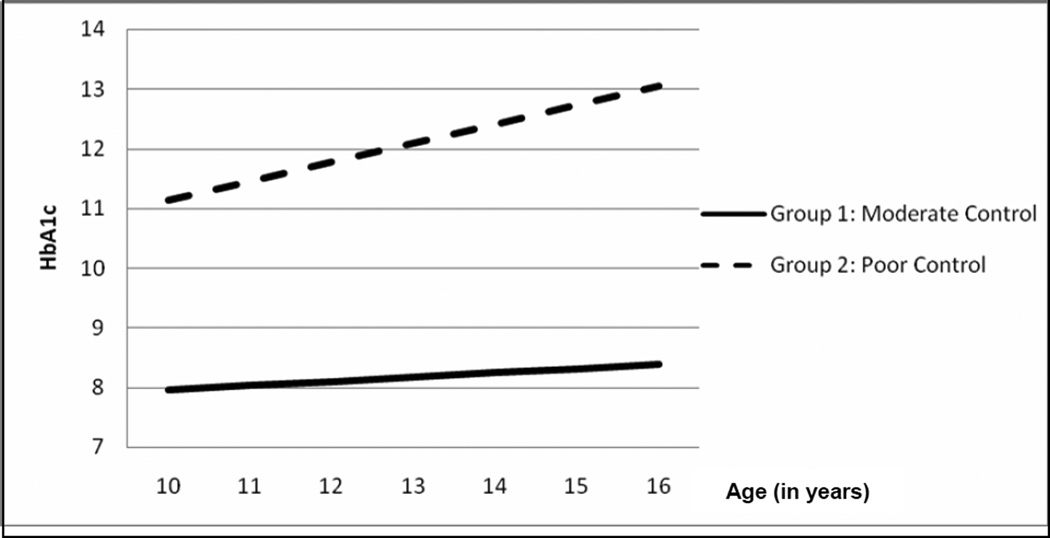
Results: Latent class growth analyses indicated two distinct trajectories of metabolic control across adolescence: moderate control with slight deterioration (92% of the sample; average HbA1c = 8.18%) and poor control with rapid deterioration (8% of the sample; average HbA1c of 12.09%). Adolescents with poor and rapidly deteriorating metabolic control reported lower paternal monitoring and frequency of help with diabetes management, lower functional autonomy, and lower self-control than others. Those with poor and rapidly deteriorating metabolic control were 6.4 times more likely to report diabetes-related emergency room visits, and 9.3 times more likely to report diabetes-related hospitalizations near the end of the study.
Conclusions: Parental involvement and adolescents' psychosocial maturity predict patterns of deteriorating metabolic control across adolescence and could be targeted for intervention.
Copyright © 2012 Society for Adolescent Health and Medicine. Published by Elsevier Inc. All rights reserved.
Figures
References
-
- Bryden KS, Peveler RC, Stein A, Neil A, Mayou RA, Dunger DB. Clinical and psychological course of diabetes from adolescence to young adulthood. Diabetes Care. 2001;24(9):1536–1540. - PubMed
-
- Diabetes Control and Complications Trial Research Group. Effect of intensive diabetes treatment on the development and progression of long-term complications in adolescents with insulin-dependent diabetes mellitus. Journal of Pediatrics. 1994;125:177–188. - PubMed
Publication types
MeSH terms
Grants and funding
LinkOut - more resources
Full Text Sources
Medical
Miscellaneous
