


EGFR L861Q mutation is a frequent feature of pulmonary mucoepidermoid carcinoma
- PMID: 22526156
- PMCID: PMC11824773
- DOI: 10.1007/s00432-012-1211-5
EGFR L861Q mutation is a frequent feature of pulmonary mucoepidermoid carcinoma
Abstract
Purpose: The purpose of this study is to assess the feasibility of targeted treatment for pulmonary mucoepidermoid carcinoma (PMEC) by investigating track record of the epidermal growth factor receptor (EGFR) mutation status in PMEC.
Methods: From January 2001 to December 2009, 20 PMEC patients (11 males and 9 females) received treatment in our center. All the patients received surgery and were diagnosed by pathology. Sequencing analysis was used to monitor exons 18-21 of the EGFR gene mutation.
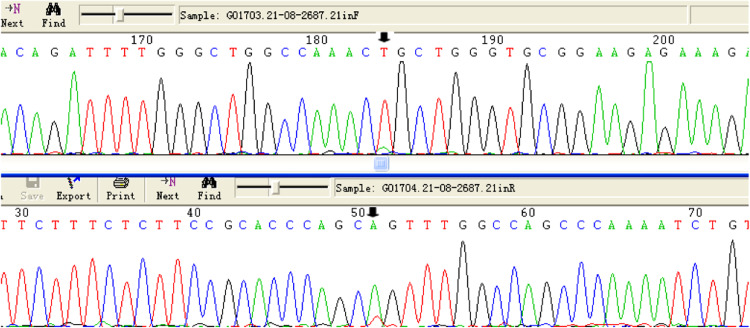
Results: The exon 21 L861Q heterozygous mutation was confirmed in five patients. There was no case with any deletion in exon 19 or exon 21 L858R mutation. One case was with a homonymy exon 18 mutation (I760I). Exon 20 G2607A (Q787Q) SNP was found in 12 of those 20 patients.
Conclusion: L861Q mutation in exon 21 is the most frequent feature of heterozygous mutation in our study. Further investigations will be required to validate our findings.
Figures

References
-
- Chin CH, Huang CC, Lin MC, Chao TY, Liu SF (2008) Prognostic factors of tracheobronchial mucoepidermoid carcinoma-15 years experience. Respirology 13:275–280 - PubMed
-
- Han SW, Kim HP, Jeon YK, Oh DY, Lee SH, Kim DW et al (2008) Mucoepidermoid carcinoma of lung: potential target of EGFR-directed treatment. Lung Cancer 61:30–34 - PubMed
-
- Heitmiller RF, Mathisen DJ, Ferry JA, Mark EJ, Grillo HC (1989) Mucoepidermoid lung tumors. Ann Thorac Surg 47:394–399 - PubMed
-
- Kang DY, Yoon YS, Kim HK, Choi YS, Kim K, Shim YM, Kim J (2011) Primary salivary gland-type lung cancer: surgical outcomes. Lung Cancer 72:250–254 - PubMed
MeSH terms
Substances
LinkOut - more resources
Full Text Sources
Medical
Research Materials
Miscellaneous
