


Human parainfluenza virus infection after hematopoietic stem cell transplantation: risk factors, management, mortality, and changes over time
- PMID: 22531491
- PMCID: PMC3443286
- DOI: 10.1016/j.bbmt.2012.04.012
Human parainfluenza virus infection after hematopoietic stem cell transplantation: risk factors, management, mortality, and changes over time
Abstract
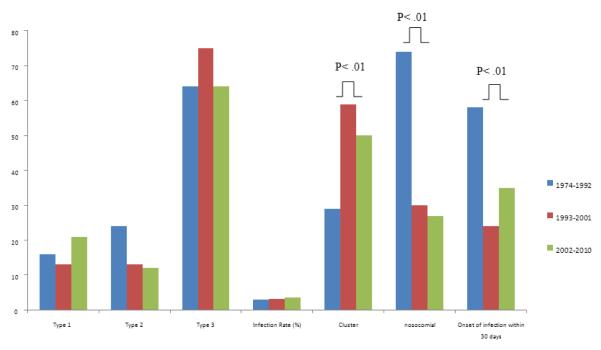
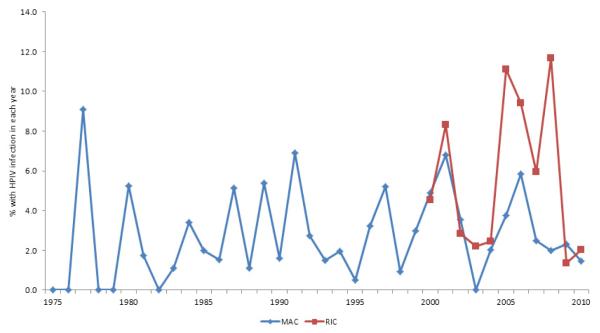
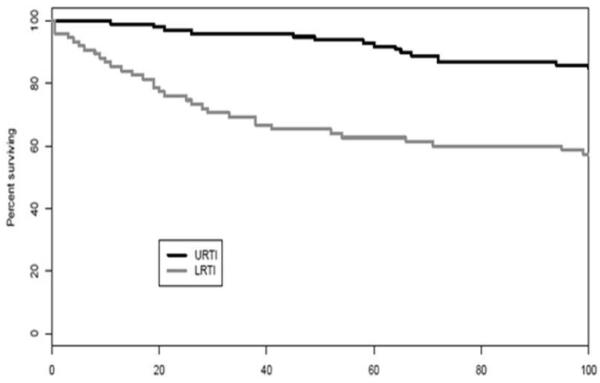
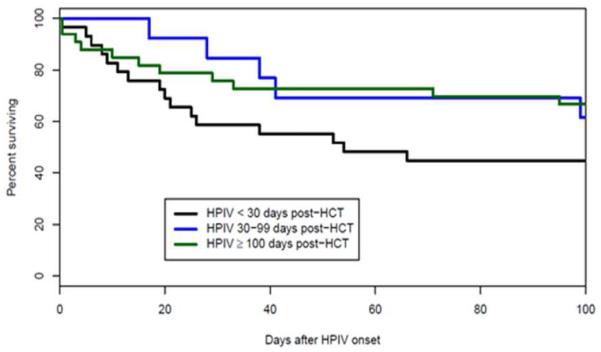
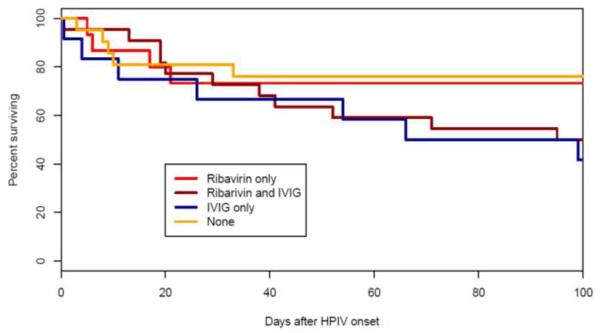
Human parainfluenza viruses (HPIVs) are uncommon, yet high-risk pathogens after hematopoietic stem cell transplant (HCT). We evaluated 5178 pediatric and adult patients undergoing HCT between 1974 and 2010 to determine the incidence, risk factors, response to treatment, and outcome of HPIV infection as well as any change in frequency or character of HPIV infection over time. HPIV was identified in 173 patients (3.3%); type 3 was most common (66%). HPIV involved upper respiratory tract infection (URTI; 57%), lower respiratory tract infection (LRTI; 9%), and both areas of the respiratory tract (34%), at a median of 62 days after transplantation. In more recent years, HPIV has occurred later after HCT, whereas the proportion with nosocomial infection and mortality decreased. Over the last decade, HPIV was more common in older patients and in those receiving reduced intensity conditioning (RIC). RIC was a significant risk factor for later (beyond day +30). HPIV infections, and this association was strongest in patients with URTI. HCT using a matched unrelated donor (MURD), mismatched related donor (MMRD), age 10 to 19 years, and graft-versus-host disease (GVHD) were all risk factors for HPIV infections. LRTI, early (<30 days), age 10 to 19 years, MMRD, steroid use, and coinfection with other pathogens were risk factors for mortality. The survival of patients with LRTI, especially very early infections, was poor regardless of ribavirin treatment. HPIV incidence remains low, but may have delayed onset associated with RIC regimens and improving survival. Effective prophylaxis and treatment for HPIV are needed.
Copyright © 2012 American Society for Blood and Marrow Transplantation. Published by Elsevier Inc. All rights reserved.
Figures
References
-
- Wendt CH, Weisdorf DJ, Jordan MC, Balfour HH, Jr., Hertz MI. Parainfluenza virus respiratory infection after bone marrow transplantation. N Engl J Med. 1992;326:921–926. - PubMed
-
- Reed G, Jewett PH, Thompson J, Tollefson S, Wright PF. Epidemiology and clinical impact of parainfluenza virus infections in otherwise healthy infants and young children < 5 years old. J Infect Dis. 1997;175:807–813. - PubMed
-
- Arisoy ES, Demmler GJ, Thakar S, Doerr C. Meningitis due to parainfluenza virus type 3: report of two cases and review. Clin Infect Dis. 1993;17:995–997. - PubMed
-
- Henderson FW. Pulmonary infections with respiratory syncytial virus and the parainfluenza viruses. Semin Respir Infect. 1987;2:112–121. - PubMed
-
- Henderson FW, Collier AM, Sanyal MA, et al. A longitudinal study of respiratory viruses and bacteria in the etiology of acute otitis media with effusion. N Engl J Med. 1982;306:1377–1383. - PubMed
Publication types
MeSH terms
Substances
Grants and funding
LinkOut - more resources
Full Text Sources
