


Anticoagulation techniques in apheresis: from heparin to citrate and beyond
- PMID: 22532037
- PMCID: PMC3366026
- DOI: 10.1002/jca.21222
Anticoagulation techniques in apheresis: from heparin to citrate and beyond
Abstract
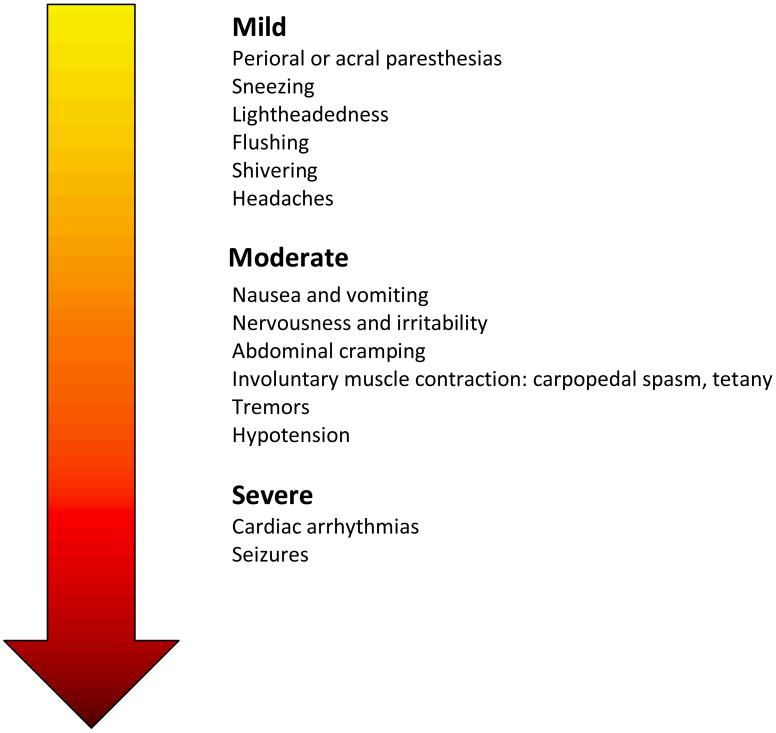
Anticoagulation is essential for maintaining the fluidity of extravascular blood on the apheresis circuit. Although both citrate and heparin are used as an anticoagulant during apheresis, citrate is preferred for the majority of exchange procedures because of its safety and effectiveness. Complications of citrate are primarily due to physiologic effects of hypocalcemia. Symptoms of hypocalcemia and other citrate-induced metabolic abnormalities affect neuromuscular and cardiac function and range in severity from mild dysesthesias (most common) to tetany, seizures, and cardiac arrhythmias. Oral or intravenous calcium supplementation is advised for decreased ionized calcium levels and/or symptomatic management of hypocalcemia. Heparin-based anticoagulation is limited to certain apheresis procedures (membrane-based plasma exchange, LDL apheresis, or photopheresis) or is used in combination with citrate to reduce citrate load. While effective, heparin anticoagulation is associated with an increased frequency of bleeding complications and heparin-induced thrombocytopenia. J. Clin. Apheresis 2012. © 2012 Wiley Periodicals, Inc.
Copyright © 2012 Wiley Periodicals, Inc.
Figures
References
-
- Mollison PL. The introduction of citrate as an anticoagulant for transfusion and of glucose as a red cell preservative. Br J Haematol. 2000;108:13–8. - PubMed
-
- Carlon GC, Howland WS, Goldiner PL, Kahn RC, Bertoni G, Turnbull AD. Adverse effects of calcium administration. Report of two cases. Arch Surg. 1978;113:882–5. - PubMed
-
- Strauss RG. Mechanisms of adverse effects during hemapheresis. J Clin Apher. 1996;11:160–4. - PubMed
-
- Hastings AB, M F, Eichelberger L, Hall Jl, Da Costa E. The ionization of calcium, magnesium, and strontium citrates. J Biol Chem. 1934;107:351–70.
-
- Flanigan MJ, Pillsbury L, Sadewasser G, Lim VS. Regional hemodialysis anticoagulation: hypertonic tri-sodium citrate or anticoagulant citrate dextrose-A. Am J Kidney Dis. 1996;27:519–24. - PubMed
Publication types
MeSH terms
Substances
Grants and funding
LinkOut - more resources
Full Text Sources
Other Literature Sources
Medical
