


The Economic impact of Non-communicable Diseases on households in India
- PMID: 22533895
- PMCID: PMC3383461
- DOI: 10.1186/1744-8603-8-9
The Economic impact of Non-communicable Diseases on households in India
Abstract
Background: In India, Non Communicable Diseases (NCDs) and injuries account for an estimated 62% of the total age-standardized burden of forgone Disability Adjusted Life Years (DALYs). Public and private financing of clinical services to reduce the NCD burden is a major challenge.
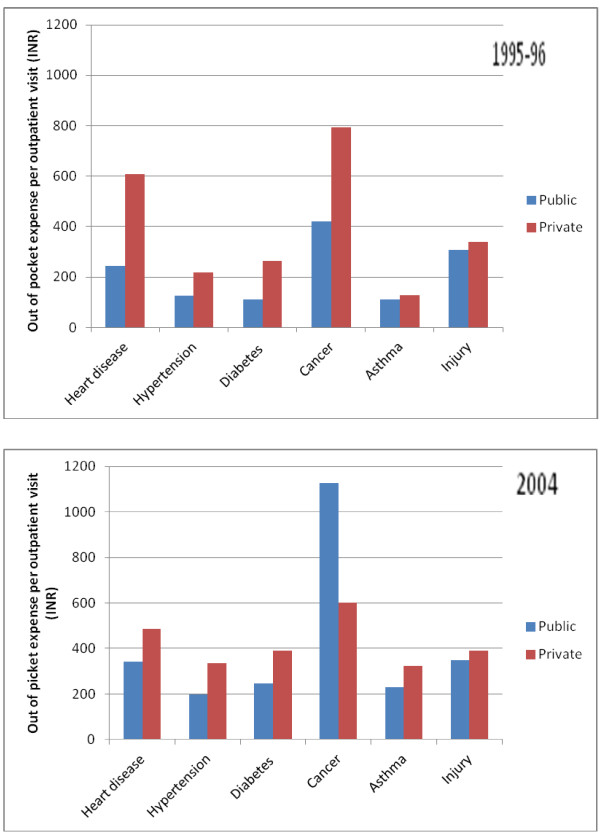
Methods: We used National Sample Survey Organization (NSSO) survey data from 1995-96 and 2004 covering nearly 200 thousand households to assess healthcare utilization patterns and out of pocket health spending by disease category. For this purpose, self-reported diseases and conditions were categorized into NCDs and non-NCDs. Survey data were used to assess how households financed their overall health expenditures and related this pattern to specific health conditions. We measured catastrophic spending on NCD-related hospitalization, defined as occurring when health expenditures exceeded 40% of a household's ability to pay, that is, household consumption spending less combined survival consumption expenditure; and impoverishment when per capita expenditure within the household decreased to below the poverty line once health spending was netted out.
Results: The share of NCDs in out of pocket health expenses incurred by households increased over time, from 31.6 percent in 1995-96 to 47.3 percent in 2004. In both years, own savings and income were the most important source of financing for many health conditions, typically between 40-60 percent of all spending, whereas 30-35 percent was from borrowing. The odds of catastrophic hospitalization expenditures for cancer was nearly 170% greater and for CVD and injuries 22 percent greater than the odds due to communicable diseases. Impoverishment patterns were similar.
Conclusions: Out of pocket expenses for treating NCDs rose sharply over the period from 1995-96 to 2004. When NCDs are present, the financial risks to which Indians households are exposed are significant.
Figures




References
-
- World Health Organization. The Global Burden of Disease. 2004 Update. 2008.
-
- Arnold FP, Arokiasamy S, Kothari P, MNutrition in India: National Family Health Survey (NFHS-3) India 2005-6. 2009.
-
- Ghaffar A, Hyder AA. Road traffic injuries, health and development-the new challenge for public health systems in South Asia. J Coll Physicians Surg Pak. 2004;14(12):704. - PubMed
Grants and funding
LinkOut - more resources
Full Text Sources
