


Dynamic role of epithelium-derived cytokines in asthma
- PMID: 22534317
- PMCID: PMC3358585
- DOI: 10.1016/j.clim.2012.03.001
Dynamic role of epithelium-derived cytokines in asthma
Abstract
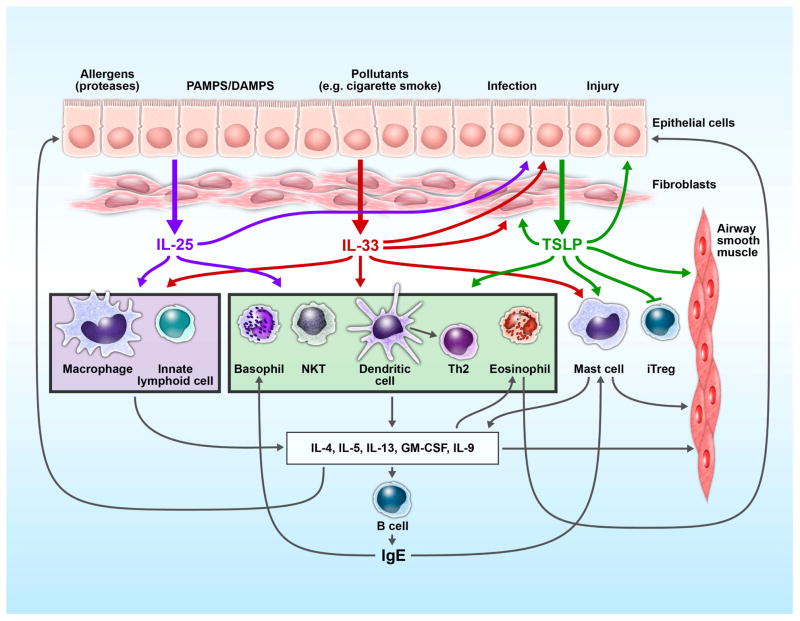
Asthma is an inflammatory disorder of the airways, characterized by infiltration of mast cells, eosinophils, and Th2-type CD4+ T cells in the airway wall. Airway epithelium constitutes the first line of interaction with our atmospheric environment. The protective barrier function of the airway epithelium is likely impaired in asthma. Furthermore, recent studies suggest critical immunogenic and immunomodulatory functions of airway epithelium. In particular, a triad of cytokines, including IL-25, IL-33 and TSLP, is produced and released by airway epithelial cells in response to various environmental and microbial stimuli or by cellular damage. These cytokines induce and promote Th2-type airway inflammation and cause remodeling and pathological changes in the airway walls, suggesting their pivotal roles in the pathophysiology of asthma. Thus, the airway epithelium can no longer be regarded as a mere structural barrier, but must be considered an active player in the pathogenesis of asthma and other allergic disorders.
Copyright © 2012 Elsevier Inc. All rights reserved.
Figures
References
-
- Wills-Karp M. Immunologic basis of antigen-induced airway hyperresponsiveness. Annu Rev Immunol. 1999;17:255–281. - PubMed
-
- Corren J. Cytokine inhibition in severe asthma: current knowledge and future directions. Curr Opin Pulm Med. 2011;17:29–33. - PubMed
-
- Chakir J, Shannon J, Molet S, et al. Airway remodeling-associated mediators in moderate to severe asthma: effect of steroids on TGF-beta, IL-11, IL-17, and type I and type III collagen expression. J Allergy Clin Immunol. 2003;111:1293–1298. - PubMed
-
- Molet S, Hamid Q, Davoine F, et al. IL-17 is increased in asthmatic airways and induces human bronchial fibroblasts to produce cytokines. J Allergy Clin Immunol. 2001;108:430–438. - PubMed
Publication types
MeSH terms
Substances
Grants and funding
LinkOut - more resources
Full Text Sources
Medical
Research Materials
