


Mini-haplotypes as lineage informative SNPs and ancestry inference SNPs
- PMID: 22535184
- PMCID: PMC3476707
- DOI: 10.1038/ejhg.2012.69
Mini-haplotypes as lineage informative SNPs and ancestry inference SNPs
Abstract
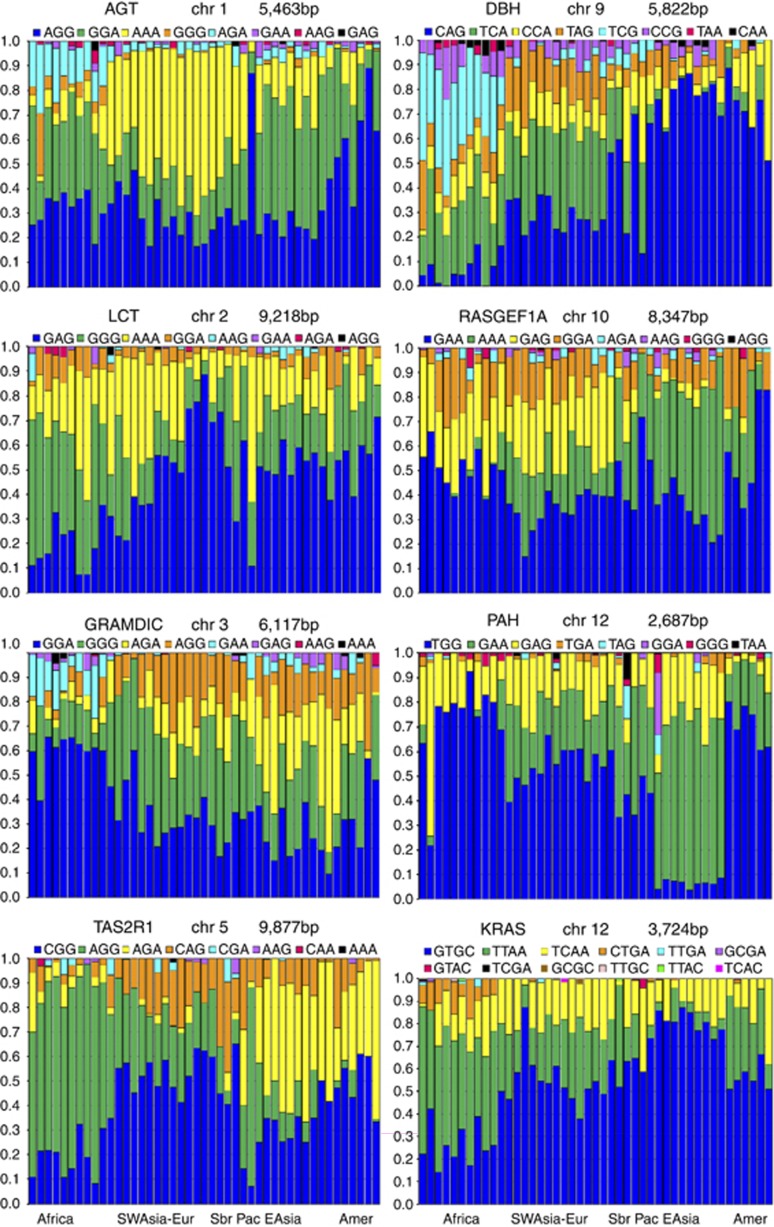
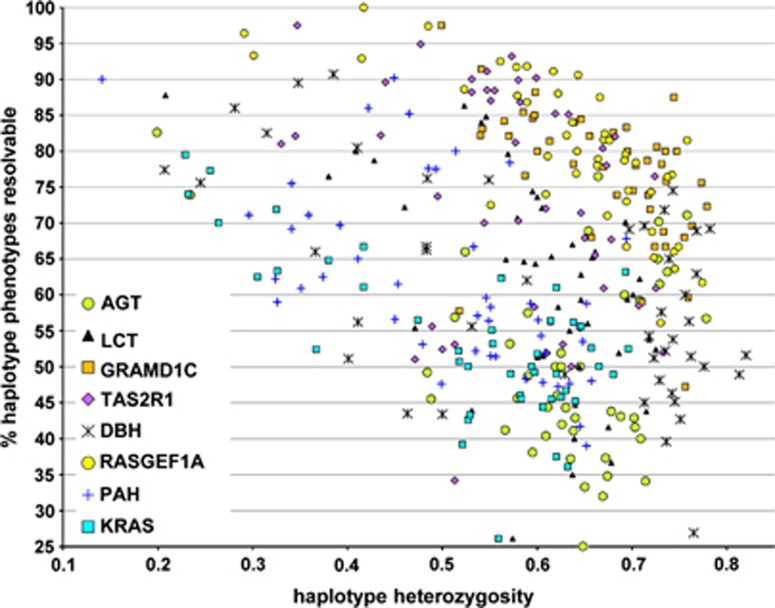
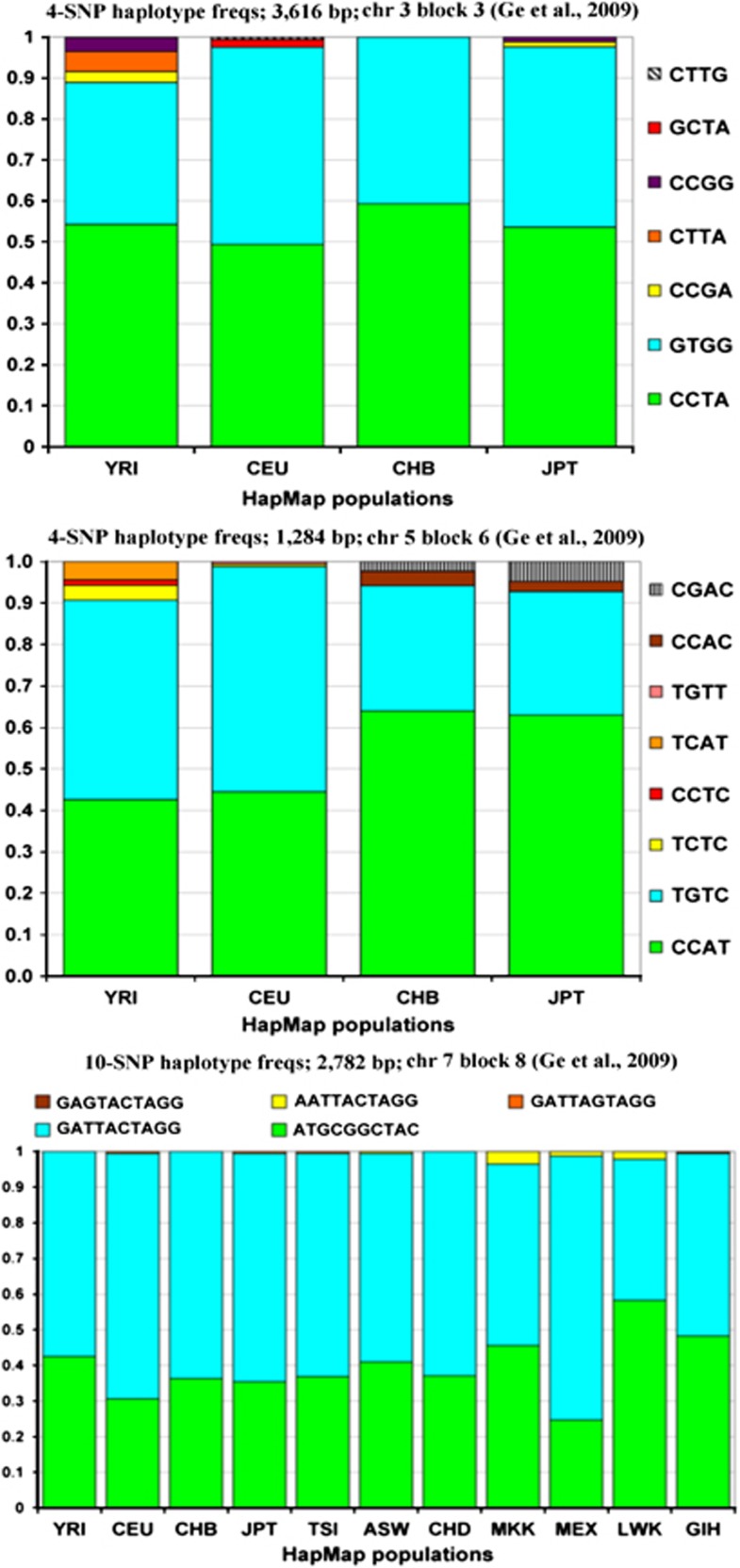
We propose that haplotyped loci with high heterozygosity can be useful in human identification, especially within families, if recombination is very low among the sites. Three or more SNPs extending over small molecular intervals (<10 KB) can be identified in the human genome to define miniature haplotypes with moderate levels of linkage disequilibrium. Properly selected, these mini-haplotypes (or minihaps) consist of multiple haplotype lineages (alleles) that have evolved from the ancestral human haplotype but show no evidence of recurring recombination, allowing each distinct haplotype to be equated with an allele, all copies of which are essentially identical by descent. Historic recombinants, representing rare events that have drifted to common frequencies over many generations, can be identified in some cases, they do not equate to frequently recurring recombination. We have identified examples in our data collected on various projects and present eight such mini-haplotypes comprised of informative SNPs. We also discuss the ideal characteristics and advantages of minihaps for human familial identification and ancestry inference, and compare them to other types of forensic markers in use and/or that have been proposed. We expect that it is possible to carry out a systematic search and identify a useful panel of mini-haplotypes, with even better properties than the examples presented here.
Figures
References
-
- Pakstis AJ, Speed WC, Kidd JR, Kidd KK.An expanded, nearly universal, panel of SNPs for individual identification Poster Presented at Annual NIJ Meeting 2007. available online: http://medicine.yale.edu/labs/kidd/www/NIJposter2007.pdf .
-
- Butler JM, Budowle B, Gill P, et al. Report on ISFG SNP panel discussion. Forensic Sci Int. 2008;1:471–472.
-
- Ge J, Budowle B, Planz JV, Chakraborty R. Haplotype block: a new type of forensic DNA markers. Int J Legal Med. 2010;124:353–361. - PubMed
-
- Gabriel SB, Schaffner SF, Nguyen H, et al. The structure of haplotype blocks in the human genome. Science. 2002;296:2225–2229. - PubMed
Publication types
MeSH terms
Grants and funding
LinkOut - more resources
Full Text Sources
