


Cocaine self-administration behaviors in ClockΔ19 mice
- PMID: 22535308
- PMCID: PMC3670183
- DOI: 10.1007/s00213-012-2704-2
Cocaine self-administration behaviors in ClockΔ19 mice
Abstract
Rationale: A key role has been identified for the circadian locomotor output cycles kaput (Clock) gene in the regulation of drug reward. Mice bearing a dominant negative mutation in the Clock gene (ClockΔ19 mice) exhibit increased cocaine-induced conditioned place preference, reduced anxiety- and depression-like behavior, increased sensitivity to intracranial self-stimulation, and increased dopaminergic cell activity in the ventral tegmental area.
Objectives: We sought to determine if this hyperhedonic phenotype extends to cocaine self-administration and measures of motivation.
Methods: Two separate serial testing procedures were carried out (n = 7-10/genotype/schedule). Testing began with acquisition of sucrose pellet self-administration, implantation of intravenous catheter, acquisition of cocaine self-administration, and dose-response testing (fixed ratio or progressive ratio). To evaluate diurnal variations in acquisition behavior, these sessions occurred at Zeitgeber 2 (ZT2) or ZT14.
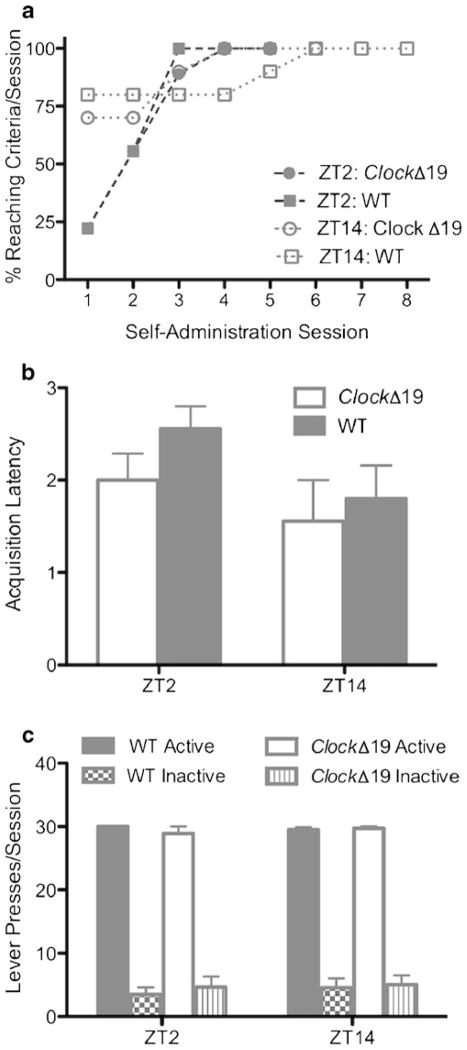
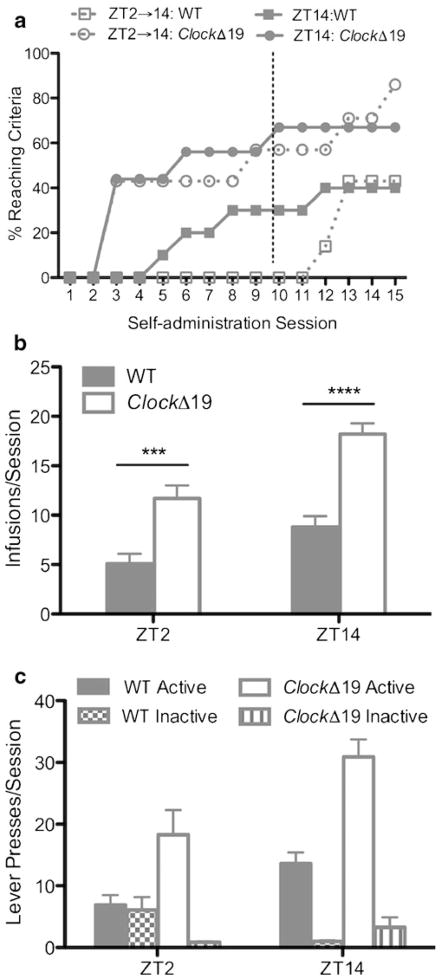
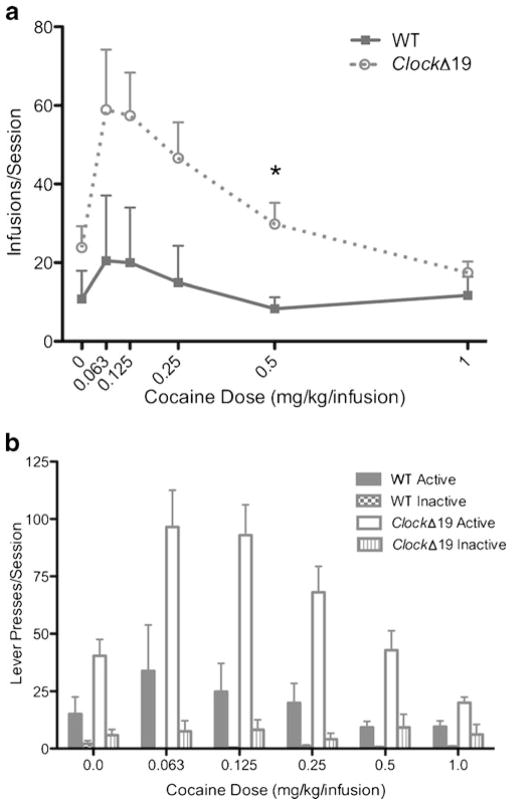
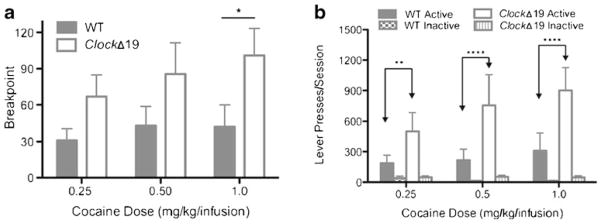
Results: WT and ClockΔ19 mice exhibited similar learning and readily acquired food self-administration at both ZT2 and ZT14. However, only ClockΔ19 mice acquired cocaine self-administration at ZT2. A greater percentage of ClockΔ19 mice reached acquisition criteria at ZT2 and ZT14. ClockΔ19 mice self-administered more cocaine than WT mice. Using fixed ratio and progressive ratio schedules of reinforcement dose-response paradigms, we found that cocaine is a more efficacious reinforcer in ClockΔ19 mice than in WT mice.
Conclusion: Our results demonstrate that the Clock gene plays an important role in cocaine reinforcement and that decreased CLOCK function increases vulnerability for cocaine use.
Conflict of interest statement
Figures
References
-
- Ahmed SH, Koob GF. Transition from moderate to excessive drug intake: change in hedonic set point. Science. 1998;282:298–300. - PubMed
-
- Caine SB, Negus SS, Mello NK. Method for training operant responding and evaluating cocaine self-administration behavior in mutant mice. Psychopharmacology. 1999;147:22–24. - PubMed
Publication types
MeSH terms
Substances
Grants and funding
LinkOut - more resources
Full Text Sources
Medical
Molecular Biology Databases
