PIWI associated siRNAs and piRNAs specifically require the Caenorhabditis elegans HEN1 ortholog henn-1
- PMID: 22536158
- PMCID: PMC3334881
- DOI: 10.1371/journal.pgen.1002616
PIWI associated siRNAs and piRNAs specifically require the Caenorhabditis elegans HEN1 ortholog henn-1
Abstract
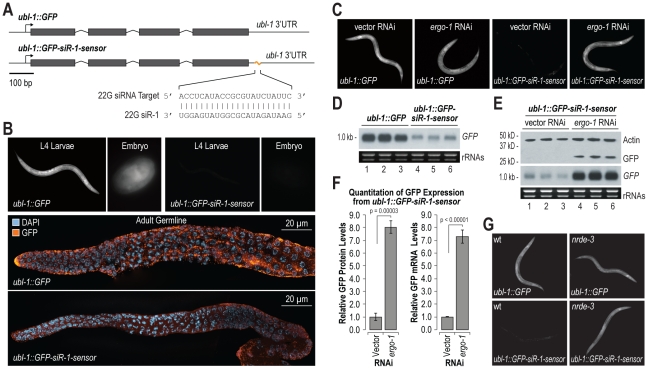
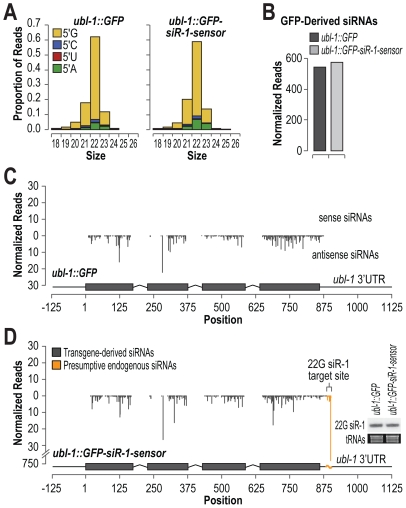
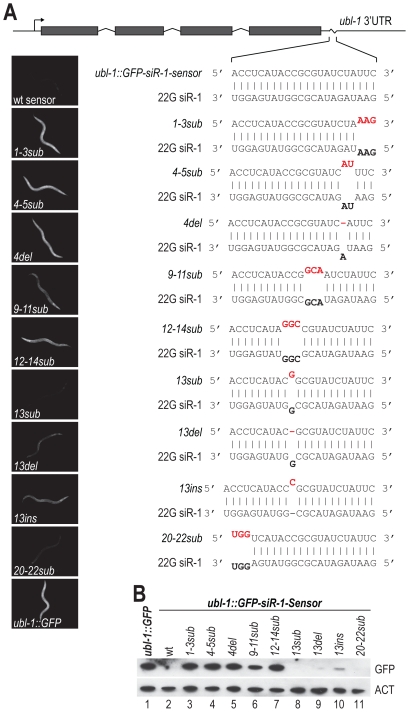
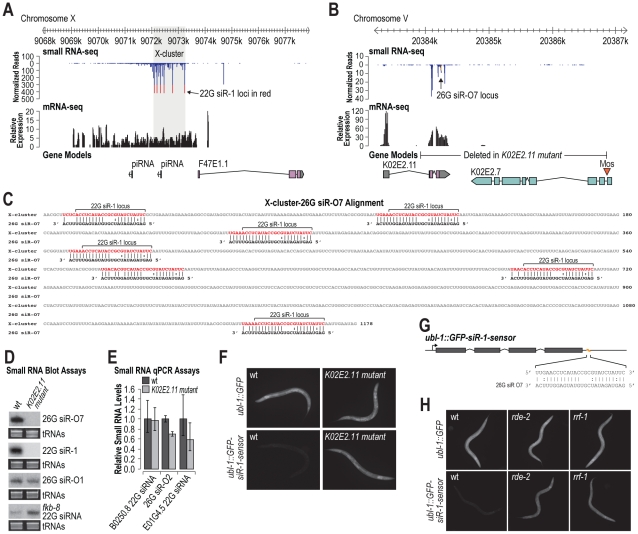
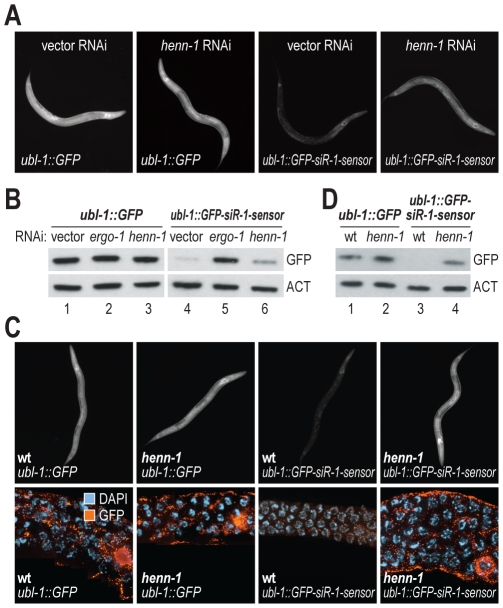
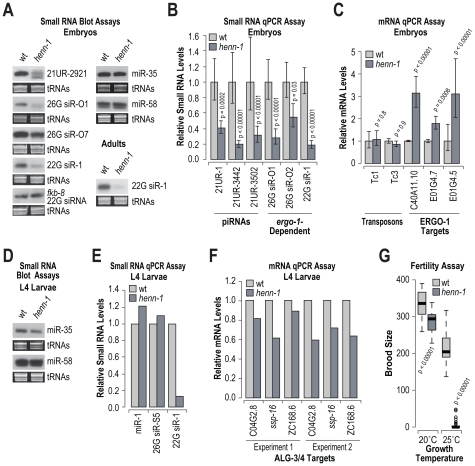
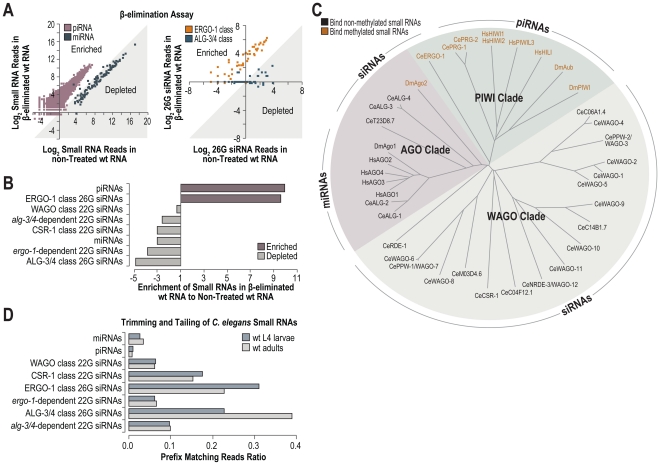
Small RNAs--including piRNAs, miRNAs, and endogenous siRNAs--bind Argonaute proteins to form RNA silencing complexes that target coding genes, transposons, and aberrant RNAs. To assess the requirements for endogenous siRNA formation and activity in Caenorhabditis elegans, we developed a GFP-based sensor for the endogenous siRNA 22G siR-1, one of a set of abundant siRNAs processed from a precursor RNA mapping to the X chromosome, the X-cluster. Silencing of the sensor is also dependent on the partially complementary, unlinked 26G siR-O7 siRNA. We show that 26G siR-O7 acts in trans to initiate 22G siRNA formation from the X-cluster. The presence of several mispairs between 26G siR-O7 and the X-cluster mRNA, as well as mutagenesis of the siRNA sensor, indicates that siRNA target recognition is permissive to a degree of mispairing. From a candidate reverse genetic screen, we identified several factors required for 22G siR-1 activity, including the chromatin factors mes-4 and gfl-1, the Argonaute ergo-1, and the 3' methyltransferase henn-1. Quantitative RT-PCR of small RNAs in a henn-1 mutant and deep sequencing of methylated small RNAs indicate that siRNAs and piRNAs that associate with PIWI clade Argonautes are methylated by HENN-1, while siRNAs and miRNAs that associate with non-PIWI clade Argonautes are not. Thus, PIWI-class Argonaute proteins are specifically adapted to associate with methylated small RNAs in C. elegans.
Conflict of interest statement
The authors have declared that no competing interests exist.
Figures
References
-
- Tolia NH, Joshua-Tor L. Slicer and the argonautes. Nat Chem Biol. 2007;3:36–43. - PubMed
-
- Grishok A, Pasquinelli AE, Conte D, Li N, Parrish S, et al. Genes and mechanisms related to RNA interference regulate expression of the small temporal RNAs that control C. elegans developmental timing. Cell. 2001;106:23–34. - PubMed
Publication types
MeSH terms
Substances
Associated data
- Actions
Grants and funding
LinkOut - more resources
Full Text Sources
Molecular Biology Databases
Miscellaneous