The analysis of vitamin C concentration in organs of gulo(-/-) mice upon vitamin C withdrawal
- PMID: 22536166
- PMCID: PMC3329599
- DOI: 10.4110/in.2012.12.1.18
The analysis of vitamin C concentration in organs of gulo(-/-) mice upon vitamin C withdrawal
Abstract
Background: Vitamin C is an essential nutrient for maintaining human life. Vitamin C insufficiency in the plasma is closely related with the development of scurvy. However, in vivo kinetics of vitamin C regarding its storage and consumption is still largely unknown.
Methods: We used Gulo(-/-) mice, which cannot synthesize vitamin C like human. Vitamin C level in plasma and organs from Gulo(-/-) mice was examined, and it compared with the level of wild-type mice during 5 weeks.
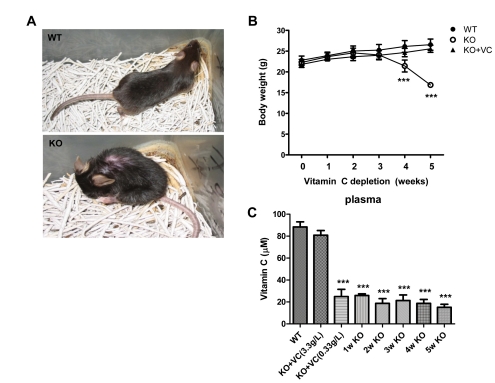
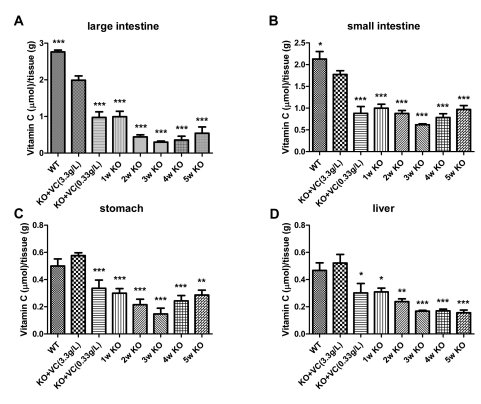
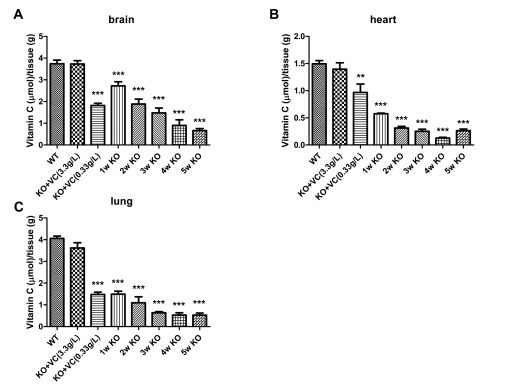
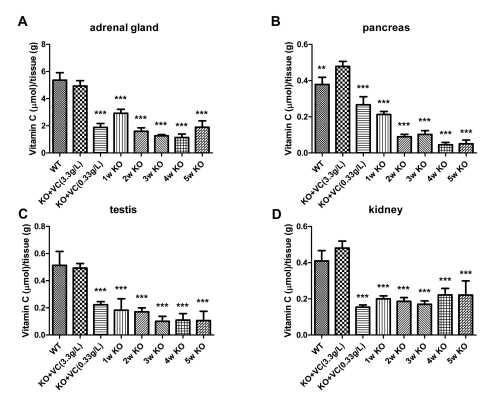
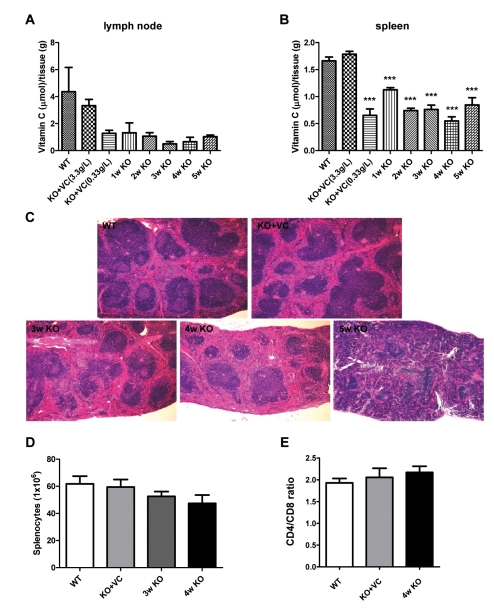
Results: The significant weight loss of Gulo(-/-) mice was shown at 3 weeks after vitamin C withdrawal. However, there was no differences between wild-type and vitamin C-supplemented Gulo(-/-) mice (3.3 g/L in drinking water). The concentration of vitamin C in plasma and organs was significantly decreased at 1 week after vitamin C withdrawal. Vitamin C is preferentially deposited in adrenal gland, lymph node, lung, and brain. There were no significant changes in the numbers and CD4/CD8 ratio of splenocytes in Gulo(-/-) mice with vitamin C withdrawal for 4 weeks. And the architecture of spleen in Gulo(-/-) mice was disrupted at 5 weeks after vitamin C withdrawal.
Conclusion: The vitamin C level of Gulo(-/-) mice was considerably decreased from 1 week after vitamin C withdrawal. Vitamin C is preferentially stored in some organs such as brain, adrenal gland and lung.
Keywords: Gulo-/- mice; In vivo kinetics; Vitamin C insufficiency.
Conflict of interest statement
The authors have no financial conflict of interest.
Figures
References
-
- Carr AC, Frei B. Toward a new recommended dietary allowance for vitamin C based on antioxidant and health effects in humans. Am J Clin Nutr. 1999;69:1086–1107. - PubMed
-
- Padayatty SJ, Katz A, Wang Y, Eck P, Kwon O, Lee JH, Chen S, Corpe C, Dutta A, Dutta SK, Levine M. Vitamin C as an antioxidant: evaluation of its role in disease prevention. J Am Coll Nutr. 2003;22:18–35. - PubMed
-
- Ellis GR, Anderson RA, Lang D, Blackman DJ, Morris RH, Morris-Thurgood J, McDowell IF, Jackson SK, Lewis MJ, Frenneaux MP. Neutrophil superoxide anion--generating capacity, endothelial function and oxidative stress in chronic heart failure: effects of short- and long-term vitamin C therapy. J Am Coll Cardiol. 2000;36:1474–1482. - PubMed
-
- Sauberlich HE. A history of scurvy and vitamin C. In: Packer L, Fuchs J, editors. Vitamin C in health and disease. New York: Marcel Dekker; 1997. pp. 1–24.
LinkOut - more resources
Full Text Sources
Molecular Biology Databases
Research Materials