. 2012;7(4):e35668.
doi: 10.1371/journal.pone.0035668. Epub 2012 Apr 20.

Development and evaluation of a 9K SNP array for peach by internationally coordinated SNP detection and validation in breeding germplasm

Affiliations

Development and evaluation of a 9K SNP array for peach by internationally coordinated SNP detection and validation in breeding germplasm

Ignazio Verde et al. PLoS One. 2012.

Erratum in

  • PLoS One. 2012;7(6). doi:10.1371/annotation/33f1ba92-c304-4757-91aa-555de64a0768

Abstract

Although a large number of single nucleotide polymorphism (SNP) markers covering the entire genome are needed to enable molecular breeding efforts such as genome wide association studies, fine mapping, genomic selection and marker-assisted selection in peach [Prunus persica (L.) Batsch] and related Prunus species, only a limited number of genetic markers, including simple sequence repeats (SSRs), have been available to date. To address this need, an international consortium (The International Peach SNP Consortium; IPSC) has pursued a coordinated effort to perform genome-scale SNP discovery in peach using next generation sequencing platforms to develop and characterize a high-throughput Illumina Infinium® SNP genotyping array platform. We performed whole genome re-sequencing of 56 peach breeding accessions using the Illumina and Roche/454 sequencing technologies. Polymorphism detection algorithms identified a total of 1,022,354 SNPs. Validation with the Illumina GoldenGate® assay was performed on a subset of the predicted SNPs, verifying ∼75% of genic (exonic and intronic) SNPs, whereas only about a third of intergenic SNPs were verified. Conservative filtering was applied to arrive at a set of 8,144 SNPs that were included on the IPSC peach SNP array v1, distributed over all eight peach chromosomes with an average spacing of 26.7 kb between SNPs. Use of this platform to screen a total of 709 accessions of peach in two separate evaluation panels identified a total of 6,869 (84.3%) polymorphic SNPs.The almost 7,000 SNPs verified as polymorphic through extensive empirical evaluation represent an excellent source of markers for future studies in genetic relatedness, genetic mapping, and dissecting the genetic architecture of complex agricultural traits. The IPSC peach SNP array v1 is commercially available and we expect that it will be used worldwide for genetic studies in peach and related stone fruit and nut species.


Conflict of interest statement

Competing Interests: The authors have declared that no competing interests exist.

Figures

Figure 1
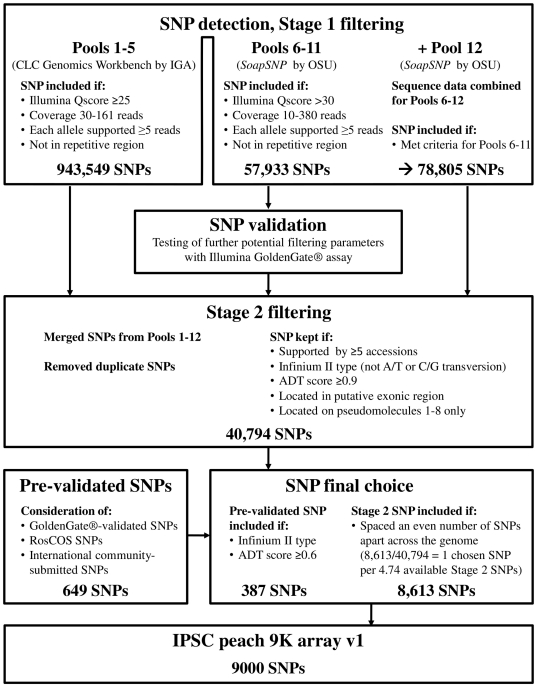
Figure 1. Workflow for SNP detection, validation, filtering, and final choice employed for development of the International Peach SNP Consortium (IPSC) peach 9 K SNP array v1.
Figure 2
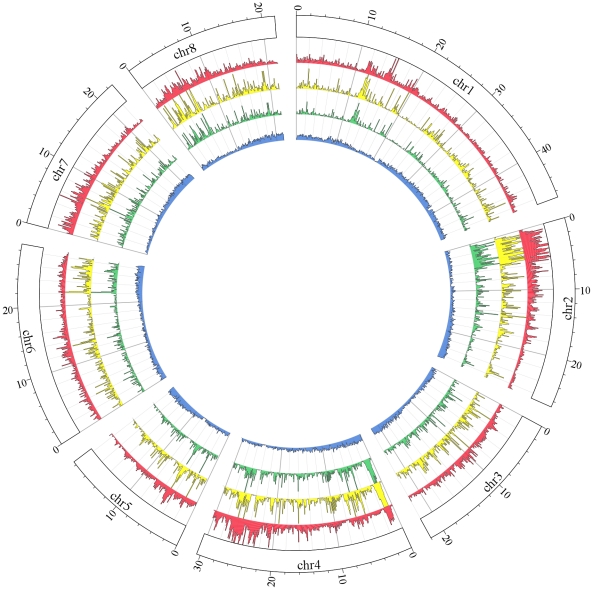
Figure 2. Distribution of SNPs along the Peach v1.0 pseudomolecules.
All tracks are plotted in 100 kb windows; inner blue track represents the frequency of coding DNA sequence CDS; y axis ranges from 0 to 100%. Red, yellow and green tracks represent, respectively, absolute number of SNPs discovered within pool 1–5, 40,789 Stage 2 SNPs in exons, and 9,000 SNPs chosen for the array; values in the y axes are capped at 2000, 100, and 30, respectively.
Figure 3
Figure 3. Frequency distribution of size of gaps between SNPs included on the IPSC peach 9 K SNP array v1. Gap sizes were based on SNP physical locations in the Peach v1.0 assembly.
Figure 4
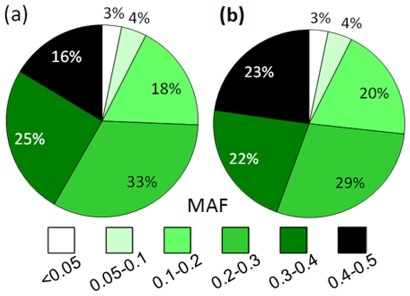
Figure 4. Distribution of minor allele frequencies (MAF) in two independent germplasm sets.
A. EU evaluation panel (n = 232); B. US evaluation panel (n = 115; cultivars and advanced selections only).
Figure 5
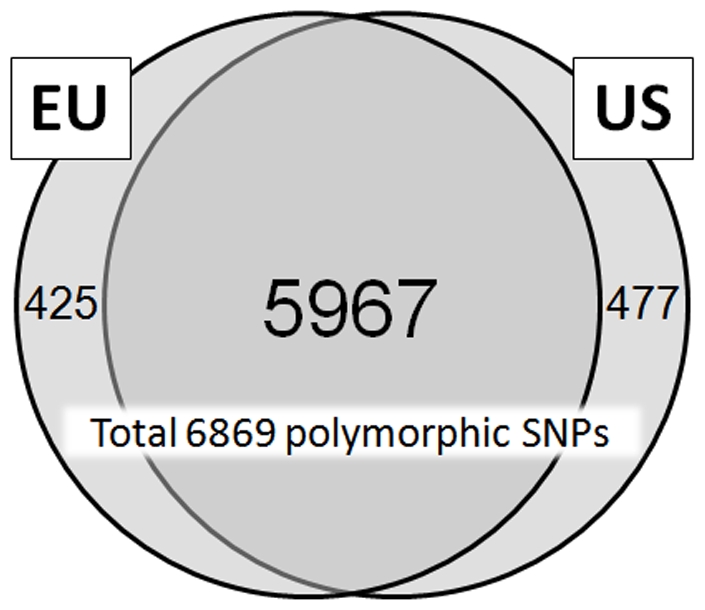
Figure 5. Polymorphic SNPs detected in EU (n = 232) and US (n = 477) evaluation panels from genome scans with the IPSC peach 9 K SNP array v1.
Figure 6
Figure 6. Distribution and physical spacing of polymorphic SNPs across the eight peach chromosomes and comparison of SNP minor allele frequencies between peach and non-peach samples, including almond, and peach and almond wild relatives, in US data set.
Data set comprises cultivars and advanced selections only. The coefficient of regression (r) between the MAF in peach and non peach set is 0.437.

References

    1. Gunderson KL, Steemers FJ, Lee G, Mendoza LG, Chee MS. A genome-wide scalable SNP genotyping assay using microarray technology. Nature Genetics. 2005;37:549–554. - PubMed
    1. Gunderson KL. Whole-genome genotyping on bead arrays. Meth Mol Biol. 2009;529:197–213. - PubMed
    1. Matukumalli LK, Lawley CT, Schnabel RD, Taylor JF, Allan MF, et al. Development and Characterization of a High Density SNP Genotyping Assay for Cattle. PLoS ONE. 2009;4:e5350. - PMC - PubMed
    1. Ramos AM, Crooijmans RPMA, Affara NA, Amaral AJ, Archibald AL, et al. Design of a High Density SNP Genotyping Assay in the Pig Using SNPs Identified and Characterized by Next Generation Sequencing Technology. PLoS ONE. 2009;4(8):e6524. - PMC - PubMed
    1. Groenen MA, Megens HJ, Zare Y, Warren WC, Hillier LW, et al. The development and characterization of a 60 K SNP chip for chicken. BMC Genomics. 2011;12:274. - PMC - PubMed

Publication types

Substances