


Drug-associated acute lung injury: a population-based cohort study
- PMID: 22539646
- PMCID: PMC3465105
- DOI: 10.1378/chest.11-2103
Drug-associated acute lung injury: a population-based cohort study
Abstract
Background: A number of drugs have been reported as risk factors for acute lung injury (ALI) and ARDS. However, evidence is largely limited to case reports, and there is a paucity of data on the incidence and outcome of drug-associated ALI (DALI).
Methods: Using a population-based retrospective cohort study design, critically ill patients with a diagnosis of ALI were studied. These patients were classified as having DALI or non-DALI, based on whether they were exposed to prespecified drugs prior to development of ALI. Outcomes were compared between the two groups and frequencies and incidences reported.
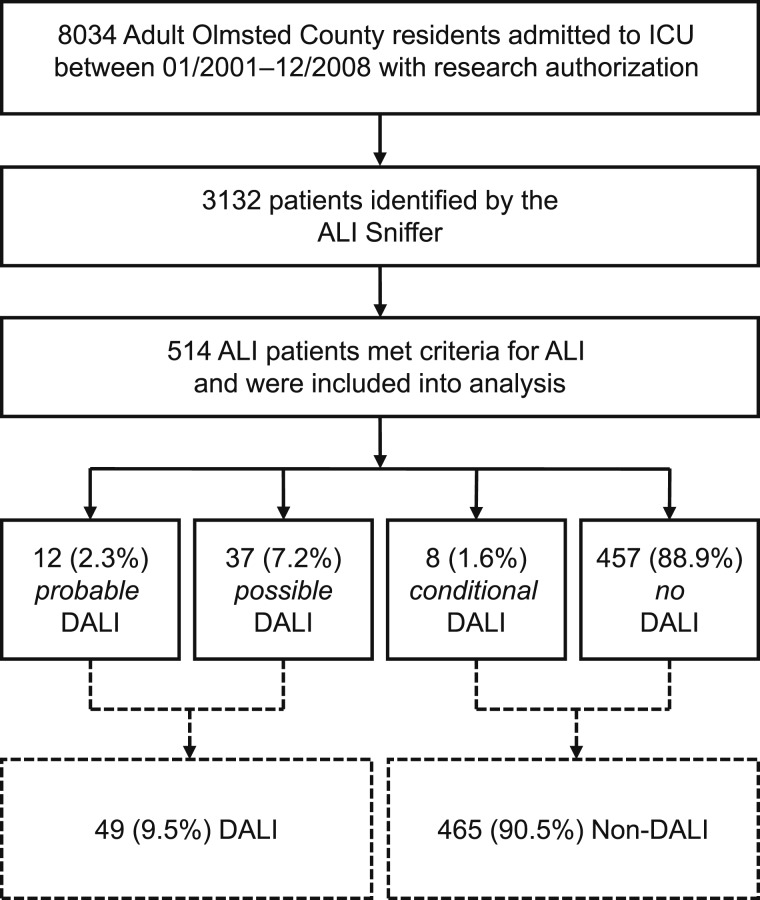
Results: Among 514 patients with ALI, 49 (9.5%) had DALI with an estimated population-based incidence of 6.6 (95% CI, 4.8-8.5) per 100,000 person-years. Of the 49 patients with DALI,36 received chemotherapeutic/antiinflammatory agents, and 14 received amiodarone. Twelve patients had no additional risk factors for ALI (probable DALI), whereas 37 had alternative risk factors (possible DALI). Patients with and without DALI had similar baseline characteristics. However, the APACHE (Acute Physiology and Chronic Health Evaluation) III scores (median, 83 vs 70, P 5 .03), ICU mortality (35% vs 20%, P 5 .03), and hospital mortality (63% vs 32%, P , .001)were significantly higher in the DALI group compared with those of the non-DALI group. Hospital mortality remained significantly higher after adjusting for APACHE III score on admission and the presence of malignancy in logistic regression analysis (OR, 2.8; 95% CI, 1.3-6.4; P 5 .009).
Conclusions: Drugs are important risk factors for ALI, and recognizing them as such may have important implications for early identification of patients at risk, discontinuation of the offending agent, and prognosis.
Figures
References
-
- Lee-Chiong T, Jr, Matthay RA. Drug-induced pulmonary edema and acute respiratory distress syndrome. Clin Chest Med. 2004;25(1):95-104 - PubMed
-
- Dimopoulou I, Bamias A, Lyberopoulos P, Dimopoulos MA. Pulmonary toxicity from novel antineoplastic agents. Ann Oncol. 2006;17(3):372-379 - PubMed
-
- Cooper JA, Jr, White DA, Matthay RA. Drug-induced pulmonary disease. Part 1: cytotoxic drugs. Am Rev Respir Dis. 1986;133(2):321-340 - PubMed
-
- Reed CR, Glauser FL. Drug-induced noncardiogenic pulmonary edema. Chest. 1991;100(4):1120-1124 - PubMed
-
- Rosenow EC, III, Myers JL, Swensen SJ, Pisani RJ. Drug-induced pulmonary disease. An update. Chest. 1992;102(1):239-250 - PubMed
Publication types
MeSH terms
Grants and funding
LinkOut - more resources
Full Text Sources
