


Review
doi: 10.1016/j.cld.2012.03.012.
Epub 2012 Apr 6.
Approach to a patient with elevated serum alkaline phosphatase
Affiliations
- PMID: 22541695
- PMCID: PMC3341633
- DOI: 10.1016/j.cld.2012.03.012
Item in Clipboard
Review
Approach to a patient with elevated serum alkaline phosphatase
Clin Liver Dis.
2012 May.
Abstract
Cholestasis develops either from a defect in bile synthesis, impairment in bile secretion, or obstruction to bile flow, and is characterized by an elevated serum alkaline phosphatase and gamma-glutamyltransferase disproportionate to elevation of aminotransferase enzymes. Key elements to the diagnostic workup include visualization of the biliary tree by cholangiography and evaluation of liver histology. The hope is that recent advances in understanding the genetic factors and immune mechanisms involved in the pathogenesis of cholestasis will lead to newer therapeutic interventions in the treatment of these diseases.
Copyright © 2012 Elsevier Inc. All rights reserved.
Figures
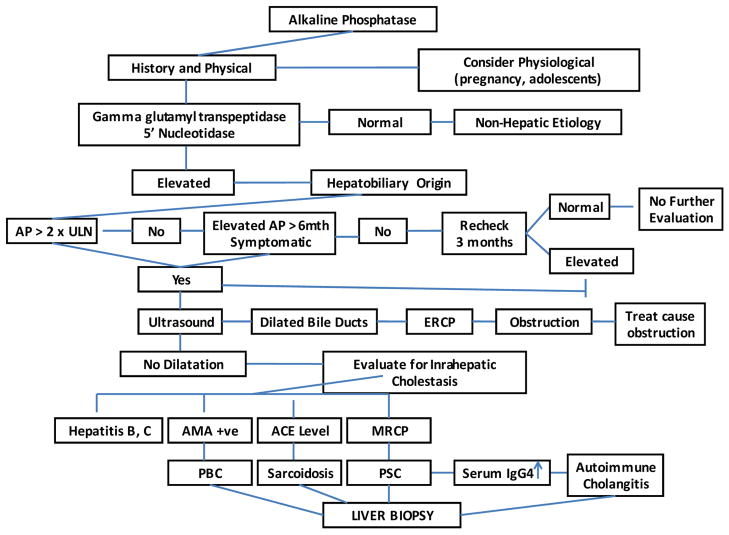
Propose algorithm for work up of elevated alkaline phosphatase
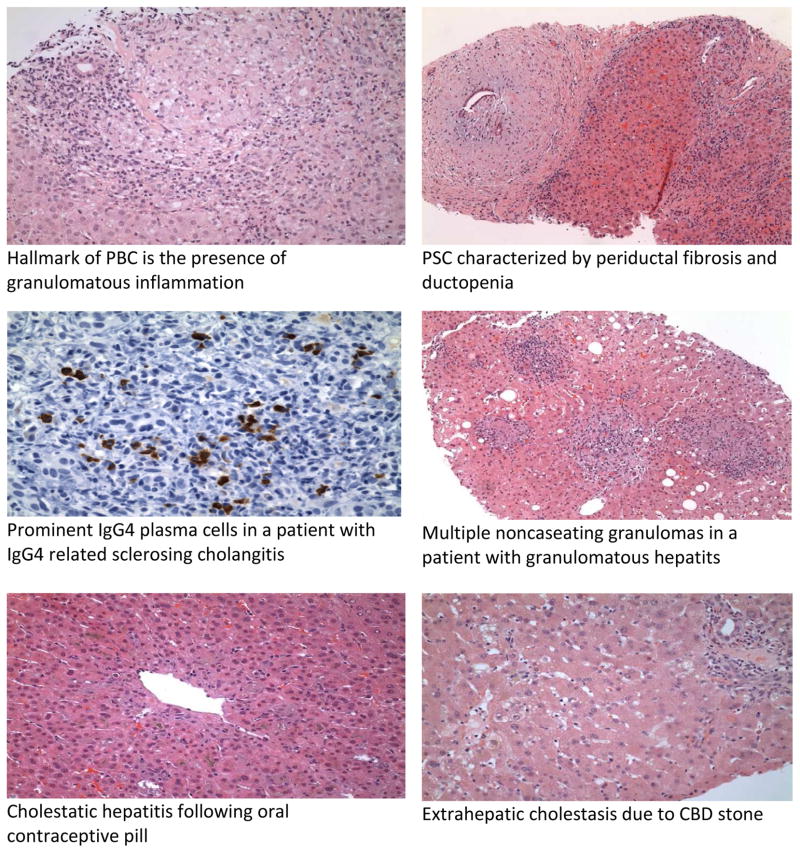
Histological features in cholestatic liver disease
References
-
- Scharschmidt BF, Goldberg HI, Schmid R. Current concepts in diagnosis. Approach to the patient with cholestatic jaundice. N Engl J Med. 1983 Jun 23;308(25):1515–9. - PubMed
-
- Trauner M, Boyer JL. Bile salt transporters: molecular characterization, function, and regulation. Physiol Rev. 2003 Apr;83(2):633–71. - PubMed
-
- Hagenbuch B, Dawson P. The sodium bile salt cotransport family SLC10. Pflugers Arch. 2004 Feb;447( 5):566–70. - PubMed
-
- Niemi M, Pasanen MK, Neuvonen PJ. Organic anion transporting polypeptide 1B1: a genetically polymorphic transporter of major importance for hepatic drug uptake. Pharmacol Rev. 2011 Mar;63(1):157–81. - PubMed
-
- Arrese M, Trauner M. Molecular aspects of bile formation and cholestasis. Trends Mol Med. 2003 Dec;9(12):558–64. - PubMed
Publication types
MeSH terms
Substances
Grants and funding
LinkOut - more resources
Full Text Sources
Medical
