


Vigorous-intensity leisure-time physical activity and risk of major chronic disease in men
- PMID: 22543741
- PMCID: PMC3445709
- DOI: 10.1249/MSS.0b013e31825a68f3
Vigorous-intensity leisure-time physical activity and risk of major chronic disease in men
Abstract
Purpose: Although studies have shown health benefits for moderate-intensity physical activity, there is limited evidence to support beneficial effects for high amounts of vigorous activity among middle-age and older men. The objective of this study was to examine the relationship between vigorous-intensity physical activity, compared with moderate-intensity activity, and risk of major chronic disease in men.
Methods: We prospectively examined the associations between vigorous- and moderate-intensity physical activity and risk of major chronic disease among 44,551 men age 40-75 yr in 1986. Leisure-time physical activity was assessed biennially by questionnaire. During 22 yr of follow-up, we documented 14,162 incident cases of major chronic disease, including 4769 cardiovascular events, 6449 cancer events, and 2944 deaths from other causes.
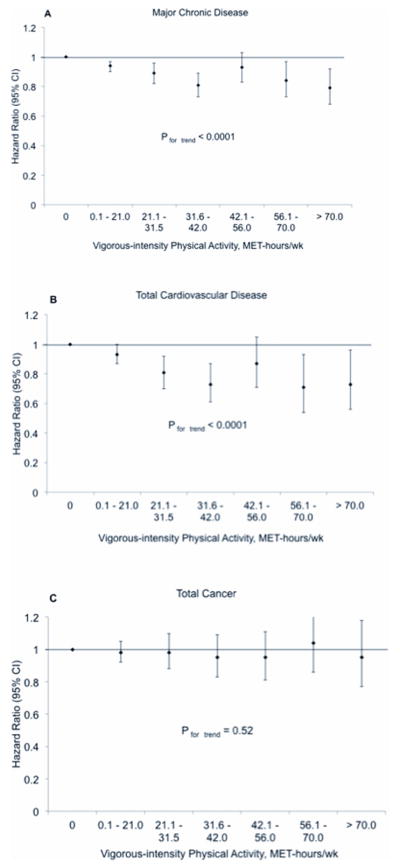
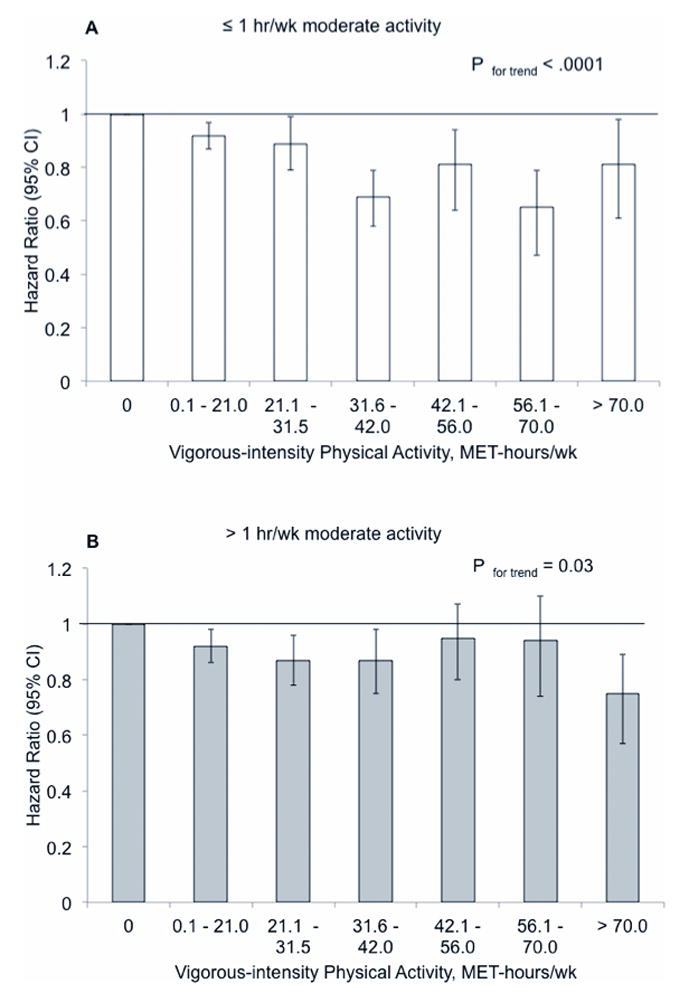
Results: The HR of major chronic disease comparing ≥ 21 to 0 MET.h.wk(-1) of exercise was 0.86 (95% confidence interval (CI), 0.81-0.91) for vigorous-intensity activity and 0.85 (95% CI, 0.80-0.90) for moderate activity. For cardiovascular disease (CVD), the corresponding HRs were 0.78 (95% CI, 0.70-0.86) and 0.80 (95% CI, 0.72-0.88), respectively. When examined separately, running, tennis, and brisk walking were inversely associated with CVD risk. Furthermore, more vigorous activity was associated with lower disease risk; the HR comparing >70 to 0 MET.h.wk(-1) of vigorous-intensity exercise was 0.79 (95% CI, 0.68-0.92; P < 0.0001 for trend) for major chronic disease and 0.73 (95% CI, 0.56-0.96; P < 0.0001 for trend) for CVD.
Conclusions: Vigorous- and moderate-intensity physical activities were associated with lower risk of major chronic disease and CVD. Increasing amounts of vigorous activity remained inversely associated with disease risk, even among men in the highest categories of exercise.
Conflict of interest statement
None. The results of the present study do not constitute endorsement by ACSM.
Figures
References
-
- Ainsworth BE, Haskell WL, Leon AS, et al. Compendium of physical activities: classification of energy costs of human physical activities. Med Sci Sports Exerc. 1993;25(1):71–80. - PubMed
-
- Chasan-Taber S, Rimm EB, Stampfer MJ, et al. Reproducibility and validity of a self administered physical activity questionnaire for male health professionals. Epidemiology. 1996;7(1):81–6. - PubMed
-
- Durrleman S, Simon R. Flexible regression models with cubic splines. Stat Med. 1989;8(5):551–561. - PubMed
-
- Fortescue EB, Shin AY, Greenes DS, et al. Cardiac troponin increases among runners in the Boston Marathon. Ann Emerg Med. 2007;49(2):137–143. - PubMed
Publication types
MeSH terms
Grants and funding
LinkOut - more resources
Full Text Sources
Miscellaneous
