


Elevated enterotoxin A expression and formation in Staphylococcus aureus and its association with prophage induction
- PMID: 22544256
- PMCID: PMC3416385
- DOI: 10.1128/AEM.00803-12
Elevated enterotoxin A expression and formation in Staphylococcus aureus and its association with prophage induction
Abstract
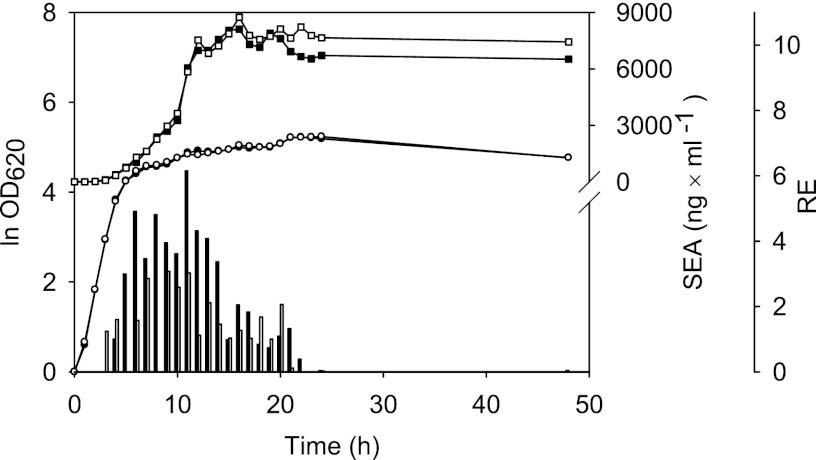
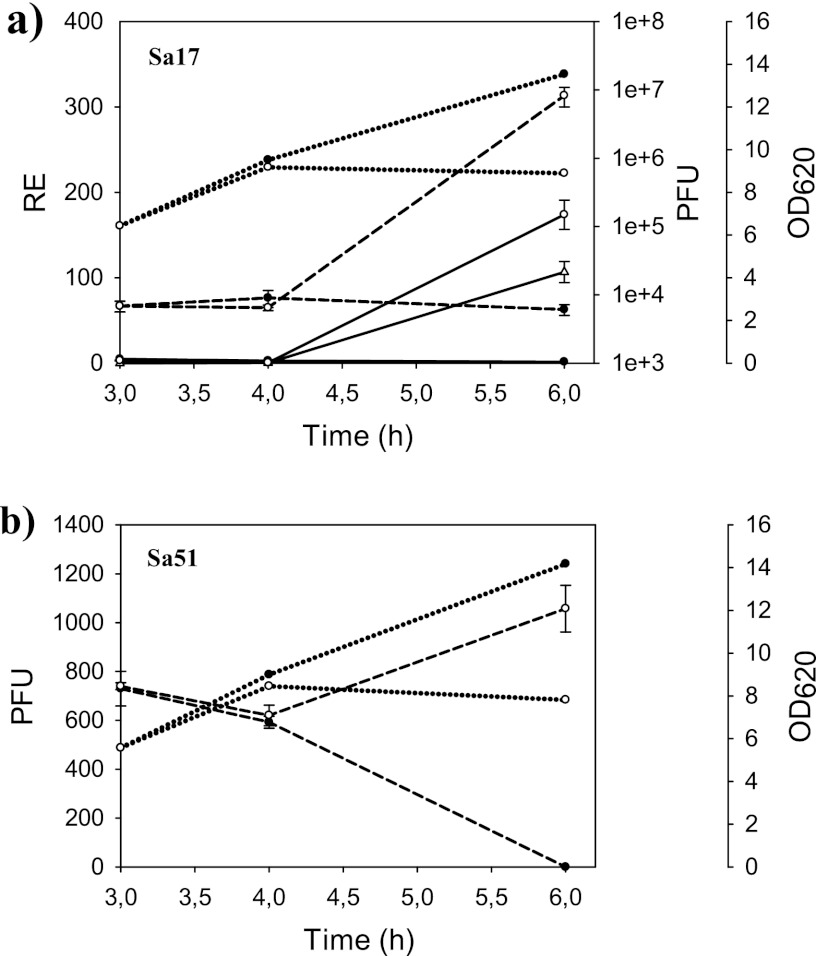
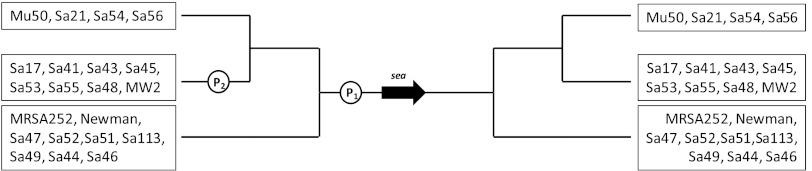
Staphylococcus aureus strains producing the bacteriophage-encoded staphylococcal enterotoxin A (SEA) were divided into two groups, high- and low-SEA-producing strains, based on the amount of SEA produced. After growth under favorable conditions in batch cultures, 10 of the 21 strains tested produced more than 1,000 ng/ml SEA, and 9 strains produced less than 10 ng/ml SEA; two enterotoxigenic strains, MRSA252 and Newman, produced intermediate levels of SEA (around 450 ng/ml). The differences in the production of SEA were found to be associated with the expression level of sea and whether the strains hosted the sea(1) or sea(2) version. Furthermore, differences in nucleotide sequence in the Siphoviridae phage region showed two clonal lineages of the high-SEA-producing strains. One of these lines was correlated with the capacity for a massive increase in SEA levels by prophage induction as demonstrated using mitomycin C (MC). This was also confirmed by the occurrence of additional sea expression, presumed to be initiated by a latent phage promoter located upstream of the endogenous sea promoter. Remarkably, the SEA level was increased up to 10-fold in some strains due to prophage induction. The low-SEA-producing group and the high-SEA-producing subgroup lacking phage-activated sea transcription showed no increase in SEA formation after the addition of MC. This study demonstrates that sea expression in enterotoxigenic strains is correlated with the clonal lineage of sea-carrying phages. The high-SEA-producing group, in particular the prophage-inducible sea(1) group, may be more relevant to staphylococcal food poisoning than the low-SEA-producing group, harboring mainly sea(2).
Figures
References
-
- Bergdoll MS. 1989. Staphylococcus aureus, p 463– 523 In Doyle MP. (ed), Foodborne bacterial pathogens. Marcel Dekker Inc, New York, NY.
-
- Betley MJ, Mekalanos JJ. 1985. Staphylococcal enterotoxin A is encoded by phage. Science 229: 185– 187 - PubMed
-
- Borst DW, Betley MJ. 1994. Promoter analysis of the staphylococcal enterotoxin A gene. J. Biol. Chem. 269: 1883– 1888 - PubMed
Publication types
MeSH terms
Substances
LinkOut - more resources
Full Text Sources
Other Literature Sources
