


Inflammatory Pathways in Parkinson's Disease; A BNE Microarray Study
- PMID: 22548201
- PMCID: PMC3324922
- DOI: 10.1155/2012/214714
Inflammatory Pathways in Parkinson's Disease; A BNE Microarray Study
Abstract
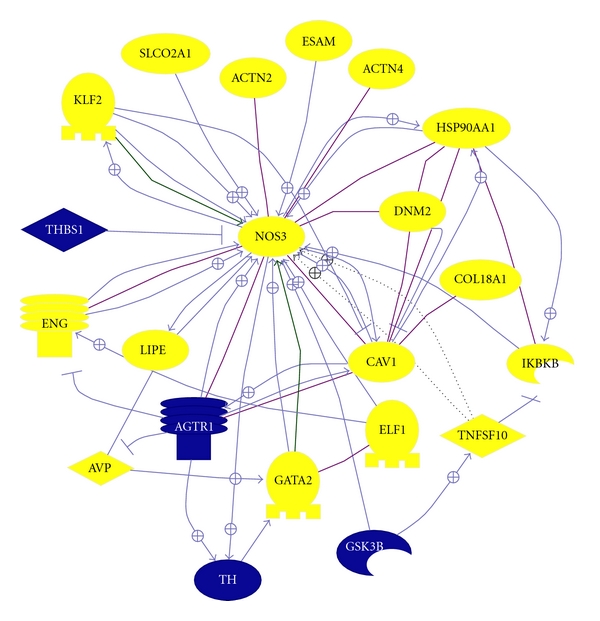
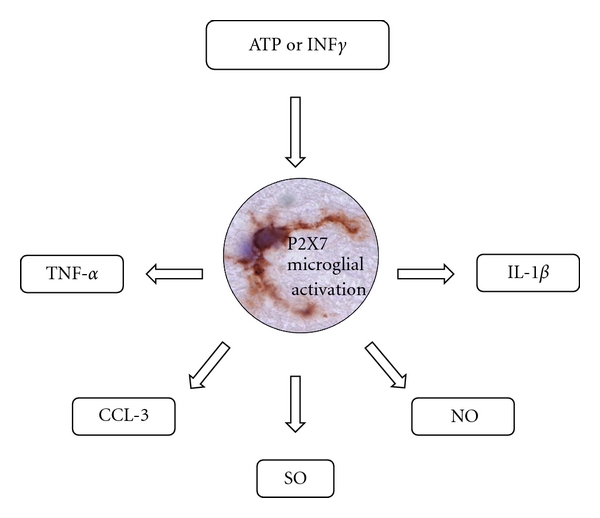
The aetiology of Parkinson's disease (PD) is yet to be fully understood but it is becoming more and more evident that neuronal cell death may be multifactorial in essence. The main focus of PD research is to better understand substantia nigra homeostasis disruption, particularly in relation to the wide-spread deposition of the aberrant protein α-synuclein. Microarray technology contributed towards PD research with several studies to date and one gene, ALDH1A1 (Aldehyde dehydrogenase 1 family, member A1), consistently reappeared across studies including the present study, highlighting dopamine (DA) metabolism dysfunction resulting in oxidative stress and most probably leading to neuronal cell death. Neuronal cell death leads to increased inflammation through the activation of astrocytes and microglia. Using our dataset, we aimed to isolate some of these pathways so to offer potential novel neuroprotective therapeutic avenues. To that effect our study has focused on the upregulation of P2X7 (purinergic receptor P2X, ligand-gated ion channel, 7) receptor pathway (microglial activation) and on the NOS3 (nitric oxide synthase 3) pathway (angiogenesis). In summary, although the exact initiator of striatal DA neuronal cell death remains to be determined, based on our analysis, this event does not remain without consequence. Extracellular ATP and reactive astrocytes appear to be responsible for the activation of microglia which in turn release proinflammatory cytokines contributing further to the parkinsonian condition. In addition to tackling oxidative stress pathways we also suggest to reduce microglial and endothelial activation to support neuronal outgrowth.
Figures
References
-
- de Lau LM, Breteler MM. Epidemiology of Parkinson's disease. Lancet Neurology. 2006;5(6):525–535. - PubMed
-
- Alves G, Forsaa EB, Pedersen KF, Gjerstad MD, Larsen JP. Epidemiology of Parkinson's disease. Journal of Neurology. 2008;255(supplement 5):18–32. - PubMed
-
- O'Sullivan SS, Williams DR, Gallagher DA, Massey LA, Silveira-Moriyama L, Lees AJ. Nonmotor symptoms as presenting complaints in Parkinson's disease: a clinicopathological study. Movement Disorders. 2008;23(1):101–106. - PubMed
-
- Gelb DJ, Oliver E, Gilman S. Diagnostic criteria for Parkinson disease. Archives of Neurology. 1999;56(1):33–39. - PubMed
LinkOut - more resources
Full Text Sources
Miscellaneous
