


Bile acid receptors as targets for the treatment of dyslipidemia and cardiovascular disease
- PMID: 22550135
- PMCID: PMC3413216
- DOI: 10.1194/jlr.R024794
Bile acid receptors as targets for the treatment of dyslipidemia and cardiovascular disease
Abstract
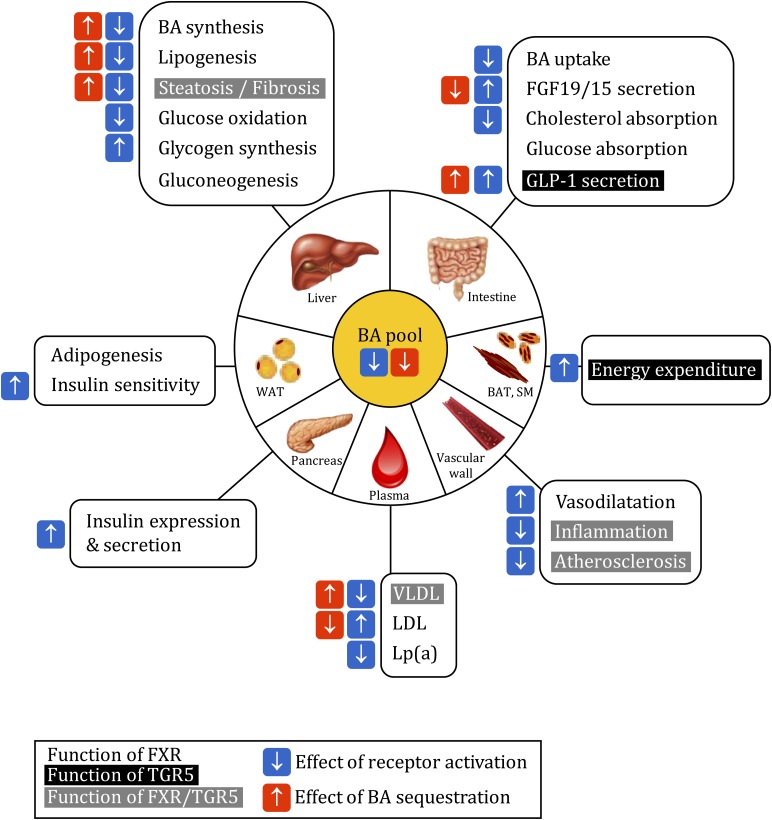
Dyslipidemia is an important risk factor for cardiovascular disease (CVD) and atherosclerosis. When dyslipidemia coincides with other metabolic disorders such as obesity, hypertension, and glucose intolerance, defined as the metabolic syndrome (MS), individuals present an elevated risk to develop type 2 diabetes (T2D) as well as CVD. Because the MS epidemic represents a growing public health problem worldwide, the development of therapies remains a major challenge. Alterations of bile acid pool regulation in T2D have revealed a link between bile acid and metabolic homeostasis. The bile acid receptors farnesoid X receptor (FXR) and TGR5 both regulate lipid, glucose, and energy metabolism, rendering them potential pharmacological targets for MS therapy. This review discusses the mechanisms of metabolic regulation by FXR and TGR5 and the utility relevance of natural and synthetic modulators of FXR and TGR5 activity, including bile acid sequestrants, in the treatment of the MS.
Figures
References
-
- Libby P., Ridker P. M., Hansson G. K. 2011. Progress and challenges in translating the biology of atherosclerosis. Nature. 473: 317–325. - PubMed
-
- Larter C. Z., Chitturi S., Heydet D., Farrell G. C. 2010. A fresh look at NASH pathogenesis. Part 1: the metabolic movers. J. Gastroenterol. Hepatol. 25: 672–690. - PubMed
-
- Staels B., Kuipers F. 2007. Bile acid sequestrants and the treatment of type 2 diabetes mellitus. Drugs. 67: 1383–1392. - PubMed
-
- Bays H. E., Goldberg R. B., Truitt K. E., Jones M. R. 2008. Colesevelam hydrochloride therapy in patients with type 2 diabetes mellitus treated with metformin: glucose and lipid effects. Arch. Intern. Med. 168: 1975–1983. - PubMed
-
- Lefebvre P., Cariou B., Lien F., Kuipers F., Staels B. 2009. Role of bile acids and bile acid receptors in metabolic regulation. Physiol. Rev. 89: 147–191. - PubMed
Publication types
MeSH terms
Substances
LinkOut - more resources
Full Text Sources
Other Literature Sources
