


Infectious diseases in healthcare workers - an analysis of the standardised data set of a German compensation board
- PMID: 22553942
- PMCID: PMC3474162
- DOI: 10.1186/1745-6673-7-8
Infectious diseases in healthcare workers - an analysis of the standardised data set of a German compensation board
Abstract
Introduction: Healthcare workers (HCW) are exposed to infectious agents. Disease surveillance is therefore needed in order to foster prevention.
Methods: The data of the compensation board that covers HCWs of non-governmental healthcare providers in Germany was analysed for a five-year period. For hepatitis B virus (HBV) and hepatitis C virus (HCV) infections, the period analysed was extended to the last 15 years. The annual rate of occupational infectious diseases (OIDs) per 100,000 employees was calculated. For needlestick injuries (NSI) a rate per 1,000 employees was calculated.
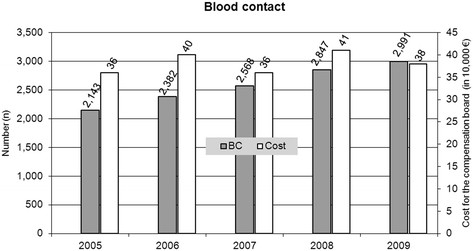
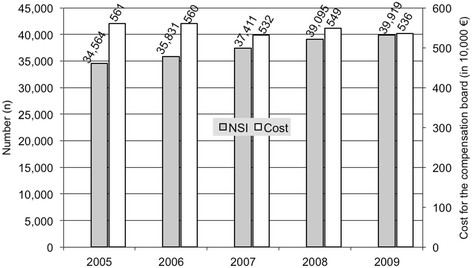
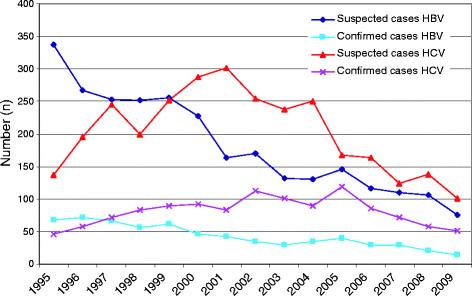
Results: Within the five years from 2005 to 2009 a total of 384 HCV infections were recognised as OIDs (1.5/100,000 employees). Active TB was the second most frequent cause of an OID. While the numbers of HBV and HCV infections decreased, the numbers for active TB did not follow a clear pattern. Needlestick injuries (NSIs) were reported especially often at hospitals (29.9/1,000 versus 7.4/1,000 employees for all other HCWs).
Conclusion: Although they are declining, HCV infections remain frequent in HCWs, as do NSIs. Whether the reinforcement of the recommendations for the use of safety devices in Germany will prevent NSIs and therefore HCV infections should be closely observed.
Figures
References
LinkOut - more resources
Full Text Sources
