. 2012 Jul 20;7(7):1292-302.
doi: 10.1021/cb200542j. Epub 2012 May 11.

Expanding the genetic code of Caenorhabditis elegans using bacterial aminoacyl-tRNA synthetase/tRNA pairs

Affiliations

Expanding the genetic code of Caenorhabditis elegans using bacterial aminoacyl-tRNA synthetase/tRNA pairs

Angela R Parrish et al. ACS Chem Biol. .

Abstract

The genetic code specifies 20 common amino acids and is largely preserved in both single and multicellular organisms. Unnatural amino acids (Uaas) have been genetically incorporated into proteins by using engineered orthogonal tRNA/aminoacyl-tRNA synthetase (RS) pairs, enabling new research capabilities and precision inaccessible with common amino acids. We show here that Escherichia coli tyrosyl and leucyl amber suppressor tRNA/RS pairs can be evolved to incorporate different Uaas in response to the amber stop codon UAG into various proteins in Caenorhabditis elegans. To accurately report Uaa incorporation in worms, we found that it is crucial to integrate the UAG-containing reporter gene into the genome rather than to express it on an extrachromosomal array from which variable expression can lead to reporter activation independent of the amber-suppressing tRNA/RS. Synthesizing a Uaa in a dipeptide drives Uaa uptake and bioavailability. Uaa incorporation has dosage, temporal, tRNA copy, and temperature dependencies similar to those of endogenous amber suppression. Uaa incorporation efficiency was improved by impairing the nonsense-mediated mRNA decay pathway through knockdown of smg-1. We have generated stable transgenic worms capable of genetically encoding Uaas, enabling Uaa exploitation to address complex biological problems within a metazoan. We anticipate our strategies will be generally extendable to other multicellular organisms.


Figures
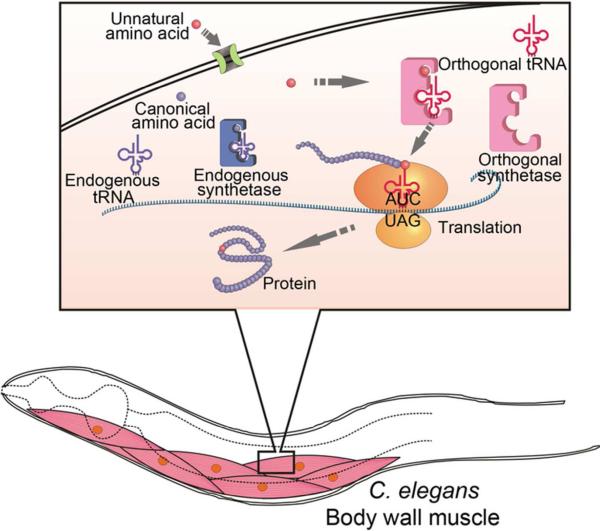
Figure 1
Figure 1. Scheme for incorporating unnatural amino acids into proteins in C. elegans
The Uaa must be able to enter the worm and be transported into cells of the target tissue. An orthogonal tRNA/RS pair evolved to be specific for the Uaa should be expressed in the target cell together with the gene of interest. An amber stop codon UAG is introduced at the desired site for Uaa insertion in target gene. The orthogonal RS charges the Uaa onto the orthogonal tRNA, which recognizes the UAG codon and incorporates the Uaa during translation.
Figure 2
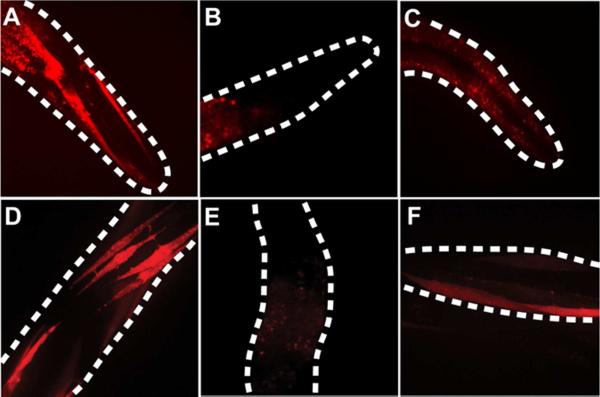
Figure 2. Screening for functional amber suppression with mCherry
(A) The extrachromosomal array unc-54pmCherryTAG156unc-54 3'UTR showed fluorescence in muscle cells in the absence of any amber suppressor tRNA/RS. (B) A single integrated copy of the same mCherry amber reporter in strain LWA1560 (wlSi151[unc54mCherryTAG156 cb-unc-119(+)]) had no detectable fluorescence in muscle cells. The observed autofluorescence was from intestinal granules, which are distinct from muscle cells in morphology and location. (C) LWA1560 crossed with an endogenous amber suppressor (sup-7(st5); wlSi151) showed red fluorescence in muscle cells. Because the sup-7 suppressor tRNA is expressed in all muscle cells, all of the cells uniformly displayed red fluorescence. (D) LWA1561 (LWA1560 with wlEx1[unc-54LeuRS_rpr-1tRNACUALeu + pRF4(rol-6)]) showed strong fluorescence in some body wall muscles. Only a subset of muscles were fluorescent due to the mosaic nature of the extrachromosomal array expressing the E. coli tRNACUALeu. (E) LWA1560 with rpr-1p: tRNACUALeu + pRF4(rol-6) had no muscle fluorescence. The observed autofluorescence was from intestinal granules. (F) LWA1562 (LWA1560 with wlEx22[unc-54TyrRS_rpr-1tRNACUATyr + pRF4(rol-6)]) showed red fluorescence in some body wall muscles. Because the tRNACUATyrTyrRS was expressed in an extrachromosomal array, the red fluorescence was mosaic. Dashed lines indicate worm outline. All images are confocal Z stacks and representative of each genotype at young adulthood.
Figure 3
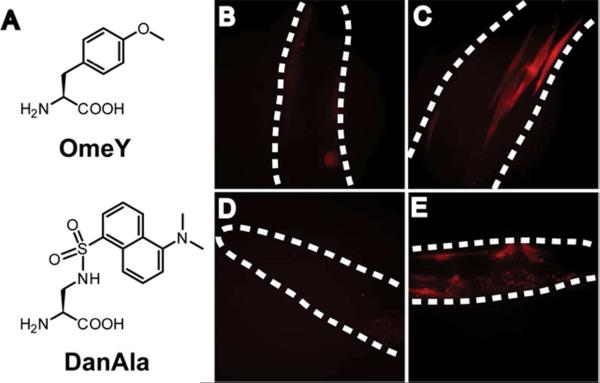
Figure 3. Incorporating Uaas into mCherry
(A) Structure of Uaas. (B) LWA1563 (LWA1560 with wlEx13[unc-54OmeRS_rpr-1tRNACUATyr + pRF4(rol-6)]) showed very little fluorescence in the absence of OmeY. (C) LWA1563 grown with 5 mM OmeY showed strong mosaic activation of the mCherry reporter in muscle cells. (D) LWA1564 (wlEx35[unc-54DanRS_rpr-1tRNACUALeu + pRF4(rol-6)]) showed no fluorescence in the absence of Uaa. (E) LWA1564 grown with 1 mM Ala-DanAla dipeptide showed strong mosaic activation of the mCherry reporter in body wall and vulval muscles. All images are confocal Z stacks and representative of each genotype. Dashed lines indicate worm outline. Animals were grown in liquid culture for 1 generation and imaged at young adulthood.
Figure 4
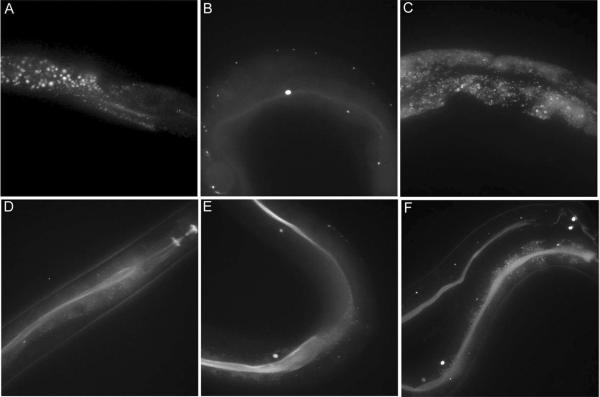
Figure 4. Fluorescence imaging shows that DanAla is sequestered in intestinal cells but Ala-DanAla dipeptide can be transported to other tissues inside C. elegans
(A) N2 worms has autofluorescent intestinal granules. (B) glo-4 (ok623) does not have autofluorescent intestinal granules. (C) After exposure to 1 mM DanAla, intestinal granules of sequestered DanAla appeared in glo-4 (ok623). (D) glo-4 (ok623) after exposure to 1 mM Ala-DanAla dipeptide. There was some diffuse fluorescence in the lumen and intestinal cells, but few punctate granules. (E) glo-4 (ok623) after exposure to 2.5 mM Ala-DanAla dipeptide. (F) glo-4 (ok623) after exposure to 5 mM Ala-DanAla dipeptide. At this high concentration of dipeptide punctate fluorescent granules began to appear. All animals were exposed for 1 generation on solid plates and assayed as young adults. Images are confocal Z stacks.
Figure 5
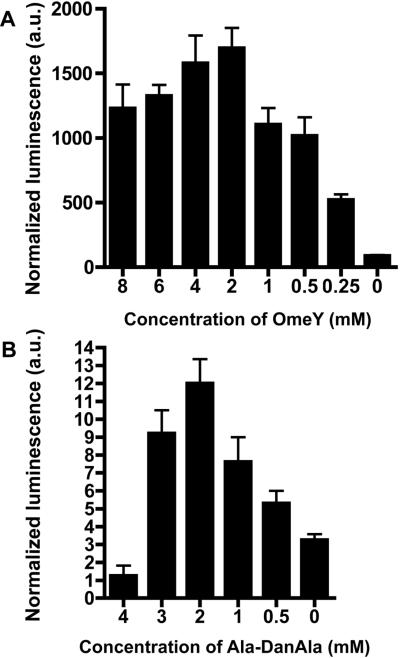
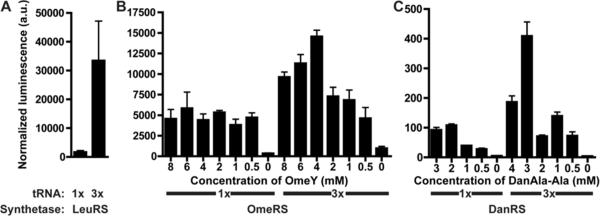
Figure 5. Quantification of Uaa incorporation in luciferase shows dependence on Uaa concentration
(A) Luciferase activities measured from strain LWA1852 (wlSi1852 [unc-54luciferaseTAG185 cb-unc-119 (+)]I; wlls1851[unc-54OmeRS_rpr-1tRNACUATyr + myo-2GFP]X) grown at different OmeY concentrations. (B) Luciferase activities measured from strain LWA1031 (wlSi1852 I; wlls1565[unc-54DanRS_rpr-1tRNACUALeu + myo-2GFP]X) grown at different Ala-DanAla concentrations. Both strains were grown on solid plates at 15 °C for 1 generation in duplicate. Luminescence was normalized to total protein concentration. Error bars represent s.e.m.; n ≥ 2.
Figure 6
Figure 6. Uaa incorporation shows dependence on the tRNA to RS ratio
(A) Comparison of LWA1008 (wlSi1852 I; wlSi13[rpr-1tRNACUALeu ]II; wlSi550[unc-54LeuRS]IV) with LWA1009 (wlSi1852 I; wlSi17[(rpr-1tRNACUALeu)3x]II; wlSi550 IV) indicates that 3x tRNACUALeu increased Leu incorporation into luciferase. (B) Comparison of LWA1852 (1x tRNACUATyr) with LWA1855 (with wlSi1082[(rpr-1tRNACUATyr)3x]IV) indicates that additional tRNACUATyr increased OmeY incorporation into luciferase. (C) Comparison of LWA1031 with LWA1856 (with wlSi13 II) indicates that additional tRNACUALeu increased DanAla incorporation into luciferase. All animals were grown for 3 generations on solid plates with indicated concentration of Uaa when applicable at 15 °C in duplicate. All error bars represent s.e.m., n ≥ 2.
Figure 7
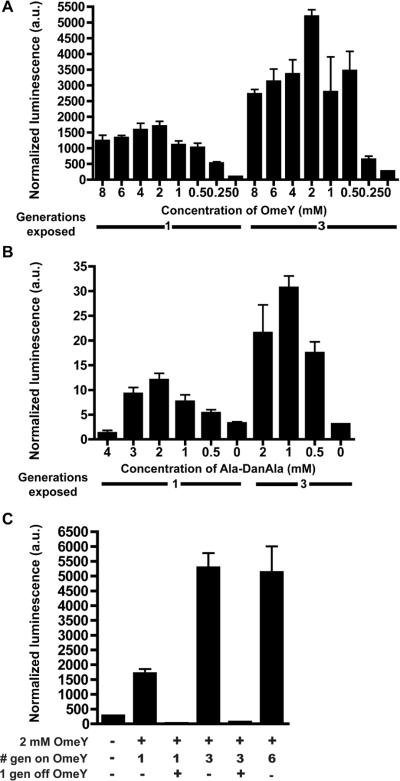
Figure 7. Uaa incorporation increases over multiple generations and is reversible
(A) LWA1852 animals show an increase in OmeY-dependent luciferase activity over 3 generations compared to 1. (B) LWA1031 animals show an increase in Ala-DanAla-dependent luciferase activity over 3 generations compared to 1. For (A) and (B), animals were grown in duplicate on solid plates of indicated Uaa concentrations at 15 °C, and assayed after 1 or 3 generations' exposure to Uaa. (C) Comparison of multi-generation data and reversibility of Uaa incorporation. LWA1852 animals were grown in duplicate at 15 °C with 2 mM OmeY on solid plates for indicated generations. Removal of worms from the Uaa for 1 generation dropped the luciferase activity to baseline levels. All error bars represent s.e.m.; n ≥ 2.
Figure 8
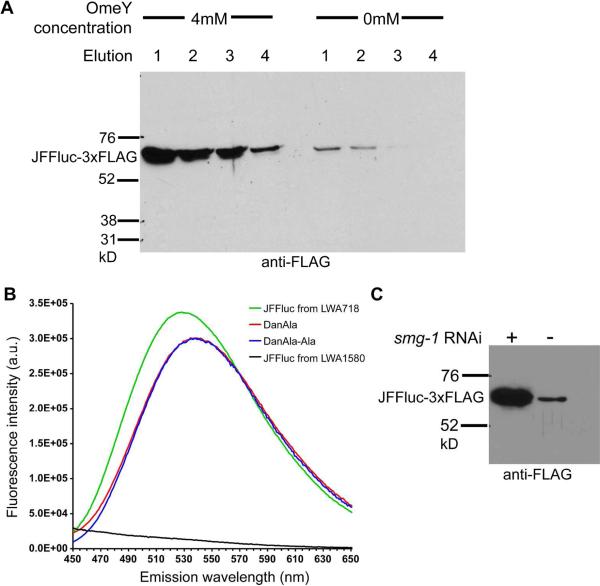
Figure 8. Biochemical analyses of Uaa incorporation and NMD effect
(A) Western blot analysis of JFFluc protein expressed in LWA717 animals grown on solid plates containing 4 mM or 0 mM OmeY. Animals were lysed, and the JFFluc protein was immunoprecipitated. Four elutions for each sample were collected and equal volumes were loaded into each lane. After transferring, the blot was probed with an anti-FLAG antibody to detect the purified JFFluc-3xFLAG. At the molecular weight corresponding to the JFFluc-3xFLAG protein (64 kDa) a strong band was visible for each elution of purified protein from animals grown on 4 mM OmeY. Only a weak band in the first 2 elutions was seen for animals grown in the absence of OmeY. Band densitometry revealed that in the absence of OmeY, the total protein detected was only 3.5% of that purified in the presence of 4 mM OmeY. (B) Fluorometric analysis of JFFluc proteins. The JFFluc protein purified from strain LWA718, which has JFFluc gene with a TAG codon at position 158, showed a fluorescence emission peak at 526 nm. The JFFluc protein purified from the control stain LWA1580 expressing the wild-type JFFluc gene (without the TAG158 codon) showed no detectable fluorescence. The same amount of protein from each strain was used for measurement. For comparison, the fluorescence emission spectra of the free Uaa DanAla and DanAla-Ala dipeptide were also measured, both of which had an emission peak at 538 nm. The dansyl fluorophore is sensitive to the environment, and the emission maximum changes after being incorporated into a protein. (C) Inactivation of NMD increased Uaa incorporation efficiency. LWA717 animals grown with 4 mM OmeY expressed more JFFluc protein when smg-1 was knocked down by RNAi (left lane), in comparison to the control RNAi against GFP (right lane). JFFluc protein was immunoprecipitated and detected by an anti-FLAG antibody in the Western. The mean fold change determined by band density when comparing smg-1 treated animals to the GFP control was 5.6, n=2.

References

    1. Wang L, Brock A, Herberich B, Schultz PG. Expanding the genetic code of Escherichia coli. Science. 2001;292:498–500. - PubMed
    1. Chin JW, Cropp TA, Anderson JC, Mukherji M, Zhang Z, Schultz PG. An expanded eukaryotic genetic code. Science. 2003;301:964–967. - PubMed
    1. Wang Q, Wang L. New methods enabling efficient incorporation of unnatural amino acids in yeast. J. Am. Chem. Soc. 2008;130:6066–6067. - PubMed
    1. Sakamoto K, Hayashi A, Sakamoto A, Kiga D, Nakayama H, Soma A, Kobayashi T, Kitabatake M, Takio K, Saito K, Shirouzu M, Hirao I, Yokoyama S. Site-specific incorporation of an unnatural amino acid into proteins in mammalian cells. Nucleic Acids Res. 2002;30:4692–4699. - PMC - PubMed
    1. Wang W, Takimoto JK, Louie GV, Baiga TJ, Noel JP, Lee KF, Slesinger PA, Wang L. Genetically encoding unnatural amino acids for cellular and neuronal studies. Nat. Neurosci. 2007;10:1063–1072. - PMC - PubMed

Publication types

MeSH terms