


A Teachable Moment Communication Process for smoking cessation talk: description of a group randomized clinician-focused intervention
- PMID: 22554310
- PMCID: PMC3529679
- DOI: 10.1186/1472-6963-12-109
A Teachable Moment Communication Process for smoking cessation talk: description of a group randomized clinician-focused intervention
Abstract
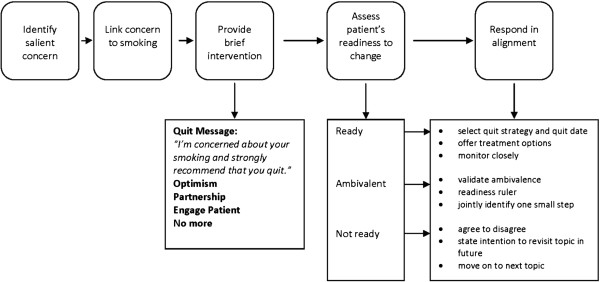
Background: Effective clinician-patient communication about health behavior change is one of the most important and most overlooked strategies to promote health and prevent disease. Existing guidelines for specific health behavior counseling have been created and promulgated, but not successfully adopted in primary care practice. Building on work focused on creating effective clinician strategies for prompting health behavior change in the primary care setting, we developed an intervention intended to enhance clinician communication skills to create and act on teachable moments for smoking cessation. In this manuscript, we describe the development and implementation of the Teachable Moment Communication Process (TMCP) intervention and the baseline characteristics of a group randomized trial designed to evaluate its effectiveness.
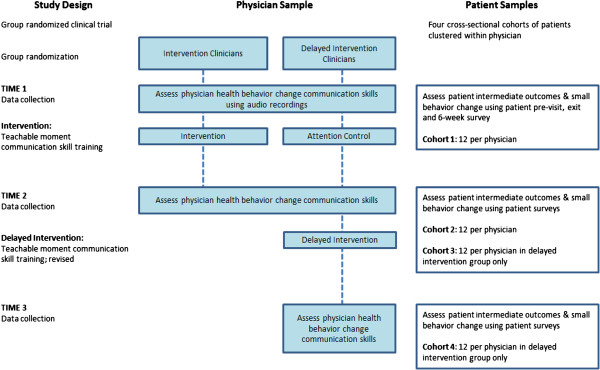
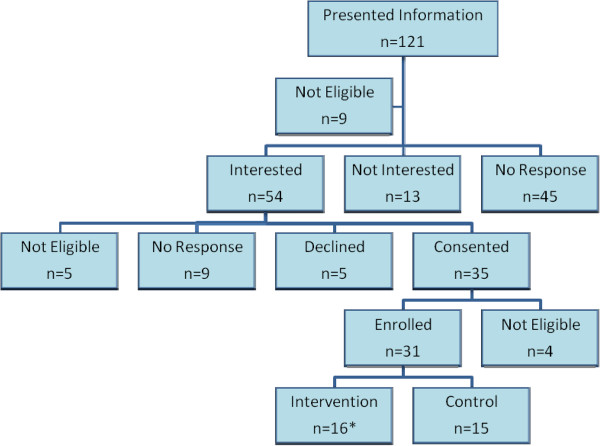
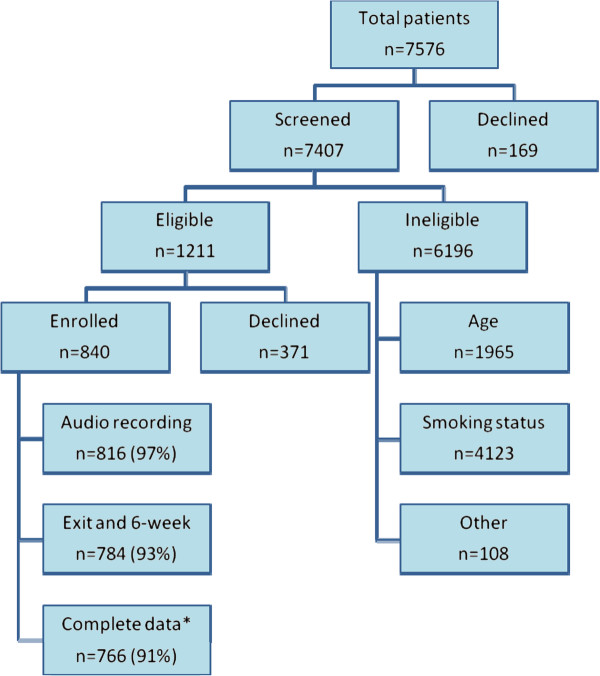
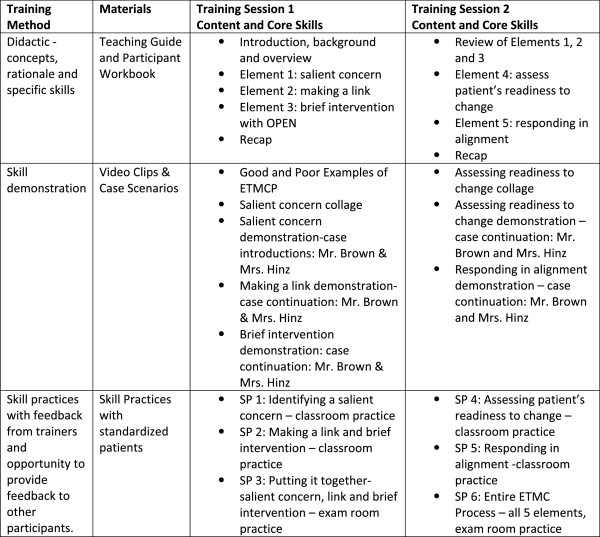
Methods/design: This group randomized trial includes thirty-one community-based primary care clinicians practicing in Northeast Ohio and 840 of their adult patients. Clinicians were randomly assigned to receive either the Teachable Moments Communication Process (TMCP) intervention for smoking cessation, or the delayed intervention. The TMCP intervention consisted of two, 3-hour educational training sessions including didactic presentation, skill demonstration through video examples, skills practices with standardized patients, and feedback from peers and the trainers. For each clinician enrolled, 12 patients were recruited for two time points. Pre- and post-intervention data from the clinicians, patients and audio-recorded clinician‒patient interactions were collected. At baseline, the two groups of clinicians and their patients were similar with regard to all demographic and practice characteristics examined. Both physician and patient recruitment goals were met, and retention was 96% and 94% respectively.
Discussion: Findings support the feasibility of training clinicians to use the Teachable Moments Communication Process. The next steps are to assess how well clinicians employ these skills within their practices and to assess the effect on patient outcomes.
Trial registration: ClinicalTrials.gov Identifier: NCT01575886.
Figures
References
-
- Pommerenke FA, Dietrich A. Improving and maintaining preventive services, Part 2: Practical principles for primary care. J Fam Pract. 1992;34:92–97. - PubMed
-
- Seffrin JR. Health issues in the Arab American community. Commentary on tobacco: the world’s leading cause of cancer. Ethn Dis. 2007;17:S3-8–S3-9. - PubMed
Publication types
MeSH terms
Associated data
Grants and funding
LinkOut - more resources
Full Text Sources
Medical
Miscellaneous
