An epidemic outbreak of canine cutaneous leishmaniasis in Colombia caused by Leishmania braziliensis and Leishmania panamensis
- PMID: 22556078
- PMCID: PMC3335684
- DOI: 10.4269/ajtmh.2012.11-0408
An epidemic outbreak of canine cutaneous leishmaniasis in Colombia caused by Leishmania braziliensis and Leishmania panamensis
Abstract
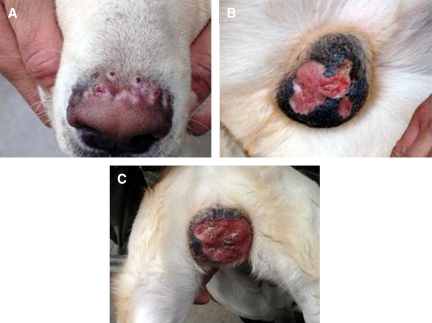
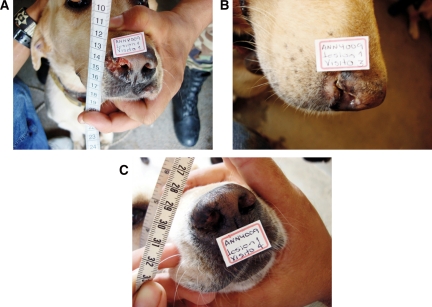
The largest recorded outbreak of cutaneous leishmaniasis in Colombia's history occurred during 2005-2009 in soldiers of the Colombian Army, with ~40,000 cases. This outbreak was caused by the influx of military personnel into the jungle with the mission of combat illicit crops and the guerrilla. The soldiers remain for long periods within the rainforest and are exposed to the bite of infected sand flies. During the military activities, soldiers work with dogs specially trained to detect landmines, and therefore, dogs are also exposed to the infected sand flies and show high incidence of cutaneous leishmaniasis (CL). This work describes an epidemic outbreak of canine CL caused by Leishmania braziliensis and Leishmania panamensis in Colombia, South America. The clinical features of the disease and the response to treatment with pentavalent antimonials observed in 72 guard dogs from the Colombian Army are described. A program for prevention and control of canine CL is also discussed.
Figures
References
-
- Alvar J, Cañavate C, Molina R, Moreno J, Nieto J. Canine leishmaniasis. Adv Parasitol. 2004;57:1–88. - PubMed
-
- Desjeux P. The increase in risk factors for leishmaniasis worldwide. Trans R Soc Trop Med Hyg. 2001;95:239–243. - PubMed
-
- Ferrer L, Aisa M, Roura X, Portús M. Serological diagnosis and treatment of canine leishmaniasis. Vet Rec. 1995;136:514–516. - PubMed
-
- Vásquez-Trujillo A. Cutaneous leishmaniasis in registration of canines present in peri-urban areas of Villavicencio, Meta and their importance in the public health. Rev Orinoquia. 2006;10:79–86.
Publication types
MeSH terms
Substances
LinkOut - more resources
Full Text Sources