Molecular identification of human hookworm infections in economically disadvantaged communities in Peninsular Malaysia
- PMID: 22556084
- PMCID: PMC3335690
- DOI: 10.4269/ajtmh.2012.11-0446
Molecular identification of human hookworm infections in economically disadvantaged communities in Peninsular Malaysia
Abstract
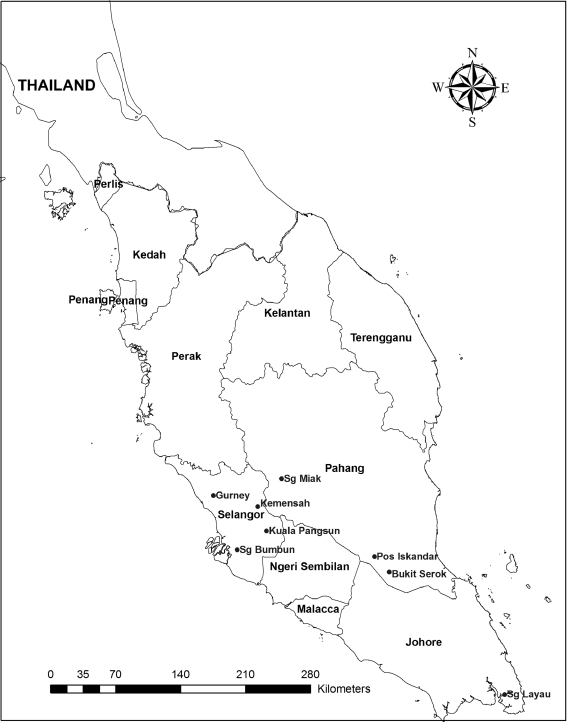
Species identification of human hookworm infections among eight communities in rural areas of Peninsular Malaysia was determined during 2009-2011. Fecal samples were examined by microscopy and subsequently, the internal transcribed spacer 2 and 28S ribosomal RNA region of Necator americanus and Ancylostoma spp. were sequenced. Overall, 9.1% (58 of 634) were identified positive by microscopy for hookworm infection, and 47 (81.0%) of 58 were successfully amplified and sequenced. Sequence comparison found that N. americanus (87.2%) was the most predominant hookworm identified, followed by Ancylostoma ceylanicum (23.4%). No A. duodenale infection was detected in this study. Detection of A. ceylanicum in humans highlighted the zoonotic transmission among humans living near dogs. Thus, implementation of effective control measures for hookworm infections in future should seriously consider this zoonotic implication.
Figures
References
-
- Chan MS, Medley GF, Jamison D, Bundy DA. The evaluation of potential global morbidity attributable to intestinal nematode infections. Parasitology. 1994;109:373–387. - PubMed
-
- de Silva NR, Brooker S, Hotez PJ, Montresor A, Engels D, Savioli L. Soil-transmitted helminth infections: updating the global picture. Trends Parasitol. 2003;19:547–551. - PubMed
-
- Albonico M, Crompton DW, Savioli L. Control strategies for human intestinal nematode infections. Adv Parasitol. 1999;42:277–341. - PubMed
-
- Crompton DW. The public health importance of hookworm disease. Parasitology. 2000;121:39–50. - PubMed
Publication types
MeSH terms
Substances
LinkOut - more resources
Full Text Sources
Miscellaneous