Comparative Study
. 2012;7(4):e33069.
doi: 10.1371/journal.pone.0033069. Epub 2012 Apr 25.

High-anxious individuals show increased chronic stress burden, decreased protective immunity, and increased cancer progression in a mouse model of squamous cell carcinoma

Affiliations
Comparative Study

High-anxious individuals show increased chronic stress burden, decreased protective immunity, and increased cancer progression in a mouse model of squamous cell carcinoma

Firdaus S Dhabhar et al. PLoS One. 2012.

Abstract

In spite of widespread anecdotal and scientific evidence much remains to be understood about the long-suspected connection between psychological factors and susceptibility to cancer. The skin is the most common site of cancer, accounting for nearly half of all cancers in the US, with approximately 2-3 million cases of non-melanoma cancers occurring each year worldwide. We hypothesized that a high-anxious, stress-prone behavioral phenotype would result in a higher chronic stress burden, lower protective-immunity, and increased progression of the immuno-responsive skin cancer, squamous cell carcinoma. SKH1 mice were phenotyped as high- or low-anxious at baseline, and subsequently exposed to ultraviolet-B light (1 minimal erythemal dose (MED), 3 times/week, 10-weeks). The significant strengths of this cancer model are that it uses a normal, immunocompetent, outbred strain, without surgery/injection of exogenous tumor cells/cell lines, and produces lesions that resemble human tumors. Tumors were counted weekly (primary outcome), and tissues collected during early and late phases of tumor development. Chemokine/cytokine gene-expression was quantified by PCR, tumor-infiltrating helper (Th), cytolytic (CTL), and regulatory (Treg) T cells by immunohistochemistry, lymph node T and B cells by flow cytometry, adrenal and plasma corticosterone and tissue vascular-endothelial-growth-factor (VEGF) by ELISA. High-anxious mice showed a higher tumor burden during all phases of tumor development. They also showed: higher corticosterone levels (indicating greater chronic stress burden), increased CCL22 expression and Treg infiltration (increased tumor-recruited immuno-suppression), lower CTACK/CCL27, IL-12, and IFN-γ gene-expression and lower numbers of tumor infiltrating Th and CTLs (suppressed protective immunity), and higher VEGF concentrations (increased tumor angiogenesis/invasion/metastasis). These results suggest that the deleterious effects of high trait anxiety could be: exacerbated by life-stressors, accentuated by the stress of cancer diagnosis/treatment, and mediate increased tumor progression and/or metastasis. Therefore, it may be beneficial to investigate the use of chemotherapy-compatible anxiolytic treatments immediately following cancer diagnosis, and during cancer treatment/survivorship.


Conflict of interest statement

Competing Interests: The authors have declared that no competing interests exist.

Figures

Figure 1
Figure 1. Effects of anxiety phenotype on tumor emergence and progression.
Compared to low-anxious mice (white bars) high-anxious mice (black bars) showed a higher mean tumor count during all phases of tumor development: papilloma emergence and regression (∼weeks 11–19), transition to SCC (∼weeks 20–25), and SCC progression (∼week 26 onwards). Data are expressed as mean ± SEM. Statistically significant differences between phases are indicated (** p < 0.05; *** p < 0.01). Analysis employed a generalized linear model for a Poisson distribution on a logarithmic link function with allowance for overdispersion of the area data.
Figure 2
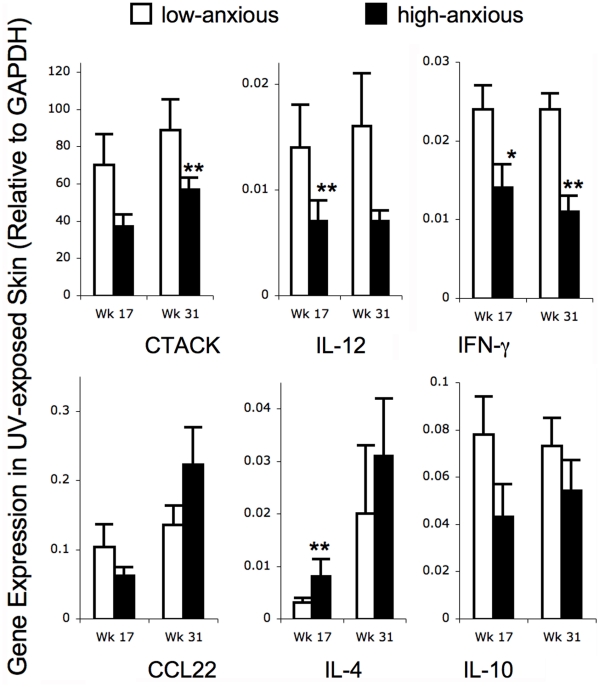
Figure 2. Effects of anxiety phenotype on chemokine and cytokine gene expression in UV-exposed skin.
Gene expression in dorsal skin was measured by quantitative PCR at weeks 17 and 31 in low- (white bars) and high- (black bars) anxiety mice. mRNA levels of chemokines and cytokines known to be protective (CTACK, IL-12, and IFN-γ) or harmful (IL-4 and IL-10) in the context of SCC were quantified. Levels of mRNA expression normalized to glyceraldehyde-3-phosphate dehydrogenase (GAPDH) mRNA are shown. Data are expressed as mean ± SEM. Outcomes were optimally Box-Cox transformed prior to analysis. For each outcome, means were compared between groups using a two-sample t-test with Satterthwaite adjustment for unequal variances. Statistical trends (* p < 0.09) and significant differences (** p < 0.05) are indicated, and corresponding effect sizes are mentioned in the text. For all comparisons where the t-test showed a statistical trend, regression analysis showed statistical significance, the only exception being week 17 IFN-γ gene expression.
Figure 3
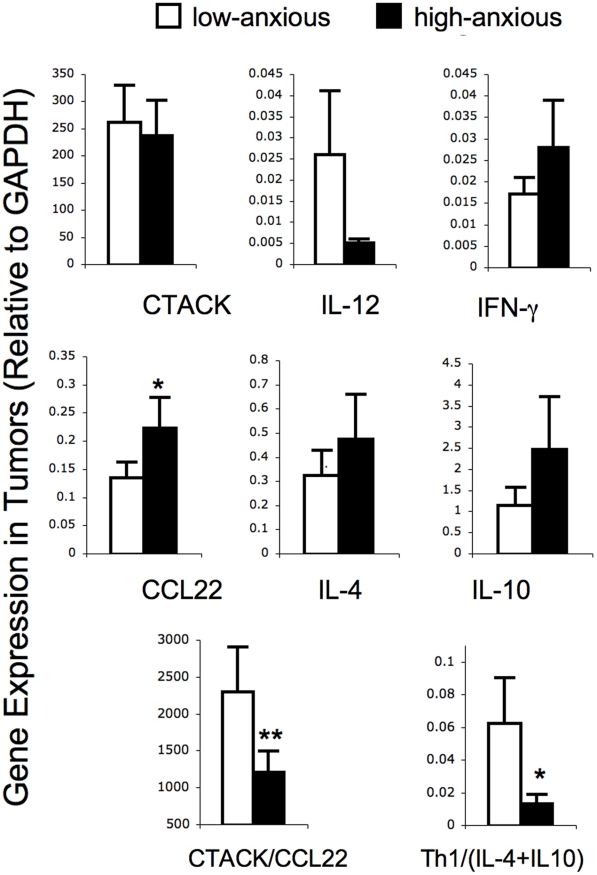
Figure 3. Effects of anxiety phenotype on chemokine and cytokine gene expression in tumors.
Gene expression in tumors was measured by quantitative PCR at week 31 in low- (white bars) and high- (black bars) anxiety mice. mRNA levels of chemokines and cytokines known to be protective (CTACK, IL-12, and IFN-γ) or harmful (IL-4 and IL-10) in the context of SCC were quantified. Since overall biological function is ultimately influenced by relative proportions of counteracting factors, we also examined the effects of anxiety phenotype on the ratios of protective versus harmful factors: CTACK/CCL22 and (IL-12+IFN-γ)/(IL-10 + IL-4). Levels of mRNA expression normalized to glyceraldehyde-3-phosphate dehydrogenase (GAPDH) mRNA are shown. Data are expressed as mean ± SEM. Statistical trends (* p < 0.09) and significant differences (** p < 0.05) are indicated. Outcomes were optimally Box-Cox transformed prior to analysis. For each outcome, means were compared between groups using a two-sample t-test with Satterthwaite adjustment for unequal variances.
Figure 4
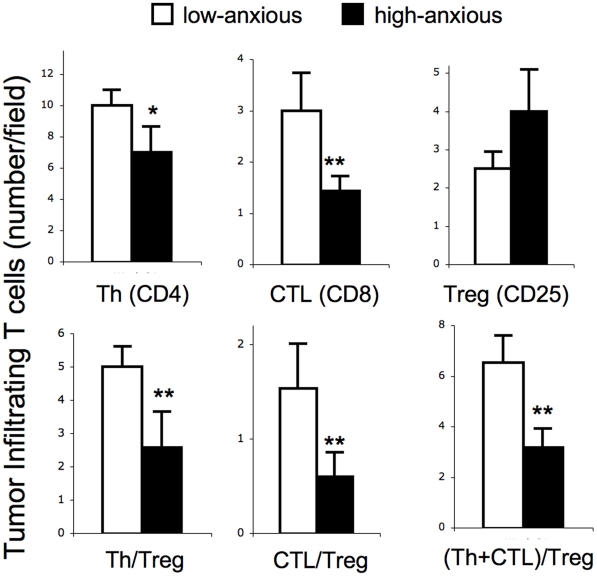
Figure 4. Effects of anxiety phenotype on tumor infiltrating helper (Th), cytolytic (CTL), and regulatory (Treg) T cells.
Tumor infiltrating T cells were quantified in low- (white bars) and high- (black bars) anxiety mice at week 31. Numbers of tumor infiltrating cells that are known to be protective (Th and CTL) or harmful (Treg) in the context of SCC were quantified. Since overall biological function is ultimately influenced by relative proportions of counteracting cells, we also examined the effects of anxiety phenotype on the ratios of protective versus harmful factors: Th/Treg, CTL/Treg, and (Th + CTL)/Treg. The number of positive cells per standardized field was counted by a blinded observer. Five fields at 60x were analyzed per stained tumor section per mouse. Data are expressed as mean ± SEM. Statistical trends (* p < 0.09) and significant differences (** p < 0.05) are indicated. Outcomes were optimally Box-Cox transformed prior to analysis. For each outcome, means were compared between groups using a two-sample t-test with Satterthwaite adjustment for unequal variances.
Figure 5
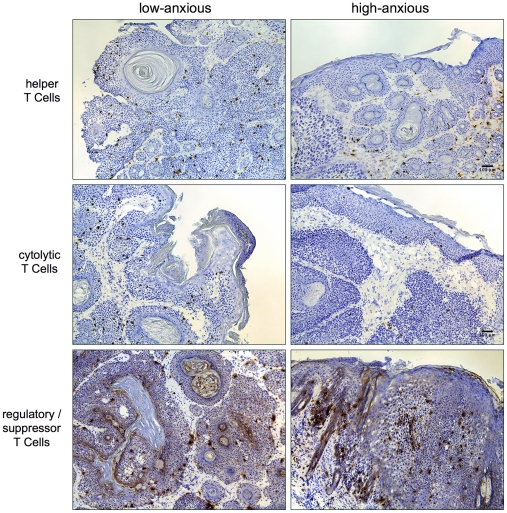
Figure 5. Photomicrographs showing the effects of anxiety phenotype on tumor infiltrating helper (Th), cytolytic (CTL), and regulatory (Treg) T cells.
Immunohistochemical staining for CD4 (top row), CD8 (middle row), and CD25 (bottom row) was used to enumerate (counts shown in Fig. 4) tumor infiltrating T cells from low- (left column) and high- (right column) anxious mice at week 31. Scale bar denotes 100 µm.

References

    1. Chida Y, Hamer M, Wardle J, Steptoe A. Do stress-related psychosocial factors contribute to cancer incidence and survival? Nat Clin Pract Oncol. 2008;5:466–475. - PubMed
    1. Temoshok L. Biopsychosocial studies on cutaneous malignant melanoma: psychosocial factors associated with prognostic indicators, progression, psychophysiology and tumor-host response. Soc Sci Med. 1985;20:833–840. - PubMed
    1. Spiegel D, Kato PM. Psychosocial influences on cancer incidence and progression. Harv Rev Psychiatry. 1996;4:10–26. - PubMed
    1. Temoshok LR. Complex coping patterns and their role in adaptation and neuroimmunomodulation. Theory, methodology, and research. Ann N Y Acad Sci. 2000;917:446–455. - PubMed
    1. McCarron P, Gunnell D, Harrison GL, Okasha M, Davey Smith G. Temperament in young adulthood and later mortality: prospective observational study. J Epidemiol Community Health. 2003;57:888–892. - PMC - PubMed

Publication types

MeSH terms