


Neoplastic transformation of T lymphocytes through transgenic expression of a virus host modification protein
- PMID: 22558084
- PMCID: PMC3338727
- DOI: 10.1371/journal.pone.0034140
Neoplastic transformation of T lymphocytes through transgenic expression of a virus host modification protein
Abstract
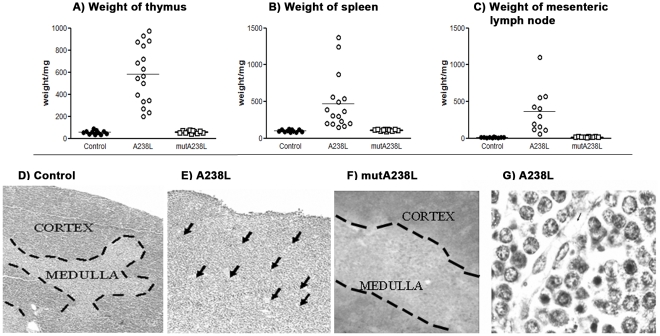
Virus host evasion genes are ready-made tools for gene manipulation and therapy. In this work we have assessed the impact in vivo of the evasion gene A238L of the African Swine Fever Virus, a gene which inhibits transcription mediated by both NF-κB and NFAT. The A238L gene has been selectively expressed in mouse T lymphocytes using tissue specific promoter, enhancer and locus control region sequences for CD2. The resulting two independently derived transgenic mice expressed the transgene and developed a metastasic, angiogenic and transplantable CD4(+)CD8(+)CD69(-) lymphoma. The CD4(+)CD8(+)CD69(-) cells also grew vigorously in vitro. The absence of CD69 from the tumour cells suggests that they were derived from T cells at a stage prior to positive selection. In contrast, transgenic mice similarly expressing a mutant A238L, solely inhibiting transcription mediated by NF-κB, were indistinguishable from wild type mice. Expression of Rag1, Rag2, TCRβ-V8.2, CD25, FoxP3, Bcl3, Bcl2 l14, Myc, IL-2, NFAT1 and Itk, by purified CD4(+)CD8(+)CD69(-) thymocytes from A238L transgenic mice was consistent with the phenotype. Similarly evaluated expression profiles of CD4(+)CD8(+) CD69(-) thymocytes from the mutant A238L transgenic mice were comparable to those of wild type mice. These features, together with the demonstration of (mono-)oligoclonality, suggest a transgene-NFAT-dependent transformation yielding a lymphoma with a phenotype reminiscent of some acute lymphoblastic lymphomas.
Conflict of interest statement
Figures



References
-
- Finlay BB, McFadden G. 2006. (2006) Anti-immunology: evasion of the host immune system by bacterial and viral pathogens. Cell 124: 767–782. Available: http://www.ncbi.nlm.nih.gov/pubmed/16497587.
-
- Vischer HF, Vink C, Smit MJ. 2006. (2006) A viral conspiracy: hijacking the chemokine system through virally encoded pirated chemokine receptors. Current topics in microbiology and immunology 303: 121–154. Available: http://www.ncbi.nlm.nih.gov/pubmed/16570859. - PubMed
-
- Loo YM, Gale M. 2007. (2007) Viral regulation and evasion of the host response. Current topics in microbiology and immunology 316: 295–313. Available: http://www.ncbi.nlm.nih.gov/pubmed/17969453.
-
- Unterholzner L, Bowie AG. 2008. (2008) The interplay between viruses and innate immune signaling: recent insights and therapeutic opportunities. Biochemical pharmacology 75: 589–602. Available: http://www.ncbi.nlm.nih.gov/pubmed/17868652. - PubMed
-
- Bonjardim CA, Ferreira PCP, Kroon EG. 2009. (2009) Interferons: signaling, antiviral and viral evasion. Immunology letters 122: 1–11. Available: http://www.ncbi.nlm.nih.gov/pubmed/19059436.
Publication types
MeSH terms
Substances
Grants and funding
LinkOut - more resources
Full Text Sources
Medical
Molecular Biology Databases
Research Materials
